

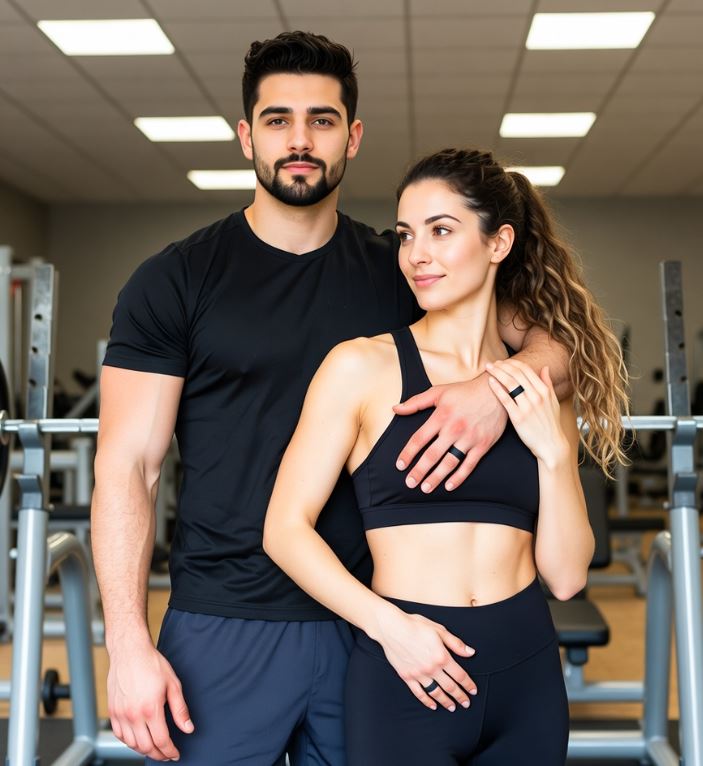
Silicone wedding rings have become an increasingly popular choice for people who lead active lifestyles. Whether you’re lifting weights, climbing, cycling, or working with your hands, silicone wedding rings offer a safer alternative to traditional metal bands. Designed with flexibility and comfort in mind, silicone wedding rings help reduce the risk of serious finger injuries while allowing you to stay focused on your workout. More athletes and fitness enthusiasts are choosing silicone wedding rings because they provide peace of mind without sacrificing the meaningful symbolism of wearing a wedding band. As fitness and safety continue to go hand in hand, silicone wedding rings have emerged as the practical solution for modern couples.
Walk into any gym on a Monday morning, and you’ll see people who have thought carefully about their footwear, their water bottle, even their playlist. Almost nobody has thought about their ring.
Which is a little odd, if you stop and think about it. A ring is a solid band of metal sized to fit snugly against your finger, and your hands are basically the main tools you use the whole time you’re at the gym. Grabbing a bar, racking a set of dumbbells, catching yourself on a machine handle, all of that puts pressure right where a ring sits. Get caught at the wrong angle and a normal Tuesday leg day turns into a trip to urgent care.
What Ring Avulsion Actually Is
Ring avulsion may sound like it’s something from a medical textbook, but that’s because it is. Ring avulsion occurs when your ring gets caught on something- a bar, a hook, some piece of equipment- and the hand keeps moving anyway. Since metal does not stretch, whatever is underneath gets damaged: skin, tissue, and sometimes the blood vessels.
There’s an actual classification system hand surgeons use for this, ranging from a temporary loss of circulation up to, in the worst cases, losing the finger entirely.
The injury isn’t limited to gyms, either. Rock climbers, cyclists, warehouse workers, and even parents lifting kids onto playground equipment can experience it. Anywhere there’s a chance of your hand catching on something while your body keeps moving, there’s a small but real risk.
Why Traditional Bands Carry More Risk of Injury
Although metal bands are built to last forever, that very quality makes them dangerous at the wrong moment. A ring that won’t bend or break under pressure sounds like a good thing, until it’s the reason something else has to give.
Compare that to how most safety gym equipment is designed. Seatbelts have give. Shoelaces are meant to be untied quickly. Even climbing harnesses have quick-release mechanisms. A rigid metal ring, by contrast, has no built-in way to release itself from a snag.
This doesn’t mean metal rings are dangerous to own or wear day-to-day. Most people wear one for decades without incident. But certain activities raise the odds enough that it’s worth pausing to think it through, especially for anyone who lifts weights regularly, works with their hands, or spends time outdoors on a bike or a climbing wall.
Using Silicone Wedding Rings for Active Hours
This is where a growing number of people have started separating their “everyday ring” from their “active ring.” The idea isn’t to give up the tradition or sentiment behind a wedding band. It’s to have a second option built specifically for the hours when your hands are working hard.
Silicone rings have become a popular answer to this problem, and for reasons that go beyond safety. They’re:
- Flexible under pressure: Instead of catching and holding firm, flexible silicone rings give way, reducing the risk of the trapped-finger scenario that leads to avulsion injuries.
- Lightweight and breathable: A lot of them have built-in airflow channels, so your finger doesn’t feel like it’s sweating under there by the end of a hot summer run.
- Low-maintenance: You don’t have to think about taking it off before you put on lotion, jump in a pool, or grab a weight.
- Affordable: Because they’re inexpensive compared to fine jewelry, it’s practical to keep one in a gym bag, one in a car, and one at home.
None of this replaces the emotional value of a wedding band. It simply gives couples a practical way to protect their hands without setting the meaningful ring aside entirely, if they’d rather keep it somewhere safe during physical activity.
Questions to Ask Before Your Next Workout
If you’re trying to decide whether this is worth thinking about for yourself, a few questions can help:
Does your routine involve pull-up bars, rings, or bar work?
These are some of the most common culprits in ring avulsion cases, since the ring can catch as the body swings or drops.
Do you lift heavy, with a mixed or hook grip?
Mixed or hook grip lifts put pressure directly across the fingers, increasing the odds of a ring shifting or catching under load.
Do you cycle, climb, or play contact sports?
Falls and quick grabs for support are unpredictable by nature, which is part of why this injury is hard to guard against with caution alone.
Answered yes to a couple of these? That doesn’t mean something bad is about to happen. It just means your hands are working harder than they do on a normal day, and a stiff metal band might not be the best thing to have on for that stretch of time.
The Takeaway: A Simple Swap That Reduces Injury Risk
Nobody plans on getting hurt, which is sort of the point of a precaution: you take it before you need it, not after. Switching to a flexible band for a few hours a day doesn’t cost much and doesn’t make you feel any differently about the ring waiting for you at home. Your hands just get a little more room to move.
A wedding ring means something. So does the hand wearing it. There’s nothing wrong with letting one ring hold the meaning and another one handle the movement.
Choosing silicone wedding rings for workouts and other physical activities is a simple decision that can provide lasting benefits. While traditional bands remain timeless symbols of love and commitment, silicone wedding rings offer greater flexibility, comfort, and protection during demanding activities. By keeping your treasured metal band safe and wearing silicone wedding rings when exercising, working, or enjoying outdoor adventures, you reduce the risk of unnecessary injuries without compromising your commitment. As more people embrace active lifestyles, silicone wedding rings continue to prove they are both a smart investment and a practical everyday accessory for protecting your hands while honoring your marriage.