

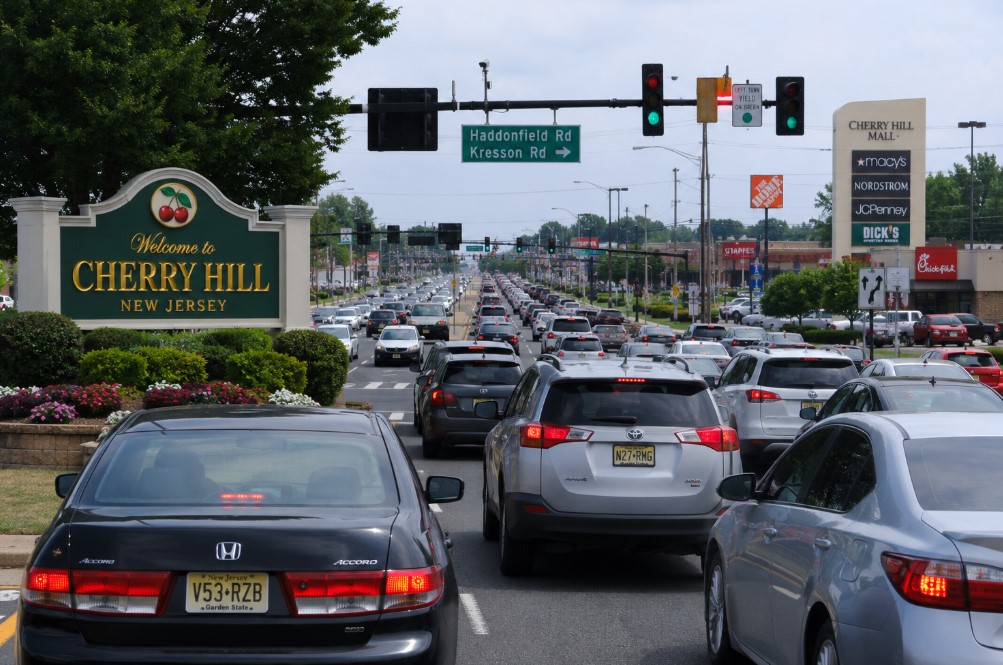
The Cherry Hill Experience: High Traffic, High Retail and What That Means for Residents
Living in Cherry Hill offers a distinct double-edged sword for families. The township thrives as a bustling retail and medical hub, bringing unmatched convenience right to your doorstep. Yet, this same thriving environment introduces high-volume, dangerous traffic into the community every single day.
When a preventable accident happens in this fast-paced environment, the resulting grief is almost always mixed with a deep sense of injustice. Grieving families are suddenly forced to deal with insurance companies and complex legal hurdles while simply trying to keep their households running. Navigating the aftermath of a severe accident in such a bustling suburban hub requires more than just standard legal advice; it demands an advocate who deeply understands the local landscape.
The Highway Hazard
Cherry Hill residents know the daily reality of navigating high-volume commuter arteries. Roads like I-295 and Route 70/73 are constantly packed with commuters, delivery vehicles, and fully loaded commercial semi-trucks. The mix of heavy commercial transit and local suburban traffic creates an inherently dangerous environment.
Speeding, distracted driving, and aggressive lane changes are the leading causes of fatal crashes on these routes. Commercial trucks pose a particular threat due to their massive size and inability to stop quickly. When a semi-truck rushing through a local route collides with a passenger car, the results are frequently catastrophic.
State data validates exactly how dangerous these roads can be. According to New Jersey State Police data, the state recorded 684 traffic fatalities in 2024. This highlights the severe, ongoing risks present on busy local and state highways.
Proving liability in these complex highway crashes requires understanding who was truly at fault, and the answer is rarely simple. A family dealing with a fatal crash on I-295 or Route 70 may be looking at a distracted driver, a trucking company that ignored federal safety regulations, or multiple parties sharing responsibility. Cherry Hill injury lawyers who handle these cases know how to pull black box data, work with accident reconstruction experts, and trace liability back to every responsible party. That thorough approach is what stands between a grieving family accepting whatever an insurance company offers and receiving the full compensation they are actually owed.
Retail and Premises Liability
Cherry Hill holds a reputation as the retail center of South Jersey. With massive shopping destinations like the Cherry Hill Mall, big-box stores, and countless local restaurants, residents spend a significant amount of time walking through commercial parking lots. These low-speed environments often create a false sense of security.
Places of business owe visitors a high duty of care under a legal concept known as premises liability. This means property owners must maintain safe environments, fix known hazards, and clearly warn visitors of potential dangers. When retail owners fail to maintain safe parking lots or walkways, they can be held financially responsible for the resulting injuries.
Pedestrian accidents and fatal slip-and-falls are a constant threat in these busy retail spaces. These incidents disproportionately affect elderly residents who may have limited mobility while navigating crowded, poorly lit, or uneven surfaces. Distracted drivers hunting for a parking spot often fail to see pedestrians crossing between cars.
The national statistics regarding low-speed retail environments are alarming.
The National Safety Council warns that 1 in 5 car crashes occurs in a parking lot, resulting in approximately 60,000 injuries and 500 deaths annually.
Adding to this danger, a related poll from the National Safety Council revealed that 66% of drivers admit to making phone calls while navigating parking lots. This creates a dangerous level of distraction in spaces heavily shared by vehicles and families on foot.
The Risk of ER Errors
Because Cherry Hill is home to major medical hubs like Jefferson Cherry Hill Hospital, residents enjoy quick access to healthcare. However, this convenience comes with unique risks related to high-volume emergency care. Busy hospitals process hundreds of patients daily, creating high-pressure environments for medical staff.
Rushed and overcrowded emergency rooms can lead to devastating medical malpractice. When doctors and nurses are overworked, they are more likely to miss critical warning signs. This environment frequently leads to the misdiagnosis or delayed treatment of fatal conditions like heart attacks, strokes, or severe infections.
When a trusted medical professional breaches the standard of care, the emotional toll on the family is immeasurable. Losing a loved one to a completely preventable medical error leaves families feeling betrayed by the very institutions meant to heal them. Holding these medical centers accountable requires specialized legal strategy to prove that standard protocols were ignored.
Your Legal Safety Net: Navigating New Jersey Deadlines
The period following a catastrophic injury is overwhelming. Families are suddenly forced to manage intense grief while trying to maintain their busy households. Adding complex legal jargon to this burden is often the last thing anyone wants to deal with.
However, ignoring the legal side of an accident can unexpectedly jeopardize your family’s financial security. New Jersey enforces strict legal timelines that dictate exactly when you can file a claim. Missing these deadlines means losing your right to compensation entirely.
The Critical Difference: The 90-Day vs. 2-Year Rule
Many people assume they have plenty of time to take legal action after an accident. While standard personal injury claims in New Jersey typically have a two-year statute of limitations, accidents involving government entities operate under completely different rules.
If your accident involves public transit (like an NJ Transit bus) or happens on a hazardous public road maintained by the state or township, you face a fast-approaching deadline. Victims have a strict 90-day deadline to file a Notice of Claim under the New Jersey Tort Claims Act for accidents involving government property.
Here is a quick comparison of how these deadlines work in New Jersey:
| Type of Accident Claim | Responsible Party | Legal Deadline to File |
|---|---|---|
| Standard Personal Injury | Private citizens, private businesses, retail stores | 2 Years from the date of the injury. |
| Tort Claims Act (Government) | NJ Transit, municipal vehicles, state-maintained properties | 90 Days to file a formal Notice of Claim. |
Failing to submit this specialized paperwork within 90 days almost always results in a dismissed case. You must speak with a legal professional immediately to determine which deadline applies to your specific situation.
Leveling the Playing Field: Matching Corporate Resources
A primary concern for many families is the intimidation of fighting massive commercial insurers and hospital systems. These organizations have bottomless legal budgets and dedicated teams working to deny your claim. Most residents wonder how they could possibly afford to fight back.
The solution is risk-free, contingency-fee advocacy. Under this financial model, grieving families pay absolutely nothing out of pocket. The law firm fronts all the costs associated with building the case, and you only pay a legal fee if the firm actually wins your case.
This model levels the playing field. It allows regular families to match corporate resources by hiring independent, top-tier medical experts and accident reconstructionists. These professionals meticulously review the evidence to prove liability, ensuring that insurance companies cannot bully you into accepting a lowball settlement.
Conclusion
Living in a high-traffic, high-retail environment like Cherry Hill requires a clear awareness of the dangers surrounding us. From the heavy commercial trucks on our highways to the distracted drivers in our local parking lots and the rushed staff within our medical centers, the risks are real and present.
No lawsuit can ever undo a sudden tragedy or bring back a loved one. However, holding negligent parties accountable ensures that grieving families achieve the financial security they need to heal. It also forces corporations and hospitals to change their practices, helping keep the entire Cherry Hill community safe from future hazards.
As Cherry Hill continues to grow as a commercial and residential destination, awareness of local safety risks becomes increasingly important. Whether dealing with highway accidents, premises liability incidents, or medical negligence, Cherry Hill residents deserve accountability when preventable harm occurs. By understanding the legal protections available and acting promptly when accidents happen, families in Cherry Hill can better safeguard their futures. Ultimately, creating a safer Cherry Hill requires both personal vigilance and a commitment to holding negligent parties responsible for their actions.