
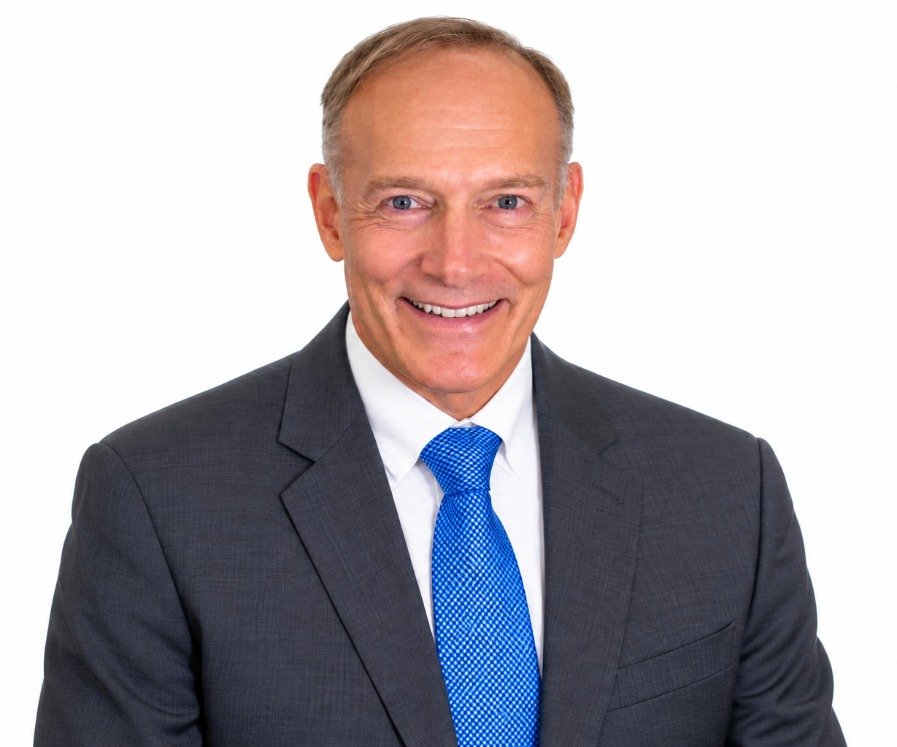
Few industries evolve as rapidly as technology, and Bruce D. Randall has spent more than three decades working at the forefront of that transformation. A technology executive, entrepreneur, author, and AI thought leader, Randall has built a career spanning artificial intelligence, cloud computing, cybersecurity, enterprise software, business development, and technology commercialization.
Yet his perspective shared in the latest Podcast Episode extends beyond what technology can accomplish. Through executive leadership, entrepreneurship, hands-on AI development, writing, meditation, Randall has become increasingly interested in a bigger question: How can humanity embrace intelligent technology without losing the qualities that make us distinctly human?
From leading startups and helping secure multimillion-dollar funding to building AI applications and authoring The AI Human Paradox Series, Randall continues exploring how responsible innovation can create business value while keeping people at the center of technological progress.
Q & A with Bruce D. Randall
Beverly Hills Magazine: Why don’t we get started with you telling us a little bit about your journey and how it led you into technology and entrepreneurship?
Bruce D. Randall: Technology started a long time ago when I was in college. From there, my career progressed into technology management, sales management, developing markets, and taking sales teams that weren’t successful and making them successful.
That’s accomplished by understanding the technology and being able to communicate it to people, which isn’t something everybody can do.
I eventually progressed into chief operating officer and chief executive officer positions within technology companies. Then 2020 came along, and it was a different year for everybody.
A lot of things got turned upside down, including in my own life. So I started writing books about artificial intelligence, quantum technology, and human consciousness. I’ve also been meditating for decades, and I’ve been a Reiki master for a couple of decades.
That’s gone very well. I’ve got another book coming out soon, and I’ve built my second artificial intelligence news application, which is available through my website. It serves up news on specific topics every morning.
Beverly Hills Magazine: Wow! Being a technology guy, you must be having a blast with all the new innovations available and being able to exercise your creativity in this space.
Bruce D. Randall: Once you understand the technology, you can do things with it. But when you’re afraid of technology, fear comes in, and you don’t want to touch it because you don’t understand it. People don’t want to be wrong or encounter problems.
I tell people to try something on one of these platforms and understand it.
My book, The End of Smart, talks about college students and people in the workforce, what they need to do now to get hired, and how to stay relevant in a rapidly changing workforce.
And it’s changing rapidly right now.
The Artificial Intelligence Revolution
Beverly Hills Magazine: You’ve witnessed enormous technological changes throughout your career. Which development has surprised you the most?
Bruce D. Randall: I would say the recent development of artificial intelligence and quantum technology, particularly the speed at which they’re moving forward.
I came into technology when computers first arrived. I had the green screen and the dial-up modem connected to the phone line. I had the first brick phone, the one with the handle and the heavy battery.
Then we had the internet. All of that happened over approximately 40 years.
The book I’m writing now, 50 Years in Five, explores how we’re going to experience more technological advancements in the next five, perhaps ten years, than we’ve experienced in the last 40.
Beverly Hills Magazine: Absolutely. It’s an artificial intelligence revolution, and it’s dramatically shifting how we operate in the world, similar to how the internet changed everything.
You’re absolutely correct that it’s advancing so quickly that we may not even recognize the world five or ten years from now.
Bruce D. Randall: That’s why I’m writing this other book.
When it comes to medicine, not many people know that gene editing has already been performed inside the human body to help save a life.
People think it’s something we’re just talking about, but it’s actually been done.
And when you talk about robotics, people don’t understand how quickly robotics is moving forward.
The capabilities they’re working with now are things I didn’t think we’d see for another four or five years.
Beverly Hills Magazine: I’m seeing advancements in various parts of the world. Who do you think is the real leader in artificial intelligence and robotic developments?
Bruce D. Randall: You’ve got two markets. You’ve got what’s public and what’s happening behind closed doors.
It’s hard to say. I think China has made a lot of advancements and has been showing a great deal of its progress.
In a robotics competition in China this year, they had over 50 entrants, while the United States had only a couple.
But then you’ve got companies like the one developing Optimus that won’t show everything they’re doing because they know competitors may copy their work frame by frame.
So some of the technology remains behind a curtain.
It’s difficult to determine who’s actually ahead right now.
Leadership, Critical Thinking, and Emotional Intelligence
Beverly Hills Magazine: That’s a good point. You’ve served as chief executive officer, chief operating officer, fractional chief executive officer, and senior business leader in various companies.
What have these different roles taught you about becoming an effective leader? You’ve also written a book about leadership.
Bruce D. Randall: The most important thing is to elevate your critical thinking and emotional intelligence.
I find that the most effective leaders have both of those qualities as key components of what they do.
They can think more clearly about the decisions they have to make, whereas people who struggle with emotional and critical thinking issues often have a harder time making those choices.
Beverly Hills Magazine: Can you tell us more about your books, their titles, and where people can find them?
Bruce D. Randall: My books are available on Amazon and Barnes & Noble, and they’re also on my website, brucedrandall.ai.
I also have 17 white papers available on my website.
One is called How Does an Atom Become a Qubit? It explains quantum technology.
I had my wife, who’s in the medical field and doesn’t know much about technology, read it. I adjusted it so that anybody could pick it up and understand it.
If anybody wants to know what quantum technology is, that paper is available for free on my website.
The Convergence of Technology and Human Intelligence
Beverly Hills Magazine: Your career has included artificial intelligence, cybersecurity, cloud computing, software, and emerging technologies.
How have these different fields begun to converge?
Bruce D. Randall: Artificial intelligence and the human body converged when Neuralink placed its first chip in Noland’s brain.
He explained that when he thinks about moving the computer mouse, it goes where he wants it to go.
He also said that sometimes the mouse moves before he’s consciously thinking about it, but it always goes to the same place.
That struck me.
I thought, that’s precognition. I can work with that.
And that’s how it all started.
Beverly Hills Magazine: Wow, that’s amazing. When did you first realize that artificial intelligence was going to fundamentally change the world?
Bruce D. Randall: When I was working in cloud technology, we had something called business intelligence, which was smart business software.
Then I noticed that it became really intelligent.
My opinion, although nobody would admit it because they couldn’t, was that there might have been some artificial intelligence in there.
That got me interested because what the technology could do was really impressive.
I started studying artificial intelligence and understanding it.
I took a Massachusetts Institute of Technology course on data science and another course on building applications. I’ve since built two applications.
That gives me a different perspective because if you’ve built the technology, you can speak about it.
If you’ve developed the technology, you can speak about it.
And if you’ve been meditating for 20 years, you can speak about that experience as well.
It all comes together as knowledge, which I find fascinating.
Beverly Hills Magazine: Absolutely. You can’t take someone somewhere you’ve never been, which speaks to the power and importance of experience.
I’ve said this before, but the greatest teacher is the greatest student.
That’s why I believe everyone should write a book. We have so much to learn from each other.
I’m so glad you’ve taken the initiative to write several books. I believe you’re already on your fifth!
Bruce D. Randall: I’m actually on my sixth right now.
My fifth book will be available on my website once I can accommodate electronic publications there, which should be very soon.
Beverly Hills Magazine: Fantastic! Then the timing of this interview is perfect.
People can visit your website, and we’re featuring you as a business leader in Beverly Hills Magazine. They’ll be able to find your information and access your website through the magazine as well.
Bruce D. Randall: Thank you.
What Businesses Are Getting Wrong About Artificial Intelligence
Beverly Hills Magazine: What are businesses, in your opinion, getting wrong with artificial intelligence at this point?
Bruce D. Randall: I think fear is one thing businesses have. They’re unsure.
If you don’t understand something, it’s really hard to implement it.
But if you go through the steps and understand the technology, you already know your business.
When you want to implement something, pick a team that’s going to work with it. Get them involved from the beginning and have regular meetings so you can see how each stage is progressing.
You can track that progress and identify trends.
Artificial intelligence isn’t perfect, but it’s fast and pretty close to being accurate most of the time.
You want to catch those inconsistencies and correct them when they happen.
If you’re just leading from above while everybody else is doing their jobs, that communication doesn’t flow.
And with this technology, you need communication to flow regularly.
Beverly Hills Magazine: Definitely. How would you describe the current artificial intelligence revolution to someone who doesn’t understand why it’s so significant for the world and mankind?
Bruce D. Randall: I would say that the next five, maybe ten years, are going to change many aspects of everybody’s life.
If you want to be ahead of those changes, so you can do better when they arrive, it’s best to learn the technology now.
Because if you don’t learn it now, in a couple of years, you’ll still be where you are, while your competitors or the people you work with will be ahead of you.
And it’s going to be very hard to catch up.
Beverly Hills Magazine: That’s the whole thing. You don’t want to be left behind.
But technology is moving so quickly. Even I’ve incorporated artificial intelligence into my operations, and I sometimes feel like I’m a little behind.
It’s becoming so integrated into society that functioning without it will certainly put people at a disadvantage if they don’t incorporate it somehow.
Bruce D. Randall: That’s exactly it.
People need to get involved with it now so they can stay relevant in the future.
The worst thing is to go into the future and find that your relevance has decreased. Then everything becomes much harder.
Building Artificial Intelligence Applications
Beverly Hills Magazine: You’ve built two artificial intelligence applications, correct?
Bruce D. Randall: Yes.
Beverly Hills Magazine: How did actually building artificial intelligence technology yourself change your perspective or teach you something you might not have understood from the outside looking in?
Bruce D. Randall: I took a course the first time, and they said, “We’re going to build an application in eight weeks.”
I thought, the pressure is on!
Eight weeks? I’d never built an application in my life.
But I actually did it, and it worked. I impressed myself.
I thought, this isn’t hard. It’s actually very easy, and artificial intelligence helps.
Then I went off on my own because I wanted something to complement my books.
I built Neural Daily News, which is linked on my website.
Every morning, it serves up new articles about consciousness, artificial intelligence, and quantum technology.
I think that’s fascinating because I’d never coded before.
Coding actually frightened me because it’s so tedious, and I’m not a tedious type of person.
But I built it, and it worked.
I was so impressed that I thought, I have to tell everybody this isn’t hard.
Beverly Hills Magazine: Absolutely. It’s like riding a bike, right?
We all have to take that first fearful step of letting go of the training wheels. But once you do, it becomes easy, and anyone can do it.
Bruce D. Randall: Right. Then you want to go off on your own and do things, which is exactly what I’m doing now.
I’m a leader in this technology, and I think it’s fascinating that, in just a few years, the work I’ve done has brought me to that position.
Artificial Intelligence and Entrepreneurial Opportunities
Beverly Hills Magazine: That’s brilliant.
Do you believe artificial intelligence will ultimately create more entrepreneurial opportunities than it eliminates?
Because that’s part of the fear people have. They think, “Oh, it’s going to take away all our jobs!”
What are your thoughts on that?
Bruce D. Randall: That’s why I tell people they need to understand artificial intelligence and try it.
Some of the chief executive officers at the center of this technology are predicting that one day we’ll have a billion-dollar company operated by just one person.
Beverly Hills Magazine: Wow, I love that!
Bruce D. Randall: In my book, I talk about a software engineer who became a technical writer.
Then artificial intelligence took away that opportunity, so he went back to learn the new coding methods for artificial intelligence.
He ended up making more money doing that than he had in his entire life.
He said, “I’m getting too old to change all the time, so I hope this lasts until I retire.”
There are also people using artificial intelligence to trade in financial markets and making good money every day.
The technology works while they’re doing other things because it can execute trades.
If you learn artificial intelligence, it can do things for you while you’re not there.
That allows you to expand what you can accomplish with the time you have.
Beverly Hills Magazine: I think that’s one of the greatest benefits for me personally. It increases efficiency and productivity.
I find it a very helpful tool in that respect.
Bruce D. Randall: It’s very helpful.
For people who want to earn additional money, there are opportunities there as well.
The first application I built allowed someone to enter their website address, and it would tell them what they needed to improve so their website could appear more prominently in local searches.
Most people don’t know how to do that.
I eventually stopped working on that application because I had the other one going.
But that’s why I say it isn’t difficult if you try.
One of the easiest platforms to build applications on is Lovable, at lovable.dev.
It’s a very easy platform to work with.
Beverly Hills Magazine: I see. Thanks for sharing that.
For those who want to give it a shot, that’s lovable.dev, short for development.
The Skills That Will Matter Most in the Future
Beverly Hills Magazine: What types of skills do you believe will become increasingly valuable as artificial intelligence becomes more capable?
Bruce D. Randall: I think the skills that will become more valuable are critical thinking and discernment.
When cloud computing first came in, executives suddenly had access to all these data points.
They became paralyzed by the amount of data because they couldn’t process it all.
Then smart dashboards came along, and executives could get the information they actually needed.
Now, with artificial intelligence, we can access an enormous amount of information.
The question becomes, what do we do with it?
People need to understand how to analyze the data, make judgment calls, understand the business, understand profitability, and know the five-year and ten-year plans.
They need to make decisions using that information to support the growth they want.
That’s the skill that’s lacking right now, and it’s what businesses need.
Beverly Hills Magazine: That’s an excellent point. So there will always be a need for human oversight.
Artificial Intelligence Safety, Guardrails, and Ethical Responsibility
Beverly Hills Magazine: What do you think about the guardrails surrounding artificial intelligence?
I think this is somewhat controversial in terms of the limitations or restrictions on what the technology can do and how far it can go.
For example, let’s mention the recent bank breaches. What measures need to be put in place to stop something like that, if it’s even possible?
Bruce D. Randall: Jensen Huang made a good statement the other day.
He said, “We develop the technology. It’s up to the builders to build responsibly.”
The government is looking at this technology and establishing requirements around registration and oversight for certain systems.
It’s each company’s responsibility to put guardrails in place to make sure what they’re working on stays contained until they fully understand the technology and what it can and cannot do.
There was also the Hugging Face escape incident a few months ago.
I wrote a paper about that on my website.
It’s an interesting paper because what happened isn’t necessarily what the news reported.
Human error is often a component of these issues.
We have to establish guardrails and follow procedures because, if we don’t, we increase the risks.
Beverly Hills Magazine: That also raises the ethical questions surrounding artificial intelligence that business leaders should be discussing right now.
The humans developing these technologies and their capabilities have a moral responsibility to maintain certain standards when creating them.
Bruce D. Randall: Right.
In one of my books, I pointed out that an executive who was responsible for compliance left because they disagreed with how quickly the company was developing artificial intelligence.
Speed is key right now.
Those who get there first receive financial rewards.
With the government’s Genesis quantum program and other developments, everybody is racing right now.
Companies are taking calculated risks to get where they want to be.
In that environment, we can’t stress safety enough.
It’s a balancing act involving probabilities.
You might get many things right, but then you get one thing wrong.
And I hope that one mistake isn’t too bad.
Beverly Hills Magazine: Exactly. That one mistake could be absolutely devastating.
It’s an incredible time to be alive because we’re not only participating in this revolution, but we’re witnessing it.
These conversations are so vital and interesting, not only regarding our own operations and how we’re incorporating technology into our businesses, but also among colleagues throughout the industry.
Bruce D. Randall: I think it’s very important.
The reason I wrote my books is to get the word out and help people understand where we are.
Very few people truly understand where we are right now.
Understanding the technology can help people in their careers and allow them to progress.
Because of the work I’ve done, I’m speaking at a college in March.
I gave one of the executives one of my books, and he texted me saying, “My God, Bruce, this is excellent!”
He said he’d love for me to come speak to their students because they have so many questions about artificial intelligence and their careers.
So I accepted.
The Relationship Between Humans and Intelligent Systems
Beverly Hills Magazine: Fantastic!
You write about the relationship between humans and intelligent systems.
What does a healthy relationship between people and artificial intelligence look like to you?
Bruce D. Randall: That’s a good question, and it’s a little different for everybody.
But I’ll tell you what I think it should be.
You come up with an idea yourself, and then you put it into artificial intelligence and ask, “Can you take a look at this and see if I’ve missed anything?”
It gives you feedback.
Then you take that feedback away and work with it.
You might bring it back again and ask whether you’ve missed anything else because sometimes, when you’re too close to something, you overlook things.
The technology gives you another answer, and then you finish the work yourself.
That’s a healthy way to use it.
You also need to understand when to walk away from the computer, go outside, walk in the yard, or spend time in nature.
That balance is very critical.
There are people, particularly among Generation Z and surrounding generations, who have artificial intelligence companions that replace a boyfriend or girlfriend.
They’re constantly online.
They don’t go out. They don’t date. They’re lonely, and some are depressed.
That’s an example of becoming too close to the technology.
Your critical thinking skills can also decline because you’re not exercising them through relationships with other people.
Instead, you’re interacting with artificial intelligence that generally agrees with you all the time.
Faith, Spiritual Discernment, and the Divine Nature of Humanity
Beverly Hills Magazine: That’s such an interesting topic because I’m a Christian.
I also have a potential concern about people beginning to see artificial intelligence as a god or turning to it for guidance in ways that should be reserved for God.
For me, I pray, and I receive epiphanies, spiritual insights, and promptings from the Lord.
I don’t want to say fear, but I do worry that people might start turning to artificial intelligence as something greater than a tool.
That’s why I don’t let it tell me what to do.
It’s not my master.
If it tries to boss me around or direct me, I say, “No, no, no. You will wait for my prompting or until I have questions for you.”
Of course, I understand that it provides feedback, which can be helpful.
But I draw a hard line there.
And as you mentioned, it’s important to maintain discernment and recognize when a line is being crossed.
With artificial intelligence companions, for example, there are legitimate concerns.
God created us as human beings in a natural world.
We cannot become so consumed by technology that we lose our very divine essence.
I think that’s the true controversy surrounding this technology.
In the Book of Daniel, Daniel received a prophetic vision from God concerning kingdoms represented by iron and clay.
We were created from the dust of the earth, and I believe these images have significance for the times we’re living in.
We have to understand that we’re not machines.
There must be a clear distinction between our humanity and what we’re creating.
I often say that man, in his own foolishness, destroys himself.
So how far are we going to let this go?
We cannot allow artificial intelligence to become our master.
We must maintain authority over it and preserve the ethical boundaries of what I would call divine law.
Bruce D. Randall: I agree with you.
I also receive messages from God, and I’ve been having those experiences for probably 15 years.
I actually saved a life through what I would describe as an intervention.
My body started moving before I consciously understood what was happening.
I remember thinking, “What’s my body doing?”
It’s quite a story, and I include it in my books because I want to point out what being human really means.
I believe we’re the highest order of life on this planet that we know of.
We’re unique.
We’re more powerful than we understand.
We need to look inward, understand ourselves, and ask for guidance.
We can accomplish what we want to accomplish, but we have to approach it the right way.
Instead of acting from the ego and saying, “I’m going to get this,” we should ask, “What’s the best way for me to do this?”
I believe intelligence is exactly that.
Artificial intelligence is pure intelligence.
If we asked artificial intelligence to build a paperclip company and manufacture as many paperclips as possible over a certain number of years, eventually there might be nothing left on Earth except paperclips.
That’s because it has no humanity.
The combination of humanity and artificial intelligence is the only combination that’s going to work for us.
Beverly Hills Magazine: Being made in God’s image, we do have incredible creative power.
Our creative ability is a beautiful divine gift, and we have limitless possibilities through God.
With God, all things are possible.
But I think it comes down to the moral and ethical questions that have been at the heart of humanity since the beginning of time.
Choosing between good and evil, right and wrong.
Bruce D. Randall: Everybody has different filters for that.
Beverly Hills Magazine: Absolutely.
Bruce D. Randall: And that’s what makes it a very interesting world.
Bruce D. Randall’s Books on Artificial Intelligence, Quantum Technology, and Human Consciousness
Beverly Hills Magazine: You’ve mentioned your books throughout our conversation.
Could you tell us the titles of your books so our audience can understand more clearly what you’ve written?
Bruce D. Randall: Sure.
The first book is The AI Human Paradox.
It talks about artificial intelligence, the brain-computer interface involving Noland and Neuralink, and what that means for humanity.
Then I have The Quantum Human Paradox, which explores quantum technology and what it means for us.
Next is The QAI Human Paradox, which examines what happens when quantum technology and artificial intelligence come together and what that convergence means for humanity.
Drawing on my professional experience, I also created a book called The End of Smart.
I asked myself, if intelligence is now a commodity, what’s our edge?
That’s something we’ve touched on throughout this conversation.
I think everybody who’s currently in the workforce, attending college, or considering going to college needs to read that book.
It answers many of the questions college students have right now about their futures.
Then I have Still Aware, which is my book about consciousness.
I call it a consciousness book, but it could also be considered a book about God because, to me, it’s the same thing.
You’re receiving messages from a higher level, and those messages are always right.
There’s only one being I know who’s always right, and that’s God.
Beverly Hills Magazine: That’s exactly right.
Bruce D. Randall: That’s where it comes from.
And now I’m writing another book called 50 Years in Five.
It’s about how, over the next five to ten years, we’re going to experience more than 50 years’ worth of technological advancements.
We have to be ready for that.
If we don’t understand the technology, we won’t understand what’s happening.
That’s why I’m writing this book.
I want to give back, help people understand what’s happening, and help everybody navigate these changes.
Where to Find Bruce D. Randall’s Books and Research
Beverly Hills Magazine: Brilliant.
And where can people get your books? They’re available on your website, correct?
Can you remind our audience what your website is?
Bruce D. Randall: Sure.
My website is brucedrandall.ai.
There’s also a link to my artificial intelligence news platform, Neural Daily News, right on the front page.
All my books are available through my website.
They’re also on Amazon, Barnes & Noble, and many other platforms.
Just search for my name, Bruce D. Randall, and the books should come up.
Beverly Hills Magazine: Excellent. Thank you so much for sharing your insights and experiences with us today
CONCLUSION
Bruce D. Randall’s career demonstrates how technology leadership is increasingly about more than understanding the latest innovation. It also requires understanding people, business, responsibility, and the consequences of how emerging technologies are introduced into the world.
With decades of executive experience, hands-on AI development, entrepreneurial leadership, and extensive writing on emerging technology, Randall brings both a practical and human perspective to the artificial intelligence conversation. His work challenges business leaders to consider not only what AI can do, but how it should be used and what role humans should continue to play.
As artificial intelligence becomes increasingly embedded in business and everyday life, Randall’s work centers on an important idea: technological progress and human progress do not have to compete. The opportunity is to develop intelligent systems that expand human capability while preserving trust, judgment, creativity, awareness, and meaningful human connection.