


Achieving a healthy, sun-kissed glow is a popular desire, but protecting our skin from harmful UV rays remains essential. This has driven a significant rise in safe, effective alternatives for tanning. Self-tanning foams have emerged as a leading choice for those seeking a beautiful tan without sun exposure.
The global self-tanning market is experiencing robust growth. Valued at USD 1.1 billion in 2022, it is projected to grow at a compound annual rate of 6.5% through 2030. Foam and mousse self-tanners contribute significantly to this market. Their lightweight texture and ease of application make them highly popular. Modern consumers also prioritize “clean” beauty. They actively seek formulations enriched with skincare ingredients like hyaluronic acid and aloe vera. The demand for quick-drying, streak-free, and natural-looking results is higher than ever.
In this guide, we will explore the best self-tanning foams available in September 2026. We will delve into key ingredients, compare different foam formulations, and provide expert application techniques. Our aim is to equip you with the knowledge to achieve a flawless, natural-looking tan at home. Understanding how to achieve truly natural-looking self-tanners is crucial for a perfect, streak-free glow.
We will also break down the science behind how these products work, ensuring you have all the information needed for a radiant complexion.
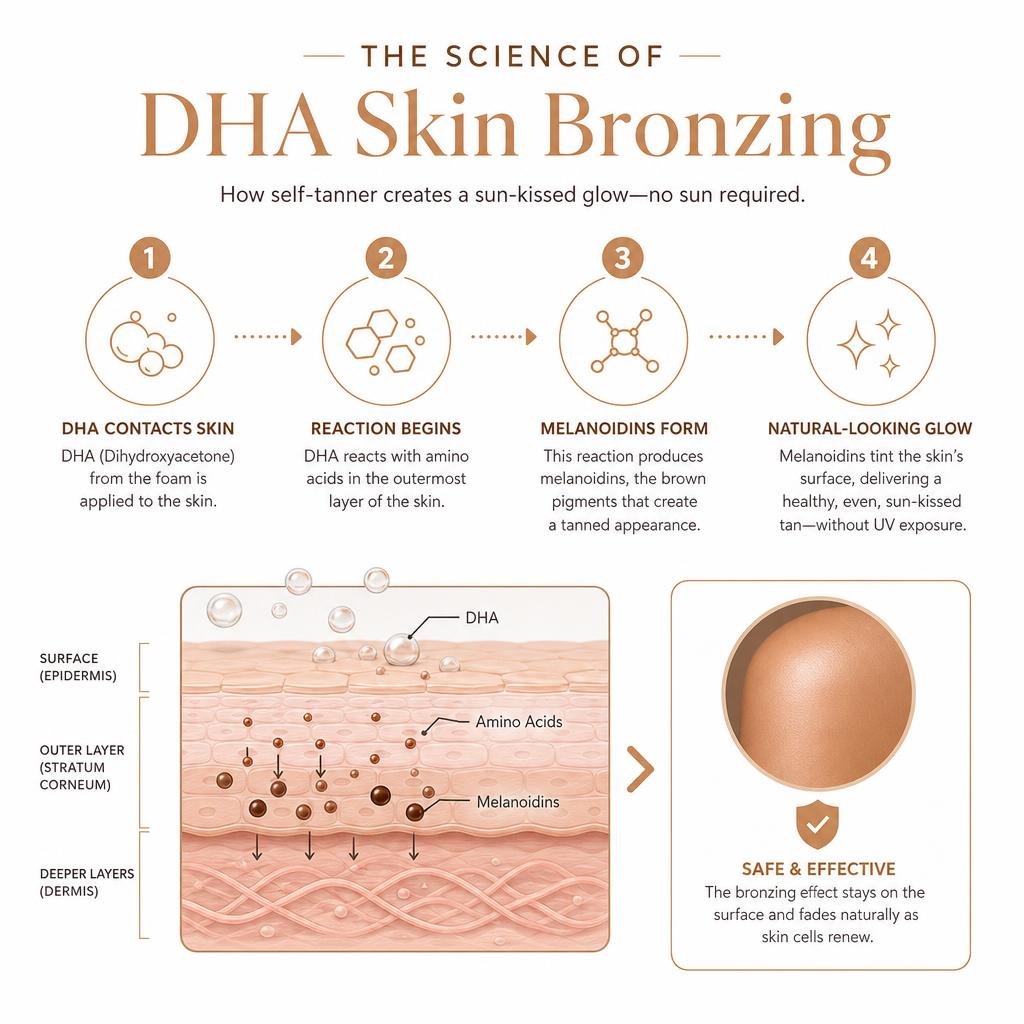
The foundation of any effective self-tanning product lies in its active ingredients. Dihydroxyacetone (DHA) is the primary component responsible for creating the tanned appearance. DHA reacts with amino acids in the outermost layer of the skin, producing melanoidins, which are brown pigments. This reaction is entirely superficial and does not involve UV radiation, making it a safe alternative to sun exposure. Some formulations also include erythrulose, a natural keto-sugar that works similarly to DHA but develops more slowly, leading to a longer-lasting and often more natural-looking tan with less risk of streaks.
When selecting a self-tanning foam, understanding the different formulations available is key to achieving your desired results. Traditional mousses, aerosol foams, and water mousses each offer unique application experiences and outcomes. Many products also incorporate a color guide, which is a temporary tint that helps you see where you’ve applied the product, ensuring even coverage and minimizing streaks. However, some advanced formulas are clear or have minimal guides, relying on their smooth application and quick absorption to prevent patchiness.
Evaluating Modern At-Home Self-Tanning Solutions
Feature Traditional Mousse Aerosol Foam Water Mousse Texture Light, airy, whipped Ultra-light, aerated, very fine Clear, lightweight, often translucent Application Easy to spread, good color guide Absorbs quickly, smooth, deeper penetration Spreads smoothly, often dye-free, no transfer Drying Time Moderate to fast Very fast, touch-dry in seconds Fast Color Guide Often has a visible guide May have a guide, some are clear Typically clear or translucent, dye-free Results Even, natural-looking tan Deep, long-lasting, controlled application Natural, streak-free, no color transfer User Experience Classic choice, good for beginners Advanced, quick, comfortable, works in patches Clean, worry-free, fresh feel Skincare Ingredients in At-Home Self-Tanning Solutions
Beyond the tanning actives, modern self-tanning foams are increasingly infused with beneficial skincare ingredients. This trend aligns with the growing consumer demand for “clean” beauty products that offer more than just cosmetic effects. Ingredients like hyaluronic acid and aloe vera are highly sought after for their hydrating and soothing properties. Hyaluronic acid is a powerful humectant that draws moisture into the skin, preventing the dryness often associated with self-tanners and promoting an even fade. Aloe vera calms the skin, reducing irritation and providing a smooth canvas for the tan.
Other nourishing additions include Kakadu plum, a rich source of Vitamin C, which offers antioxidant benefits and can brighten the skin. Vitamin E and jojoba oil are known for their moisturizing and skin-conditioning properties, helping to maintain skin health and extend tan longevity. Argan oil further enhances hydration and provides a luxurious feel, while coconut water infuses the skin with electrolytes and moisture, contributing to a healthy, radiant glow. These ingredients work synergistically to ensure the skin remains soft, supple, and hydrated, leading to a more natural-looking and long-lasting tan without patchiness.
Foam Formulations: Traditional Mousse vs Aerosol vs Water Mousse
The evolution of self-tanning foams has brought about distinct formulation types, each with its own advantages. Traditional mousses are well-loved for their whipped, airy texture, making them easy to apply and blend. They often come with a color guide, which is helpful for beginners to ensure even coverage.
Aerosol foams, such as those in Bondi Sands’ Aero range, represent a more advanced formulation. These are ultra-light and aerated, designed for rapid absorption and a touch-dry finish in seconds. Their deeper and quicker penetration allows for a more controlled application and often results in a deeper, longer-lasting tan. Users typically work in small sections due to their fast-drying nature.
Water mousses, like SOL by Jergens’ offering, are characterized by their clear or translucent, dye-free formulas. These provide a clean application experience with virtually no color transfer onto clothing or bedding. They spread smoothly and are designed to develop a natural, streak-free color without the need for a visible guide. The absence of dyes makes them a popular choice for those concerned about staining or residue. Each formulation aims to address common self-tanning concerns like stickiness, transfer, and uneven application, offering diverse options to suit individual preferences.
The Step-by-Step Technique for Streak-Free Application
Achieving a flawless, streak-free tan with self-tanning foam is less about the product itself and more about the preparation and application technique. A well-executed routine ensures an even color development and a natural-looking finish that fades beautifully. Precision in each step is crucial for optimal results.
Skin Preparation and Hydration Barriers
Proper skin preparation is the cornerstone of a perfect self-tan. We recommend exfoliating your entire body 24 hours before application. This removes dead skin cells, creating a smooth surface for the tan to adhere to evenly. Using an exfoliation mitt or a gentle scrub works best. After exfoliation, ensure your skin is clean, dry, and free from any lotions, deodorants, or perfumes, as these can create a barrier or react with the self-tanner, leading to uneven results.
Just before applying the foam, create hydration barriers on notoriously dry areas. Lightly moisturize spots like your knees, elbows, ankles, and hands with a thin layer of oil-free lotion. This prevents the self-tanner from over-developing on these areas, which tend to absorb more product and can become noticeably darker or patchy. This small step makes a significant difference in achieving a seamless tan.
Application and Blending Best Practices
For application, always use a dedicated tanning mitt. This not only protects your palms from staining but also helps distribute the foam evenly and smoothly. Pump the self-tanning foam directly onto the mitt. Start applying in long, sweeping motions, working on one body part at a time (e.g., one leg, then the other). Avoid circular rubbing initially, as this can create streaks. Ensure full coverage of each section before moving on.
For hard-to-reach areas like your back, a back applicator can be incredibly helpful. When it comes to hands and feet, use the minimal residue left on your mitt after tanning the rest of your body. Lightly sweep over these areas, paying attention to blending around knuckles, wrists, and ankles. Some users prefer to lightly buff with a clean, damp cloth on these areas after application to ensure a natural transition. Blending is key to avoiding harsh lines and achieving a professional-looking finish.

Development Times and Customizing Tan Depth
Understanding the development time of your chosen self-tanning foam is essential for customizing your tan depth and ensuring longevity. Different formulations offer varying speed and intensity, allowing you to tailor your glow to any occasion.
Express Foams vs Extended Development Formulas
The self-tanning market offers solutions for every schedule. Express foams, such as Bondi Sands’ 1 Hour Express or Ultra Express, are designed for rapid results. These typically develop a noticeable tan in as little as one hour, making them ideal for last-minute events. Some, like the Ultra Express with ColourLock Accelerator™ technology, can deliver a fully developed, deep glow in just 60 minutes, meaning you can rinse and be ready on the same day.
For those with more time, extended development formulas are left on for longer periods, often between 6-8 hours, or even overnight for the deepest results. Brands like Summer Skin Australia offer flexibility, allowing users to achieve a medium glow in 3 hours, a deep glow with two layers rinsed after 3 hours, or an intense glow by leaving it on overnight. This multi-layer approach and varying rinse times allow for significant customization of shade intensity. Gradual tanners can also be used to build color over time or maintain an existing tan, ensuring a consistent and even fade.
Selecting At-Home Self-Tanning Solutions for Your Skin Tone
Choosing the right self-tanning foam involves considering your natural skin tone and desired tan depth. Many brands offer a range of shades from light to ultra-dark. For fair skin, starting with a light or medium shade is often recommended to achieve a natural, sun-kissed look. Those with medium skin tones can opt for medium or dark formulas, while deeper skin tones can achieve a rich, bronzed glow with dark or ultra-dark options.
Beyond depth, undertones matter. Some foams are formulated with specific undertones to counteract orange hues or enhance natural warmth. For instance, some products aim for a golden tone, while others might lean towards an olive or deep bronze. Brands like Bondi Sands offer tools like their “Technocolor Shade Finder” or “Self Tan Quiz” to help users identify the best product for their unique skin. For those seeking truly natural-looking self-tanners, understanding how a product interacts with your skin’s undertones is paramount to avoiding an artificial appearance.
Frequently Asked Questions About Self-Tanning Foams
How Long Does a Self-Tanning Foam Last and How Should It Be Maintained?
A well-applied self-tan from foam typically lasts between five to seven days. Its longevity largely depends on proper skin preparation, application, and aftercare. To maintain your tan and ensure an even fade, we recommend daily moisturization with an oil-free lotion. Oil-based products can break down the tan prematurely. Gentle cleansing, avoiding harsh scrubbing or exfoliation, and patting your skin dry after showering will also help prolong your glow. Some users find that using a gradual tanning lotion every few days can extend the life of their tan even further.
Can You Apply Self-Tanning Foam Without Showering Afterwards?
Yes, several modern self-tanning foams are designed as “no-rinse” formulas. Products like Bondi Sands Liquid Gold Foam or certain clear mousses are formulated to be touch-dry in seconds and develop over several hours without needing to be washed off. These often have minimal or no color guide, reducing the risk of transfer. They allow you to apply, dress, and go about your day while the tan develops, offering ultimate convenience for busy lifestyles. Always check the product instructions, as some express foams still require a rinse after a short development period.
How Do You Prevent Transfer and the Traditional Fake Tan Smell?
Brands have made significant strides in addressing common self-tanning concerns. To prevent transfer onto clothing or bedding, many foams are formulated to be fast-drying and transfer-resistant, especially those with clear or minimal color guides. Allowing the product to fully dry before dressing is crucial. For added protection, wearing loose, dark clothing and using sheet protectors can be beneficial.
Regarding the “fake tan” smell, which is often a byproduct of the DHA reaction, many products now incorporate advanced odor-masking technologies and pleasant fragrances. Tropical scents like coconut or passion fruit are common, effectively neutralizing the typical self-tan aroma. Some brands also use naturally derived fragrances to appeal to consumers seeking cleaner formulations.
Conclusion
The world of self-tanning foams in September 2026 offers an impressive array of options for achieving a beautiful, sun-kissed glow safely and conveniently. By understanding the key ingredients, comparing different foam formulations, and mastering application techniques, you can confidently achieve professional-looking results at home. Prioritizing skin hydration through formulations enriched with hyaluronic acid, aloe vera, and other nourishing ingredients will ensure an even, long-lasting tan that fades beautifully.
Proper skin preparation, meticulous application with a mitt, and selecting a foam suited to your desired depth and development time are paramount. Whether you opt for a rapid express foam or a luxurious overnight treatment, the perfect self-tan is within reach. Embrace these modern solutions for a flawless, radiant complexion year-round.