

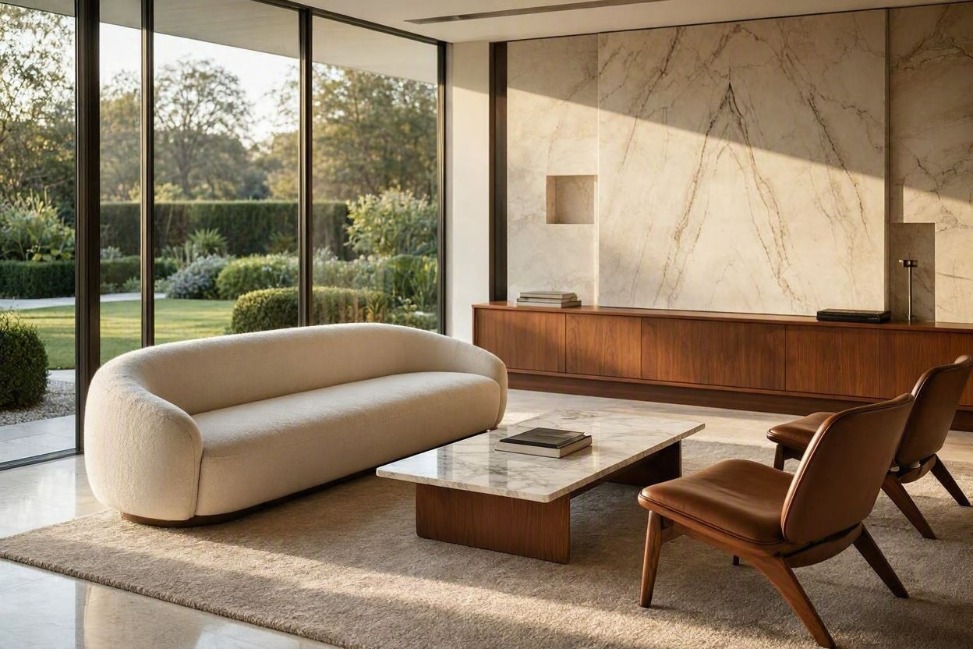
Bringing Mid-Century Modern Style Into a Modern Living Room
Mid-century modern design has remained influential because it offers something many contemporary homes still need: warmth without heaviness, character without excessive decoration, and furniture that feels architectural while remaining practical. The style is especially effective in a living room, where large upholstered pieces, technology, lighting, and storage all have to coexist.
Bringing the look into a modern interior does not require recreating a 1950s room or filling the space with vintage collectibles. A more successful approach is to borrow the proportions, materials, and sense of restraint that define the period, then combine them with present-day comfort and technology.
Start With Clean, Horizontal Lines
One of the clearest characteristics of mid-century furniture is its emphasis on simple geometry. Low sofas, elongated cabinets, slim tables, and furniture raised on tapered legs create a strong horizontal rhythm.
That quality can be particularly useful in a modern living room because it keeps larger pieces from feeling visually heavy. Furniture that sits slightly above the floor exposes more of the room and can make the layout feel lighter, even when the piece provides substantial storage.
Avoid interpreting “clean lines” as severe minimalism. Mid-century design often includes gentle curves, sculpted edges, and organic forms. The goal is clarity rather than emptiness.
Warm wood does much of the visual work in this style.
Wood is one of the easiest ways to introduce mid-century character. Walnut tones are strongly associated with the look, but other warm woods can create a similar effect. What matters is the sense of natural grain and depth.
A wood cabinet, coffee table, or side table can bring warmth to a room filled with painted walls, glass, metal, and upholstered seating. It also creates a useful bridge between vintage-inspired furniture and contemporary finishes.
There is no need for every wood surface to match. Slight variation can make a room feel collected over time. Keeping the undertones reasonably compatible is more important than buying a perfectly coordinated set.
Let One or Two Pieces Carry the Style
Rooms often feel more sophisticated when the design influence is concentrated rather than repeated everywhere. A sculptural lounge chair, distinctive coffee table, or mid-century modern media console can establish the direction without turning the room into a period set.
This approach also gives homeowners more freedom to keep comfortable contemporary sofas, modern lighting, and updated technology. A few strong pieces can communicate the aesthetic while the rest of the room remains flexible.
Choose the pieces that naturally attract attention. The media wall, central coffee table, and primary seating are strong candidates because they already shape the visual structure of the room.
Balance Vintage References With Modern Comfort
Authentic vintage furniture can be beautiful, but comfort standards and household needs have changed. Many homeowners prefer deeper sofas, more supportive cushions, hidden cable management, and larger storage capacity than original mid-century pieces offered.
Modern interpretations can preserve the proportions and materials of the style while adapting to current life. This is especially valuable around televisions and electronics, where furniture may need ventilation, cable openings, adjustable shelves, or space for a soundbar.
The best rooms do not force a choice between historical accuracy and practical living. They use the visual language of the period while accepting that a contemporary household has different needs.
Choose a Restrained Color Palette
Mid-century interiors are often associated with memorable colors such as mustard, olive, burnt orange, teal, and rust. These shades can work beautifully, but they are most effective when used selectively.
A modern living room might begin with warm white walls, wood furniture, and a neutral sofa, then introduce color through a chair, rug, artwork, or cushions. This makes the room easier to update and prevents the palette from becoming theatrical.
Earthy colors tend to pair naturally with warm wood. Black, cream, and brass can add contrast. If the architecture already contains strong materials such as stone or terrazzo, the furniture palette can remain quieter.
The room gets more interesting when straight lines are interrupted by softer shapes.
One reason mid-century design still feels fresh is the tension between geometry and nature. Rectangular storage pieces are often paired with rounded tables, curved chairs, or sculptural lighting.
Use that contrast to keep the living room from feeling rigid. If the sofa and media cabinet are strongly horizontal, consider a round coffee table or globe-shaped lamp. If the architecture is boxy, a curved lounge chair can soften the composition.
The goal is rhythm. Repeating only straight lines can feel flat, while using too many unusual shapes can create visual competition. A few deliberate contrasts are usually enough.
Lighting is where the room can feel especially sculptural.
Lighting is a major part of the style because mid-century interiors often treat lamps as sculptural objects. Floor lamps with angled arms, globe fixtures, cone shades, and simple metal details can add character without taking up much visual space.
Layering light is more useful than relying on one ceiling fixture. A floor lamp near a chair creates a reading zone, while a table lamp can make the room feel warmer in the evening. Dimmable lighting helps preserve a relaxed atmosphere around televisions and reflective surfaces.
Design trends show that a polished interior, lighting should support both function and mood. Even a beautiful lamp is more successful when it illuminates a place where people actually read, talk, or gather.
Keep the Media Wall Visually Calm
Televisions are much larger than they were during the original mid-century era, so the media wall requires some adaptation. The easiest way to maintain the style is to give the screen a grounded, furniture-like base rather than surrounding it with excessive equipment.
A long, low cabinet works well because it reinforces the horizontal proportions associated with the period. Closed doors can hide routers, game accessories, and cables, while carefully placed open areas can accommodate devices that need ventilation.
Limit decorative objects around the screen. A few ceramics, books, or pieces of art can add personality, but too many small items compete with the clean structure that makes the style appealing.
Texture usually does more than extra decoration.
Mid-century rooms often gain richness from materials rather than decoration. Wool rugs, woven fabrics, leather, wood grain, stone, and matte metals can make a restrained room feel layered.
This is a useful principle for contemporary luxury interiors because it creates depth without clutter. A neutral sofa can feel more considered when paired with a textured rug and warm wood table. A simple cabinet can become more distinctive through fluted doors or carefully chosen hardware.
When materials are interesting, the room needs fewer accessories. That helps preserve the open, composed feeling associated with the style.
Art keeps the room from feeling like a period exercise.
Mid-century modern should not become a formula. Art is one of the easiest ways to make the room reflect the people who live there. Large abstract pieces, photography, graphic prints, or even contemporary works can sit comfortably with vintage-inspired furniture.
Scale is important. One substantial artwork can often create more impact than a wall filled with many small pieces. In a room with architectural furniture, strong art can provide an expressive counterpoint.
The final result should feel like a modern home with a design point of view, not a showroom assembled from one era.
Edit the Room Before You Finish
The last step is subtraction. Mid-century modern design depends on breathing room around furniture, so every surface does not need to be filled. Leave visible floor space where possible and let important pieces stand apart.
Look at the living room from the main entrance and identify what attracts the eye first. If too many objects compete, remove a few. If the room feels cold, add texture or warmer lighting rather than more furniture.
A successful mid-century modern living room feels composed, comfortable, and easy to live in. By focusing on warm materials, strong proportions, functional storage, sculptural lighting, and a limited number of expressive pieces, homeowners can bring the spirit of the style into a contemporary space without making it feel stuck in the past.