

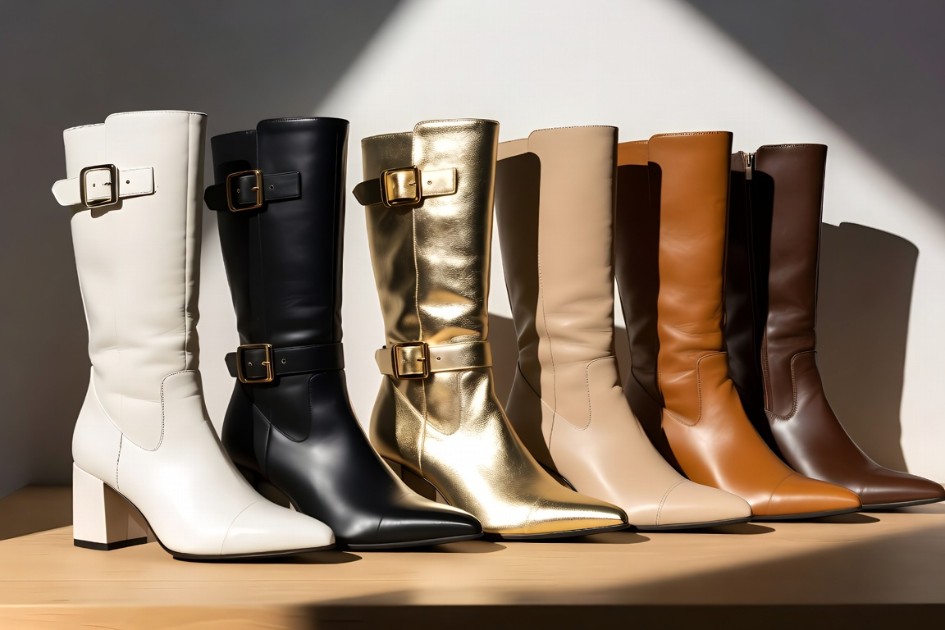
Luxury footwear can transform an outfit with remarkably little effort. Among the most versatile pieces, an exceptional pair of boots can bring structure, sophistication, and personality to a wardrobe. However, finding the perfect pair involves more than following seasonal trends. Silhouette, craftsmanship, materials, proportion, and versatility all influence whether a boot becomes a lasting wardrobe investment.
From polished leather ankle boots to elegant knee-high silhouettes, the right pair can complement everything from tailored trousers to evening dresses. Ultimately, luxury footwear should combine distinctive design with enduring wearability.
The best luxury boots do more than complete an outfit. They should give your toes room, hold your heel securely, move comfortably at the ankle, and fit your lower leg without pinching. Whether you are looking for everyday booties or extra wide calf boots, the right choice starts with measurements and ends with a real-world comfort test.
Boot sizing can be confusing because the number on the box tells only part of the story. Foot width, instep height, ankle volume, shaft circumference, sock thickness, and boot construction can all affect the final fit. A practical approach helps you find a pair that works for walking, sitting, commuting, and styling through the season.
Why Boot Fit Takes More Than a Shoe Size
Two luxury boots marked with the same size can feel completely different because brands use different lasts, which are the forms used to shape footwear. One style may have a roomy, rounded toe, while another narrows quickly over the forefoot. A larger size is not always the answer to a width issue, either. It can create excess length, heel slip, and instability.
Think about fit in several areas: foot length, forefoot width, instep height, ankle room, shaft width, and calf circumference. Feet may also swell slightly later in the day, and thick winter socks or insoles can take up extra space inside the shoes. The American Podiatric Medical Association notes that properly fitted boots should allow your toes to move while keeping the heel, instep, and ball of the foot secure, which is a useful standard when comparing styles.
How to Measure Your Feet at Home
- Place a piece of paper on a hard, level floor.
- Put on the socks you plan to wear with the boots.
- Stand naturally and trace each foot without angling the pen beneath it.
- Measure from the back of the heel to the longest toe.
- Measure across the widest part of each foot.
- Use the larger foot measurement when your feet differ slightly in size.
These numbers are a starting point, not a guarantee. The shape and depth of a boot’s interior can matter as much as its listed width. If you use an insole, measure and try on boots with it in place.
How to Measure Calves for Tall Luxury Boots
- Stand upright with your weight evenly distributed.
- Use a soft tape measure around the widest part of each calf.
- Keep the tape level and comfortably snug, not pulled tight.
- Repeat the measurement over leggings or jeans if you will tuck them into the boots.
- Record both calves, then compare the larger number with the product’s shaft chart.
Also, compare the shaft height. A boot may fit around the widest part of the calf but still feel restrictive higher on the leg or behind the knee. “Wide calf” is not a universal measurement, so the listed circumference and height are more useful than the label alone.
Boot Shapes That Can Improve Comfort
Round and Square Toes
Round and square toes generally provide more space at the front of the foot. They are strong options if pointed footwear tends to pinch your toes, and they pair easily with denim, relaxed trousers, casual dresses, and everyday layers.
Almond and Pointed Toes
Almond-shaped toe box and pointed toes create a polished, lengthened look, but comfort depends on how quickly the toe box narrows. Your longest toe should not press against the front, and the sides of your forefoot should not feel compressed.
Low and Block Heels
Low heels and wider block heels offer a steadier base than very narrow heels. They can make sense for travel, workdays, events that involve standing, and outfits that need a little elevation without sacrificing stability.
Closure Types and Adjustable Features
- Zippers: Convenient, but the shaft still needs enough room to close smoothly.
- Laces: Helpful for adjusting fit through the ankle and lower leg.
- Elastic panels: Add give as the leg moves and bends.
- Buckles and straps: Can fine-tune the fit around the ankle or shaft.
- Pull-on designs: Create a clean silhouette, but need a sufficiently wide opening.
Adjustable details should support natural movement, not create deep marks or limit circulation. If a zipper strains, a lace panel must be pulled to its limit, or a strap digs in while seated, the boot is likely too tight for regular wear.
Choosing Between Booties, Mid-Calf Boots, and Tall Boots
Booties
Booties remove the calf-fitting challenge while still offering coverage and structure. Try them with cropped jeans, wide-leg trousers, skirts, or casual dresses. Pay attention to ankle width, instep height, and the opening, especially if you prefer thicker socks.
Mid-Calf Boots
Mid-calf boots offer more coverage without always reaching the widest part of the calf. They work well with leggings, sweater dresses, and straight-leg pants, though the shaft edge should not sit too tightly against the leg.
Tall Boots
Tall boots require the most comparison shopping. Check the ankle fit, calf circumference, shaft height, and room for tucked-in clothing. Recent wide-calf boot coverage has also emphasized checking size charts rather than assuming every inclusive-fit label means the same thing.
How to Test Luxury Boots Before Keeping Them
- Try both boots on later in the day, when feet may be slightly fuller.
- Wear your intended socks, tights, leggings, or jeans.
- Walk indoors on a clean surface for several minutes.
- Check the toes, heel, ankle, instep, and calf for pressure points.
- Flex your foot, climb a few stairs if possible, and sit down to test shaft movement.
- Watch for rubbing, heel lift, sliding, pinching, or a zipper that feels strained.
A boot can feel pleasantly snug at first, particularly in structured leather, but it should never cause sharp pain, tingling, numbness, or pressure that worsens with movement.
Common Boot-Fitting Mistakes
- Buying a longer size in an attempt to solve a width problem.
- Measuring calves while seated instead of standing.
- Forgetting to account for thick socks and tucked-in layers.
- Assuming all “wide” or “wide calf” labels use the same measurements.
- Ignoring the shaft height and how the boot feels while sitting.
- Expecting stiff materials to stretch enough to repair a poor fit.
Simple Outfit Ideas
- Wear low-heel ankle boots with straight-leg jeans and a tucked sweater.
- Pair tall boots with a relaxed midi skirt and a cropped jacket.
- Balance chunky lug soles with soft knitwear or a flowing dress.
- Create a longer visual line by pairing tonal pants with boots in similar shades.
- Style western-inspired boots with simple denim and minimal layers.
- Combine combat boots with tailored trousers for a rugged but polished contrast.
Questions Readers Often Ask
Should Boots Feel Tight at First?
Mild snugness can be normal, but pain is not. Your toes need room to move, and your heel should stay secure without excessive slipping.
Can Thick Socks Fix Loose Boots?
Thicker socks may improve slight looseness, but they cannot correct a boot that is too long, unstable, or poorly shaped for your foot.
Are Wide Boots Always Wider in the Calf?
No. A wide-foot boot may still have a standard shaft, and a wide-calf style may not provide enough toe-box room. Check both measurements.
Final Checklist Before Buying
- Foot length and width checked.
- Calf circumference measured while standing.
- The shaft height compared with your leg.
- Space allowed for socks and tucked-in clothing.
- Heel height chosen for the activity you actually plan to do.
- Return terms reviewed before wearing boots outdoors.
Caring for Luxury Boots
Exceptional footwear deserves thoughtful maintenance. Clean leather regularly and condition it according to the manufacturer’s recommendations.
Suede requires specialized brushes and protective products. Additionally, storing boots properly can help preserve their shape between wears.
Shoe trees can prove particularly useful for leather styles. Furthermore, rotating footwear allows materials to rest between wears and can extend their lifespan.
Building a Sophisticated Boot Collection
A thoughtfully curated boot collection does not need dozens of pairs. Instead, focus on designs that serve distinct purposes.
A refined wardrobe might include an elegant ankle boot, a sophisticated knee-high silhouette, and a statement design for special occasions.
From there, colors and materials can expand according to your lifestyle. Ultimately, the goal is to create a collection where every pair has a purpose.
Conclusion
The perfect luxury boots should complement your wardrobe while expressing your individual style. Exceptional materials, thoughtful proportions, sophisticated silhouettes, and quality construction can transform footwear into a lasting investment.
Rather than chasing every seasonal trend, choose designs that offer versatility and enduring elegance. When carefully selected and properly maintained, luxury boots can become some of the most valuable pieces in a sophisticated wardrobe.
The right luxury boots support real life, not just a mirror check. Measure your feet and calves, compare the full boot shape, and test movement before committing. When fit comes first, comfort, stability, and personal style can work together as one.