

The Quiet Luxury Upgrade California Homeowners Are Finally Talking About
There is a particular kind of home upgrade that never makes the mood board but transforms daily life completely. Not the kitchen renovation you show off at dinner parties. Not the custom wine cellar or the infinity pool. Something quieter, more considered, and in the long run, more valuable than almost anything else you can do to a California property.
Residential elevators have arrived — not as a novelty for the ultra-wealthy, but as a thoughtful investment being made by discerning homeowners across the state who understand that true luxury is less about appearances and more about living well, without compromise, for as long as possible.
The demand for residential elevators in California has grown steadily over the past several years, driven not by a single trend but by a convergence of forces: an aging population that refuses to be defined by its limitations, a luxury real estate market in which multi-level homes are the norm, and a design industry that has finally caught up with what buyers actually want from their spaces.
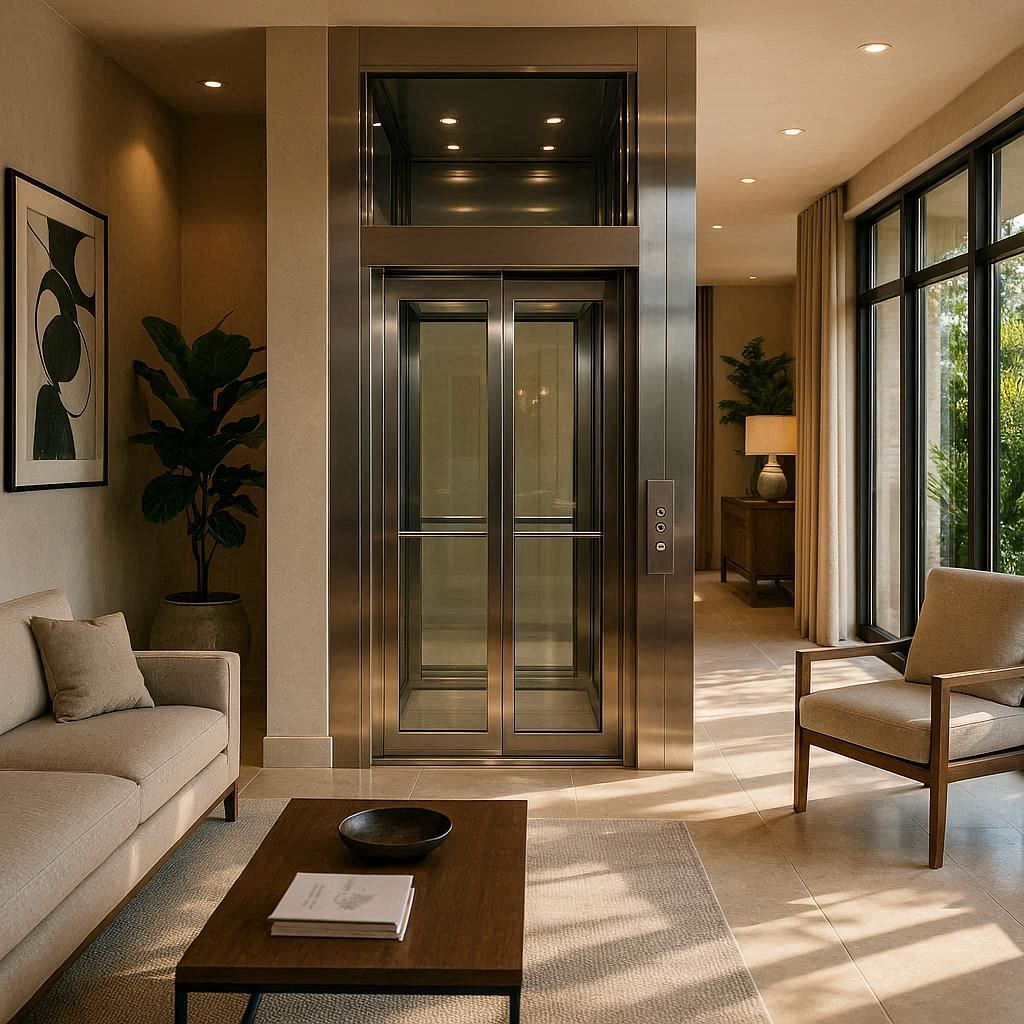
Residential elevators are quickly becoming a defining feature of modern luxury homes, especially in multi-level properties in California, where convenience and long-term livability matter. These systems allow homeowners to move seamlessly between floors without relying on stairs, making daily life safer, easier, and more comfortable.
Beyond functionality, residential elevators also enhance property value by adding a sophisticated design element that blends with both contemporary and classic interiors. As more homeowners focus on aging in place and future-proofing their homes, residential elevators continue to stand out as a practical upgrade that delivers both lifestyle benefits and lasting investment value.
California Living Was Made for This
Spend any time in the hills above Los Angeles, in the clifftop estates of Malibu, or in the split-level architectural gems scattered through Palm Springs, and one thing becomes obvious: California homes are vertical. The terrain demands it. The views require it. And the lifestyle that comes with them — decades spent in a home that grows with a family, hosts grandchildren, accommodates the unexpected — asks something more of the architecture.
A residential elevator answers that ask quietly and completely. It allows a home on three levels to function as fluidly as a single-story property. It means the primary suite on the top floor remains the primary suite indefinitely. It means the guest who arrives with a new knee replacement doesn’t have to navigate stairs the week of Thanksgiving. It means the house you fell in love with stays the house you live in, fully and without reservation, for the rest of your life.
According to the California Department of Housing and Community Development, accessibility modifications to residential properties are among the most impactful investments homeowners can make for long-term livability — a designation that carries particular weight in a state where property values make moving a costly alternative to adapting.
Residential Elevators Design That Belongs in a Home Like Yours
The conversation around residential elevators used to stall at aesthetics. The equipment looked utilitarian. The shaft was an interruption. The cab felt like it belonged in a medical facility rather than a home designed by an architect whose work appears in shelter magazines.
That conversation is over. The current generation of residential elevators — particularly the self-supporting, panoramic models now available — are objects of genuine design consideration. Transparent shafts that read as architectural features rather than insertions. Cabs with finishes that can be specified to complement the interior. Footprints compact enough to integrate into existing floor plans without sacrificing square footage that matters. Residential elevators are also reshaping how architects and designers plan luxury homes from the ground up. Instead of being treated as an afterthought, they are now integrated into layouts early in the design process to ensure seamless movement and optimal space use.
For homeowners working with interior designers or architects on a renovation, the elevator has become a conversation worth having early in the process. The best installations are the ones planned from the beginning rather than retrofitted as an afterthought. When done well, it disappears into the home — which is exactly the point.
What the Real Estate Market Already Knows
Luxury real estate agents in Southern California have noted a meaningful shift in how buyers respond to homes with elevators already installed. Where the feature was once considered niche — relevant only to buyers with specific mobility considerations — it has become a broader signal of how thoughtfully a property has been prepared for long-term use.
The National Association of Realtors has documented the growing importance of accessibility features across generational cohorts of buyers, with the trend accelerating as more buyers think beyond the immediate move-in and toward the decade ahead.
For sellers, it eliminates an objection before it can be raised. For buyers, it removes a planning cost and a decision. For both parties, it simplifies a transaction that is complicated enough already.
There is also the question of rental yield for those who hold income-producing properties. An elevator in a luxury rental significantly expands the pool of qualified tenants — particularly in markets like Beverly Hills, Bel Air, and the Palisades, where tenants expect a certain standard and will pay to find it.
The Practicalities Worth Knowing
California’s building code requires that residential elevator installations be permitted and inspected — a process that varies slightly by county but follows the same fundamental framework statewide. Working with an experienced installer who understands local permitting is not optional; it’s the difference between an installation that adds value and one that creates complications at the point of sale.
The California Building Standards Commission incorporates the ASME A17.1/CSA B44 safety code for elevators and escalators, which governs load capacity, door safety systems, emergency protocols, and more. Any reputable residential elevator company should be able to walk you through compliance requirements for your specific county before a contract is signed.
Installation timelines and costs vary depending on the system type and the existing structure of the home. Self-supporting models, which require no pit excavation or machine room, are generally the most practical choice for existing homes and can often be installed with minimal structural disruption. For new builds or full renovations, a traditionally shafted system may offer additional options worth exploring with your architect.
Residential elevators also play a key role in improving accessibility for households of all ages and mobility levels. In many modern homes, they eliminate the physical strain of stairs while creating a smoother flow between living spaces. Homeowners increasingly view residential elevators as a long-term solution rather than a luxury add-on, especially in larger California estates where multiple floors are standard. With advancements in design and engineering, today’s residential elevators are quieter, more energy-efficient, and easier to integrate into both new builds and existing homes, making them a smart and future-ready investment.
A Different Kind of Investment
Residential elevators are increasingly seen as a future-proof upgrade that supports both lifestyle and property value. As families plan to stay in their homes longer, these systems provide a practical way to maintain independence and comfort across every stage of life. They also appeal to buyers in competitive luxury markets, where thoughtful design and accessibility features can set a property apart. With modern technology making installations more flexible and visually refined, residential elevators are becoming a standard expectation in upscale multi-level homes rather than a rare luxury feature.The homes that hold their value longest in California are the ones that were designed — or upgraded — with genuine foresight. The ones where every decision reflected not just how the owners wanted to live this year, but how they intended to live for the next thirty.
An elevator is that kind of decision. It isn’t flashy. It won’t be the first thing a guest notices or the detail that photographs best for a listing. But it is, for the people who live in the home every day, one of the most meaningful things the house can offer: the certainty that it will work for them, beautifully and without limitation, for as long as they choose to stay. This shift reflects a growing demand for homes that prioritize comfort, accessibility, and long-term functionality. As a result, residential elevators are no longer just a convenience feature—they are becoming a core element of high-end residential design across California and other luxury real estate markets.
In a state where the homes are extraordinary and the terrain is unforgiving, that certainty is worth quite a lot.