


Transforming Educational Policy with Online EdD Programs
Online EdD programs are creating new opportunities for educators who want to advance into leadership roles without stepping away from their current careers. Many professionals are choosing online EdD programs because they offer flexibility, accessibility, and specialized leadership training designed for modern education systems. As technology continues to reshape higher education, online EdD programs are helping prepare future administrators, policymakers, and education leaders to manage evolving academic challenges more effectively.
Key Takeaways
- Flexible Learning: Online EdD programs let educators advance while maintaining work and personal commitments.
- Leadership Preparation: Graduates gain skills for K-12 and higher education administration to address leadership shortages.
- Innovative Curriculum: Programs emphasize practical projects, data-driven decisions, and research-based strategies.
- Policy Impact: Graduates can influence local, state, and national educational policies and reforms.
- Technology & Personalized Learning: Virtual classrooms, simulations, and AI tools enhance skill-building and engagement.
- Career Advancement: EdD holders gain access to higher-level leadership roles, with increased earning potential and professional influence.
The Rise of Online EdD Programs
Online Doctor of Education (EdD) programs have surged in popularity, offering educators more flexible and accessible options for earning advanced degrees. As the educational landscape changes, educators are increasingly turning to digital degree pathways, such as EdD programs online, which serve both seasoned professionals and those aspiring to become future school leaders. These programs are designed to fit the complex schedules of working adults and help address critical gaps in educational leadership nationwide.
Institutions are pioneering this movement by launching fully online EdD programs that equip educational leaders to meet today’s complex challenges. The convenience and reach of such programs enable greater access for educators from disparate geographic locations or under-resourced communities, expanding opportunities to attain a terminal degree while remaining in their own professional positions.
Addressing Leadership Shortages
The education sector faces an urgent shortage of skilled administrators, with research revealing that up to a quarter of school principals leave their posts within two years. The consequences reverberate throughout the system, leaving schools without experienced leaders and compounding difficulties for student achievement and staff retention. In response, online EdD programs have emerged as essential training grounds to help fill the growing leadership vacuum.
Programs built around practical experience emphasize culturally responsive, real-world leadership. Such models are designed to enable administrators to drive meaningful change at the K-12 level, intentionally targeting populations where the need for prepared and effective leaders is most acute.
According to U.S. News & World Report, online EdD programs at Youngstown State University are not only growing in number but are continuing to innovate in how they address current educational gaps through specialized curricula and expanded support structures.
Flexibility and Accessibility
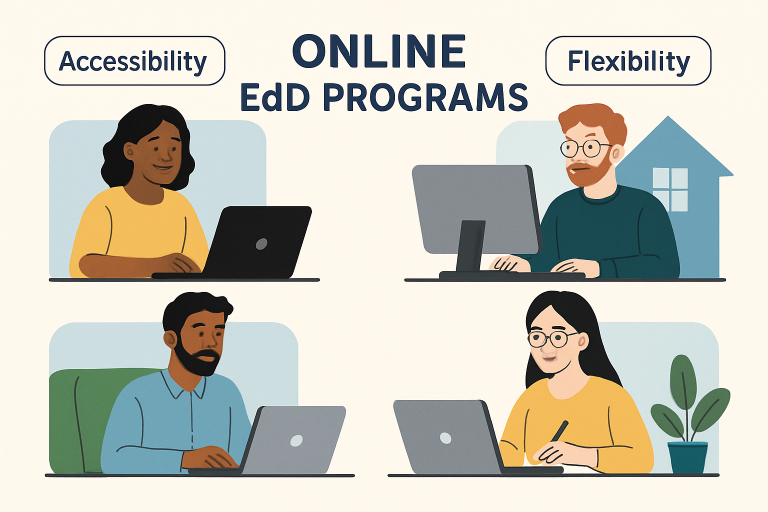
Flexibility is among the greatest advantages of online EdD programs. These programs allow educators to maintain their professional responsibilities and family commitments while pursuing advanced academic growth. With institutions such as the University of Michigan-Dearborn moving their EdD programs fully online, accessibility has dramatically improved for prospective students across entire states, rather than being limited to a specific campus or region.
Those in rural or underserved areas can participate without relocating or commuting, making advanced education far more attainable. This flexibility offers a new avenue for diverse candidates to rise into leadership roles, bringing fresh perspectives into the policymaking arena.
Innovative Curriculum Designs
Online EdD programs are reimagining what it means to prepare for leadership in today’s schools. University programs such as Drexel’s Doctorate in Educational Leadership and Management prioritize inquiry-driven projects and systemic thinking. This progressive approach ensures that graduates leave with a toolkit for continuous improvement and sustainable, student-focused solutions to policy and administration challenges.
This trend toward innovation also means leadership candidates gain exposure to current theories and data-driven decision-making. Such exposure helps them create policies that reflect today’s realities and best practices across a variety of learning environments.
Impact on Educational Policy
The influence of online EdD graduates does not stop at the district or school level. Armed with research acumen and policy design expertise, many take on advocacy roles, work in policy organizations, or even move into government positions.
These leaders use their knowledge to bridge the gap between theory and practical implementation, often spearheading committees, drafting new guidelines, or collaborating with lawmakers to advance educational equity and quality.
Technological Integration in Learning
Technological advancements have completely transformed the online learning experience. Digital classrooms are no longer static forums for discussion but interactive spaces enhanced with Virtual Reality (VR), Augmented Reality (AR), and immersive simulations. These technologies deepen learning by helping candidates engage directly in real-world administrative scenarios or practice responses to complex school situations in a risk-free environment.
According to Edutopia, the growth of VR and AR is quickly redefining the boundaries of classroom experiences, enabling personalized engagement and practical skill-building in online education settings.
Personalized Learning Experiences
The latest evolution in online EdD programs leverages Artificial Intelligence (AI) and machine learning tools that analyze student behaviors, adapt materials, and recommend tailored content based on individual progress. Adaptive learning platforms ensure that both instruction and assessment are customized to each student’s strengths and growth areas, increasing engagement and mastery of substantive leadership skills.
Educators who train under these systems are better prepared to understand and implement differentiated instruction and tailored policy strategies when they take on leadership roles, ensuring they can effectively meet the diverse needs of their school communities.
Final Thoughts
The proliferation of online EdD programs is subtly but powerfully reshaping the future of educational policy and leadership. By offering flexible, accessible, and innovative training, these programs open new opportunities for educators who aspire to influence policy and practice. As the landscape of education continues to evolve, the leaders emerging from these online pathways will be pivotal in creating systems that respond compassionately and intelligently to 21st-century educational challenges.