


Imagine strolling through a garden and suddenly being flooded with memories of a distant summer, solely because of the floral aroma in the air. This phenomenon, commonly known as the “Proustian effect,” highlights how deeply our sense of smell is integrated with memory and emotion. When you encounter a particular fragrance, such as those found in luxury perfumes, it can instantly whisk you back to significant moments in your life, connecting the present with vivid scenes from the past.
The science behind this connection is both fascinating and powerful, explaining why some scents become lifelong emotional signposts. Smells not only serve as reminders of people and places but also shape our personalities, preferences, and emotional wellbeing. In many ways, these olfactory cues influence who we are and how we experience the world.
Over time, researchers have discovered that our reactions to scents are not only psychological but also physiological. Familiar odors often calm us, while unpleasant or unexpected smells can trigger discomfort or stress responses. Whether through nostalgia or an instinctive reaction, our brains are wired to respond almost instantaneously to aromatic cues. For example, the smell of pine might make you think of holidays, while vanilla may remind you of family gatherings. These associations are unique and deeply personal, making the study of scent and memory an endlessly compelling area within neuroscience and psychology.
The Science Behind Scent and Memory
The human olfactory system is uniquely structured to create powerful links between scent, memory, and emotion. When you inhale an odor, the sensory information bypasses the thalamus and heads straight to the limbic system, the area of the brain responsible for emotion and memory formation. In particular, the amygdala and hippocampus are key players in this process, making the response to scent quick and usually involuntary. This pathway explains why a simple fragrance can evoke a strong emotional response or prompt detailed memories that visual or auditory cues might not unlock.
Research published in scientific journals such as Scientific American demonstrates that scents can revive autobiographical memories with greater intensity and emotional impact than other senses. These scent-triggered memories are also more likely to be associated with positive emotions, reduced stress, and an overall sense of wellbeing. As a result, scientists continue to explore ways to harness these innate connections for therapeutic, marketing, and social purposes.
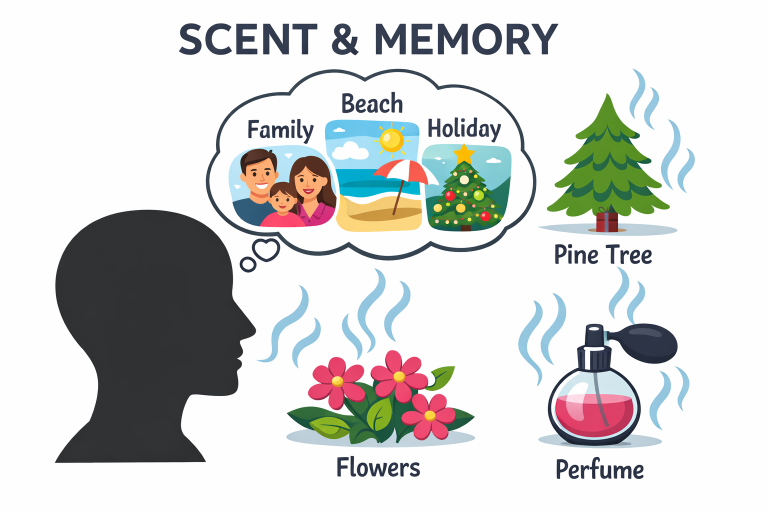
Emotional Responses to Familiar Smells
The emotional impact of familiar scents can be profound. For example, many people have reported that smelling cut grass or rain on warm asphalt can immediately transport them back to childhood or specific life moments. This is because the amygdala, the area responsible for emotional reactions, is directly involved in processing smell. When we encounter a familiar fragrance, the brain rapidly associates it with stored memories, and this can modify our mood in just seconds. Emotional responses are often more intense to odors than to images or sounds, according to research published by Psychology Today. Scents often bypass logical reasoning and spark instinctive emotional shifts, which is why a certain perfume or the aroma of freshly baked bread can elicit comfort, happiness, or even sadness and longing.
Scent-Induced Memory Recall in Mental Health
The therapeutic potential of scent is gaining recognition in mental health care. Aromatherapy, for example, has long been used as a supportive treatment for anxiety and depression. The ability of scent to quickly evoke positive memories and feelings can help reduce symptoms of stress, and for individuals with depression, this offers a natural avenue toward emotional regulation. In recent clinical studies, including work conducted at the University of Pittsburgh, familiar scents have helped participants recall memories that bring emotional comfort or clarity. This method is now being considered for patients with early-stage dementia, as these scent-triggered memories are often among the last to fade and can spark richer communication between individuals and their caregivers.
Cultural Significance of Scents
Across cultures, scents hold unique meanings and significance. Many societies use incense, spices, or specific aromatic plants in ceremonies to evoke memories, honor traditions, or mark transitions. The World Sensorium project gathered fragrances from 225 countries, capturing aromas linked to national identity and heritage. This collective olfactory memory helps preserve cultural narratives and creates a tapestry of sensory experience that unites communities through shared scents.
Cultural associations with scent also influence the fragrances used in luxury perfumery and household products, reflecting not only personal preferences but also the values of a particular region or society.
Practical Applications of Scent-Memory Connection
The profound connection between scent and memory has practical uses in everyday life, business, and the arts. For example, companies use signature fragrances in hotel lobbies, boutiques, and retail spaces to create memorable customer experiences and cultivate brand identity. In therapy, certain scents are used to support emotional healing, help unlock repressed memories, or alleviate symptoms of trauma.
There is also growing interest in the creative use of scent within art installations, as pioneered by institutions. By combining scent with visual or auditory stimuli, artists explore new ways of storytelling, inviting participants to access forgotten aspects of their personal histories.
Conclusion
The intricate ties between scent and memory continue to shape our lives, influencing our emotions, choices, and cultural identities. As scientists, artists, and mental health professionals study these links further, there is growing potential for scent to enrich everything from therapy and marketing to art and personal wellbeing. Understanding and embracing the power of scent can ultimately lead to a deeper appreciation of how we remember, connect, and experience the world.