
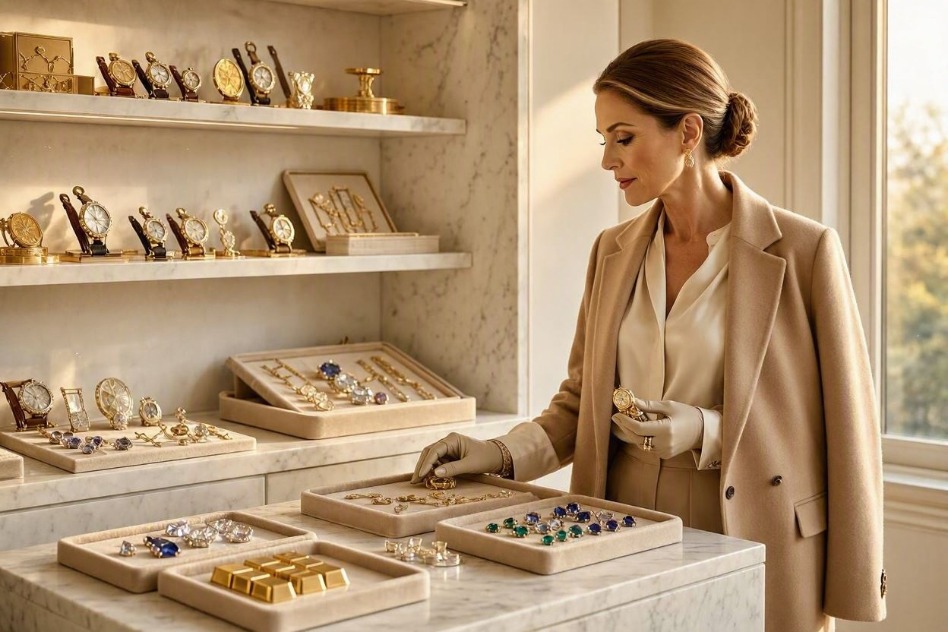
A thoughtfully curated luxury collection can hold far more than financial value, preserving craftsmanship, history, personal memories, and timeless elegance.
Key Takeaways
- Sort jewelry, coins, bullion, flatware, watches, and loose stones before requesting an offer.
- Record metal marks, coin dates, mint marks, certificates, and any identifying details.
- Do not clean or polish collectible coins before an experienced professional examines them.
- Distinguish melt value from resale value and collector value.
- Compare at least two or three itemized offers when practical.
- Choose a buyer who clearly explains weighing, testing, deductions, and payment terms.
Selling inherited jewelry, an old coin collection, bullion, or unwanted precious-metal items can feel overwhelming when different pieces may have very different forms of value. Before accepting an offer, a little preparation can help you describe what you own, protect items that may be collectible, and compare quotes more confidently. Sellers who want to understand the process can begin by reviewing the types of items that Precious Elements Jewelry & Coin handles.
The goal is not to become an appraiser overnight. It is to arrive prepared with organized items, useful details, and questions that make the valuation process easier to follow. A fair sale begins with knowing whether an item is being considered for metal content, resale potential, collector demand, or a combination of these factors.
Why Preparation Matters Before a Sale
Items that look alike can receive very different offers. Weight and metal purity matter for scrap jewelry and bullion, while condition, maker, design, rarity, and demand may matter more for a signed bracelet, vintage watch, or unusual coin. One jewelry box can contain broken pieces, best valued for their metal content, alongside complete pieces with meaningful resale potential.
Preparation also makes it easier to compare gold buyers on more than an advertised percentage or a verbal estimate. A total payout only has meaning when you understand which items were included, the purity assigned to each item, and whether any charges or exclusions affected the calculation.
Step One: Gather and Sort Everything
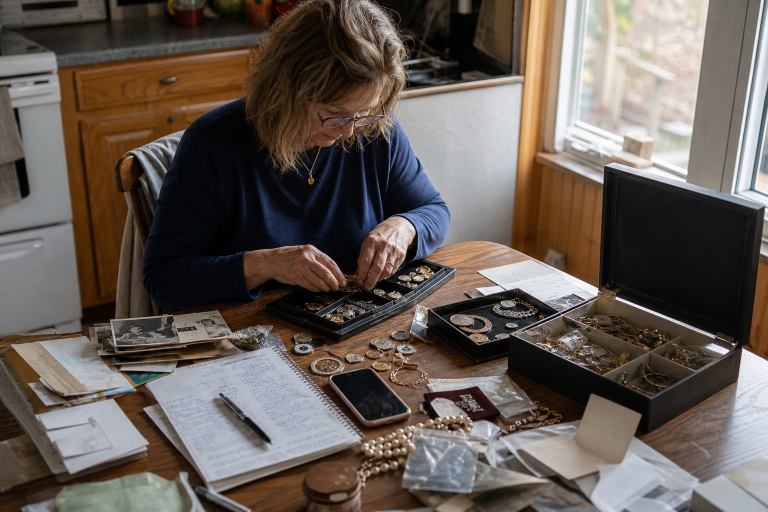
Start by placing items into clear groups: gold jewelry, silver jewelry, platinum, coins, bullion, watches, flatware, and loose stones. Keep pairs, matching sets, original coin holders, branded boxes, and paperwork together. Separate heavily damaged jewelry from intact pieces, but do not assume damage makes an item worthless. A broken signed piece may still have resale value, while an unmarked item may require testing.
Create a basic inventory as you work. Include a short description, quantity, visible marks, approximate weight if known, and a photo of items that appear valuable. This list helps prevent mix-ups and provides a useful reference when comparing offers later.
Step Two: Check Marks, Dates, and Paperwork
Examine jewelry under good light for marks such as 10K, 14K, 18K, 22K, 925, sterling, platinum, or fineness numbers. A karat mark indicates the proportion of gold in a gold alloy, while “925” commonly identifies sterling silver. The FTC explains common terminology for gold, platinum, silver, plated items, and vermeil in its guidance on jewelry markings and metal descriptions.
For coins, record the denomination, year, mint mark, and any visible design variation or damage. Gather receipts, grading reports, certificates of authenticity, prior appraisals, and original packaging. Marks and paperwork are useful clues, but they do not replace professional testing or authentication.
Step Three: Handle Cleaning With Care
For ordinary jewelry, gentle dust removal with a soft cloth is usually safer than aggressive polishing. Avoid abrasive cleaners, polishing wheels, harsh chemicals, and home experiments that can scratch metal, loosen stones, or alter finishes.
Take extra care with coins. Do not scrub, dip, polish, or “improve” a coin before it is evaluated, especially if it may be old, scarce, or collectible. Surface condition can affect a collector’s appeal, and the descriptions in a coin grading guide show why details such as wear, luster, marks, and overall preservation matter to collectors.
Step Four: Estimate Metal Content
A simple estimate can provide context before you request an offer:
Estimated metal value = weight × purity × current market price
This is only a starting point. Karat describes gold purity as parts per 24, while fineness is often expressed as parts per thousand. Stones, clasps, solder, hollow construction, and non-metal components can affect the weight used in a final calculation. A buyer may also account for testing, refining, resale costs, and market risk.
Step Five: Separate Melt Value From Collector Value
Melt value is based on the recoverable precious metal. Resale value reflects what a completed item may sell for as jewelry, a watch, or decorative silver. Collector value is a potential premium tied to rarity, condition, historical interest, craftsmanship, a notable maker, or current demand.
An old coin should not automatically be sold as scrap, and an older ring is not automatically an antique treasure. Consider a specialist opinion before selling graded coins, coins with unusual varieties, signed jewelry, estate pieces, luxury watches, or items with strong provenance.
Step Six: Research the Market and Compare Offers
Check current precious-metal prices on the same day you plan to seek quotes because market prices can move. For collectible items, look at comparable sales cautiously and compare pieces with similar dates, condition, certification, and design. A headline spot price is not necessarily the amount paid for a finished jewelry item or a small lot of mixed scrap.
Questions to Ask Each Buyer
- Will each item be weighed separately and in view?
- How will metal purity be tested?
- Is the offer based on melt value, resale value, collector value, or more than one category?
- Are stones, non-metal parts, refining, shipping, or other deductions included?
- Can I receive a written breakdown before I decide?
- When and how will payment be made?
How to Spot a Trustworthy Buyer
Look for a clear business identity, working contact information, and a process that does not rely on pressure. A credible buyer should be willing to explain the scale, testing method, item categories, and payment terms. Keep a receipt listing the items sold, weights or descriptions, offered amount, and payment details.
Common Mistakes to Avoid
- Accepting the first offer without understanding how it was calculated.
- Cleaning collectible coins before seeking an evaluation.
- Mixing different metals into one group without asking for an explanation.
- Leaving certificates, grading reports, original boxes, or matching pieces at home.
- Assuming every old item has collector value, or that every damaged item is only scrap.
- Agreeing to a transaction without a written receipt or clear payment terms.
Final Checklist for Sellers
- Sort and photograph your items.
- Record marks, dates, mint marks, and distinguishing features.
- Gather paperwork, holders, and original packaging.
- Handle coins gently and avoid polishing them.
- Check current market conditions.
- Compare offers using written details, not advertising alone.
- Keep documentation after the sale.
Conclusion
Careful preparation makes a sale more transparent and less stressful. By organizing items, preserving potentially collectible pieces, understanding basic metal terminology, and requesting clear calculations, sellers can make more informed decisions when selling jewelry, coins, and precious metals in 2026.