

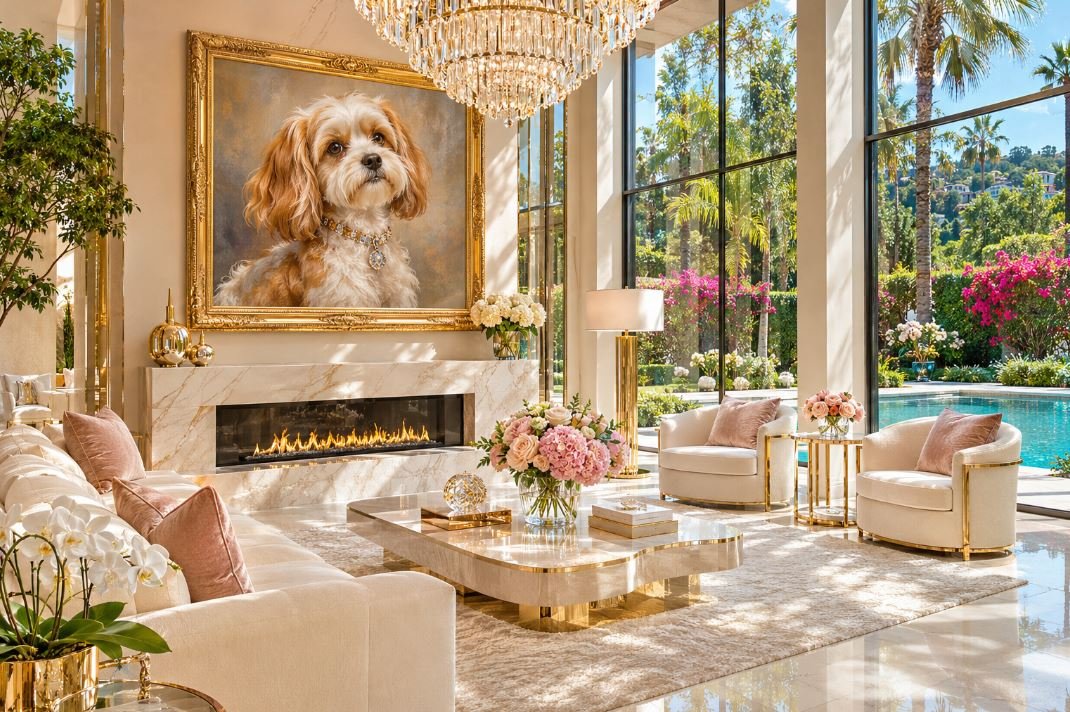
Make Your Space Feel More Personal
Luxury interior design is about more than exquisite furniture, beautiful finishes, and carefully coordinated décor. The most memorable homes combine elegant surroundings with meaningful details that reflect the people who live there. From cherished family photographs to custom artwork and thoughtfully arranged living spaces, personal touches can transform a beautifully decorated residence into a welcoming retreat.
Creating a luxury home that feels genuinely personal does not require an extensive renovation or an entirely new collection of furnishings. Instead, meaningful objects, comfortable arrangements, and distinctive decorative accents can introduce warmth and individuality. These six luxury home décor ideas reveal how to create an inviting interior without sacrificing beautiful design.
Key Takeaways
- Personal artwork, photographs, and treasured keepsakes introduce warmth and individuality into luxury interiors.
- Custom pet portraits offer meaningful ways to celebrate beloved companions through elegant home décor.
- Unexpected decorative pieces and playful artwork can reflect a homeowner’s personality and sense of humor.
- Beautiful interiors become more inviting when everyday essentials remain comfortable and accessible.
- Thoughtful furniture arrangements and welcoming details enhance the experience of entertaining guests.
- Flexible displays allow luxury homes to evolve naturally with changing interests, memories, and lifestyles.
The Beauty of Creating a Personal Luxury Home
There is a difference between admiring a room and wanting to spend the evening in it.
You can appreciate the proportions of a sofa, the veining in a marble table, or the way a pair of lamps frames a fireplace. But the invitation to stay often comes from something smaller: a comfortable chair pulled toward the conversation, a stack of books someone is actually reading, a photograph with a story behind it.
These details take time to accumulate. They come from habits, relationships, and the things people choose to keep through several moves.
If your home looks finished but still feels a little unfamiliar, consider what it reveals about you. A few personal additions can give beautiful surroundings a warmth that is difficult to buy all at once.
1. Start With Something You Would Never Find in a Showroom
Look around your main living space. Is there anything in it that a visitor might ask you about?
It could be a small painting bought on holiday, a ceramic bowl made by a friend, or a photograph of your parents before you were born. The object doesn’t need to be rare or valuable. Having a reason to care about it is enough.
Pieces like these can disappear when people redecorate. Their colors don’t quite fit, the frame needs replacing, or there seems to be nowhere suitable to put them. Eventually, everything personal ends up in a drawer while the shelves fill with accessories chosen to complete a look.
Try bringing one thing back. Give it a proper frame, place it where you’ll see it, or move a decorative object to make room.
You may need to experiment. A small, irregular bowl might feel lost on a large console but look lovely beside a reading chair. An old photograph can gain presence with a generous mat and a simple frame. The aim is to find a setting where you can enjoy what you already own.
2. Give Everyday Companions a Place in the Picture
Family photographs tend to record occasions: weddings, holidays, graduations, birthdays. Pets occupy much more ordinary territory.
They’re there when you answer emails at the kitchen table. They follow you upstairs, claim the warm laundry, and settle into the same corner while you watch television. Their presence becomes part of how the house feels.
A portrait can give that familiar face a place among the other images you display. When choosing pet portrait paintings, start with a photograph that captures an expression you recognize. The alert look your dog gives you before a walk might mean more than a perfectly posed picture taken by someone else.
Consider where you’d genuinely enjoy seeing it. A smaller piece near your desk can feel intimate. A framed portrait among family photographs can make a natural addition to an existing arrangement.
Choose the style with the rest of your home in mind, but allow yourself some freedom. A picture you love doesn’t have to reproduce the exact palette of the room.
3. Let One Piece Show Your Sense of Humor
Some of the most enjoyable homes contain a detail that catches you off guard.
A serious collection of books might share a shelf with an absurd little sculpture. A formal hallway might hold a photograph that makes the family laugh every time they explain it. Such choices give visitors a glimpse of the people behind the decorating decisions.
For a household with a much-loved animal, royal pet portraits can offer that kind of surprise. At first glance, the clothing and composition suggest a traditional portrait. Then you notice that the distinguished subject is the dog currently asleep beneath the coffee table.
The idea works particularly well when it reflects a joke the household already shares. Perhaps your cat behaves as though every chair belongs to her. Perhaps your small dog receives visitors with the gravity of someone conducting official business.
Let the portrait carry the humor. It doesn’t need a collection of themed accessories around it. A quiet setting gives people time to notice the face and make the connection for themselves.
4. Keep the Objects You Actually Enjoy Using
Personal character also comes from the things you reach for.
A favorite cup has a particular weight in your hand. A reading lamp falls at the right angle. A soft throw stays near the sofa because someone uses it every evening.
These are useful clues when deciding what deserves space in a room. Before buying another accessory, notice what is already part of your routine and whether it has a convenient place.
Keep the books you’re reading within reach of a comfortable seat. Leave room on the table for a drink. If you enjoy music in the evening, make the controls easy to access rather than hiding them behind objects that must be moved first.
Wear can be part of an object’s appeal, too. A leather chair softens, a wooden table acquires small marks, and a much-used cookbook opens at a familiar page. Care for these things, repair them when needed, and let them continue earning their place.
A home becomes easier to enjoy when its most attractive spaces are available for ordinary use.
5. Make Guests Feel Welcome in Small, Specific Ways
Hospitality is often a matter of noticing what someone might need before they have to ask.
Sit in the chair a guest usually takes. Is there somewhere to put a glass? Can they speak comfortably to the person opposite? Does a lamp shine directly into their eyes?
A room can look generously furnished while offering surprisingly few comfortable places to settle. A small side table or a slight change in seating position may improve the experience more than another decorative purchase.
Think about arrival as well. Offer a clear place for a coat and bag. Make room by the door rather than expecting visitors to balance their belongings while greeting everyone.
If you have pets, ask guests whether they’re comfortable around them. Someone can admire the portrait on the wall and still prefer not to have its subject sitting in their lap. Arranging a familiar resting place for your animal gives everyone a little more choice.
Once people are seated comfortably, you can stop managing the room and join the conversation.
6. Leave Space for the Home to Change With You
A finished room can create an unexpected problem: you become reluctant to disturb it.
A new photograph has nowhere to go. A gift feels difficult to place. An interest you’ve recently taken up leaves no trace because the shelves were arranged around an earlier version of your life.
Allow a few areas to remain flexible. A picture ledge makes photographs easy to change. A shelf can hold recent finds. A noticeboard in a private room gives postcards, notes, and small pictures somewhere to gather.
You don’t have to display everything permanently. Put things away for a while, bring others out, and see what you miss. Moving a familiar object can help you appreciate it again.
Over time, the room may become less coordinated than it was on the day it was decorated. It may also become more interesting. Someone notices a new photograph, asks about the portrait, or picks up a book you’ve just finished.
And you have something to tell them.
Conclusion
Create a Luxury Home That Reflects Your Life
The most beautiful luxury homes offer more than impressive architecture and exquisite furnishings. They tell the stories of the people who live within them. Meaningful artwork, cherished photographs, custom pet portraits, and thoughtfully arranged spaces introduce personality into even the most carefully designed interiors.
True luxury also embraces comfort, hospitality, and everyday enjoyment. A favorite reading chair, a treasured family photograph, or a distinctive piece of artwork can make a room feel more inviting than an expensive decorative accessory.
Ultimately, personalizing a luxury home is an ongoing process. As interests evolve and new memories are created, the interior can continue reflecting life’s meaningful experiences. The result is a beautiful living environment that feels elegant, welcoming, and unmistakably your own.