
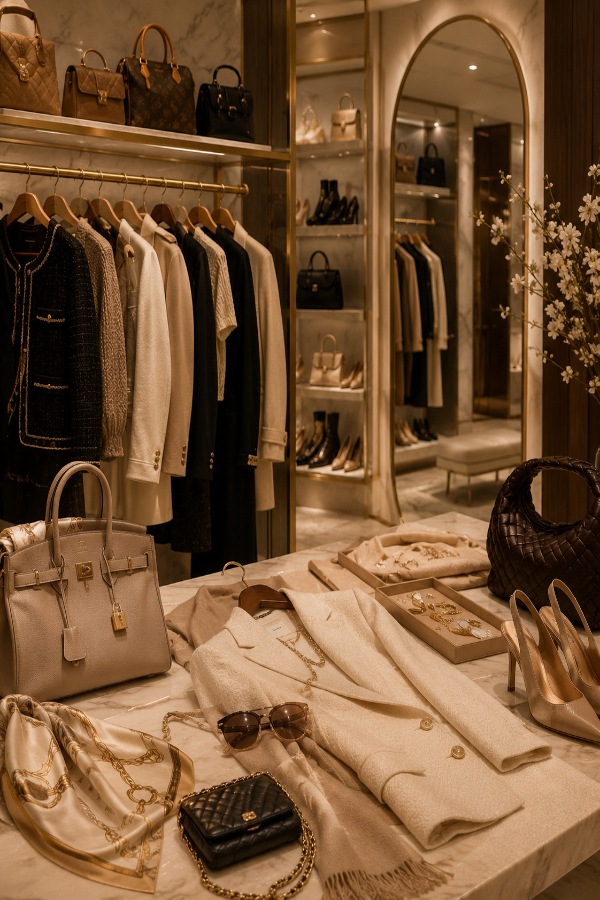
Luxury fashion is about more than a recognizable name. The finest designer pieces combine exceptional materials, distinctive design, craftsmanship, heritage, and an unmistakable sense of personal style. For the luxury shopper, buying designer fashion is therefore less about following every trend and more about understanding what makes a piece genuinely worth owning.
From a Chanel jacket to a Dior handbag, a Hermès silk scarf, a Louis Vuitton travel piece, a Gucci loafer, a Saint Laurent evening look, or a Bottega Veneta leather accessory, the right purchase can become an important part of a sophisticated wardrobe. Major luxury houses continue to balance heritage with contemporary design, creating pieces that reflect both their identities and changing ideas of modern luxury.
Understand What Luxury Really Means
The word luxury is often associated with price, but price alone does not determine quality.
When considering a designer purchase, look beyond the logo. Examine the construction, materials, stitching, hardware, lining, finishing, and overall proportions. A beautifully made garment should feel considered from the inside out.
Luxury fashion houses such as Gucci, Saint Laurent, Bottega Veneta, Balenciaga, and Brioni are recognized for distinctive design languages and craftsmanship.
Likewise, Louis Vuitton, Dior, Celine, Loewe, Fendi, Givenchy, Loro Piana, and other renowned maisons have built identities around specialized craftsmanship and recognizable aesthetics.
The most discerning shoppers understand these differences before making a purchase.
Choose a Designer House That Reflects Your Style
Every luxury fashion house communicates something different.
Chanel is associated with Parisian elegance, refined tailoring, quilted leather, pearls, and distinctive house codes. Dior offers an unmistakably polished feminine aesthetic, while Hermès is renowned for exceptional leather goods, silk, and meticulous craftsmanship.
Louis Vuitton combines heritage travel design with contemporary designer fashion. Gucci frequently embraces expressive Italian style, while Saint Laurent is known for a sharper, sophisticated approach to modern dressing.
Bottega Veneta offers another interpretation of luxury through leather craftsmanship and distinctive silhouettes. Kering describes the house as renowned for its luxury leather goods, while highlighting Gucci and Saint Laurent for their respective Italian craftsmanship and fashion heritage.
The goal is not to own every famous label. Instead, discover the houses whose aesthetic naturally complements your wardrobe.
Invest in Pieces You Will Actually Wear
One of the biggest mistakes luxury shoppers make is purchasing something simply because it is desirable.
A spectacular runway piece may photograph beautifully but remain untouched in your closet.
Before purchasing, consider how often you can realistically wear it. A beautifully tailored blazer, leather handbag, cashmere coat, silk scarf, elegant watch, or exceptional pair of shoes may offer considerably more wardrobe value than an extremely seasonal statement piece.
Think about your lifestyle, existing wardrobe, travel schedule, professional environment, and personal aesthetic.
The best luxury purchase should feel exciting today while remaining useful tomorrow.
Know the Difference Between Trends and Icons
Luxury fashion constantly evolves, but certain designs develop enduring cultural significance.
An iconic piece can become recognizable without being overly dependent on seasonal trends. Dior’s handbag heritage provides a strong example. The house continues to reinterpret established signatures while introducing new silhouettes and materials.
The same principle applies across luxury fashion.
Rather than asking, “Is this trending?” consider asking:
- Does the design suit my personal style?
- Will I still enjoy it several years from now?
- Does the piece represent the identity of the house?
- Can I style it in multiple ways?
- Is the craftsmanship evident?
- Does it complement what I already own?
These questions encourage a more sophisticated approach to luxury shopping.
Examine Materials and Construction
Designer fashion materials should always be part of the conversation.
Fine leather, silk, cashmere, wool, suede, and expertly constructed technical fabrics can dramatically influence how a garment feels and performs. However, the material itself is only one consideration.
Look closely at stitching and finishing. Examine seams, zippers, buttons, clasps, linings, handles, and edges. Luxury is often revealed through details that are barely noticeable at first glance.
Dior, for example, emphasizes savoir-faire and construction throughout its current handbag collections. Some designs incorporate hand-stitching and carefully finished house signatures.
This attention to detail is part of what separates exceptional fashion from ordinary luxury-inspired merchandise.
Consider the Cost Per Wear
A luxury purchase can become more rational when you consider how frequently you will use it.
Imagine spending more on a beautifully constructed handbag that you carry several times each week. Over several years, its cost per wear may become considerably more attractive than purchasing multiple inexpensive alternatives that quickly lose their appeal.
The same principle works with outerwear, shoes, tailoring, luggage, and accessories.
Instead of asking only, “How much does it cost?” ask:
“How much value will this piece provide throughout my lifestyle?”
That question changes the entire luxury shopping experience.
Build a Luxury Designer Fashion Wardrobe Around Foundations
A sophisticated wardrobe does not need to be overflowing with designer logos.
Begin with exceptional foundations.
A beautifully tailored black blazer can work for years. A refined leather handbag can transition from daytime meetings to dinner. A cashmere sweater can become a seasonal staple. A silk scarf can transform a simple outfit. A perfectly cut pair of trousers can support countless combinations.
Once these foundations are established, introduce more distinctive pieces.
This approach creates a wardrobe that feels curated rather than purchased.
Know When a Statement Piece Is Worth It
There is still a place for dramatic fashion.
A sculptural evening gown, extraordinary handbag, embellished jacket, statement shoe, or bold runway-inspired piece can bring personality to a luxury wardrobe.
The key is balance.
Pairing one dramatic designer piece with understated essentials often creates a more sophisticated effect than wearing multiple recognizable logos simultaneously.
Luxury styling is frequently about restraint.
Shop Through Trusted Channels
Where you purchase designer fashion matters.
For major purchases, prioritize official boutiques, authorized retailers, and established luxury specialists. This is particularly important for highly sought-after handbags, watches, jewelry, and limited-edition pieces.
A reputable purchasing experience should provide clear information about authenticity, condition, materials, returns, and aftercare.
When purchasing pre-owned luxury, research the seller carefully and request appropriate documentation when available.
The objective is simple: protect the value of the investment while enjoying the fashion itself.
Explore the World of Pre-Owned Luxury
Pre-owned designer fashion can provide another sophisticated route into luxury.
Vintage Chanel, Hermès, Louis Vuitton, Dior, Gucci, and other established houses can offer shoppers access to discontinued designs, archival pieces, rare materials, and older collections that are no longer available through traditional boutiques.
Vintage fashion also offers something increasingly valuable: individuality.
Rather than wearing exactly what appears in the current season’s campaign, a carefully sourced vintage piece can give a wardrobe an entirely personal character.
For collectors, archival fashion can also provide a fascinating connection to the history of a maison.
Think About the Designer’s Heritage
Heritage adds another dimension to luxury fashion.
Many major houses have developed their identities over decades or even centuries. LVMH’s fashion and leather goods portfolio, for example, includes houses such as Louis Vuitton, Christian Dior, Celine, Fendi, Loewe, Givenchy, and Loro Piana, each with its own heritage and creative identity.
Kering similarly identifies Gucci, Saint Laurent, Bottega Veneta, Balenciaga, McQueen, and Brioni among its fashion and leather goods houses.
Understanding that history makes shopping more interesting.
You are not simply choosing a jacket or handbag. You are choosing a piece of a design language that has evolved over generations.
Pay Attention to Fit
Even the most expensive garment can look ordinary when the fit is wrong.
Before purchasing designer fashion clothing, examine the shoulders, sleeves, waist, rise, hem, and overall proportions. A skilled tailor can make certain adjustments, but some structural elements cannot easily be changed.
For luxury clothing, fit should feel intentional.
The garment should complement your proportions rather than overwhelm them.
This is especially important with tailored jackets, trousers, coats, eveningwear, and structured dresses.
Let Accessories Define the Look
Accessories can transform an otherwise simple wardrobe.
A Chanel handbag, Hermès scarf, Dior bag, Louis Vuitton travel piece, Gucci belt, Saint Laurent sunglasses, or Bottega Veneta leather accessory can introduce luxury without requiring an entirely designer outfit.
This is one reason accessories remain such an important part of luxury fashion.
Dior, for example, describes its handbags as creations built around savoir-faire and creativity, while continuing to reinterpret recognizable house signatures for contemporary collections.
One exceptional accessory can sometimes have more visual impact than an entire head-to-toe designer ensemble.
Create Your Own Luxury Uniform
The most stylish luxury shoppers often develop a recognizable personal uniform.
Perhaps yours is tailored black trousers, a cashmere sweater, pointed pumps, and a structured handbag. Perhaps it is denim with a beautifully cut blazer, designer loafers, and understated jewelry.
Your luxury wardrobe should ultimately reflect you.
Fashion houses provide the vocabulary. Your personal style creates the sentence.
That distinction is important because true luxury is not simply about displaying wealth. It is about developing confidence, discernment, and an aesthetic that feels unmistakably your own.
The Art of Buying Less but Better
Luxury shopping becomes more rewarding when every purchase has a purpose.
Instead of accumulating designer pieces simply because they carry prestigious names, focus on craftsmanship, versatility, design, heritage, and emotional connection.
The most successful luxury wardrobe is not necessarily the largest.
It is the one in which every piece earns its place.
Whether you are drawn to the Parisian sophistication of Chanel and Dior, the leather craftsmanship of Hermès and Bottega Veneta, the Italian character of Gucci, the modern edge of Saint Laurent, or the heritage of Louis Vuitton, the ultimate goal remains the same: choosing pieces that elevate your wardrobe and reflect your individual definition of luxury.
Final Thoughts
Buying designer fashion should feel less like a transaction and more like collecting pieces of exceptional design.
Take your time. Study the craftsmanship. Learn the heritage of the houses you admire. Consider how each purchase fits into your existing wardrobe and lifestyle.
Most importantly, choose with intention.
The finest luxury wardrobe is not defined by how many designer fashion labels it contains. It is defined by the quality of its pieces, the confidence with which they are worn, and the unmistakable personal style behind every choice.