

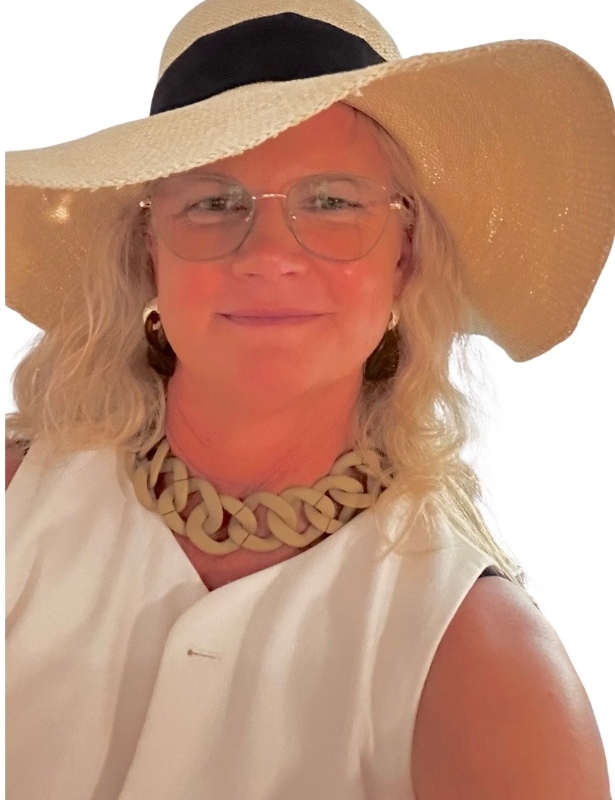
Step into the sunlit world of Dr. Pamela Johnson, where stethoscopes beat in rhythm with generous hearts and every treatment room hums with possibility. For three decades, this extraordinary veterinarian has woven medicine, mentorship, and magic into an award-winning career that began the moment she first cradled a trembling puppy and promised, “I’ve got you.” From building an AAHA-accredited hospital that became the gold standard of compassionate care to rising as Regional Director for a national veterinary powerhouse, Dr. Pam has never met a challenge she couldn’t transform into triumph.
Yet it’s her creation of Veterinary Masterminds—a luminous community where exhausted clinicians rediscover joy and pet parents unlock PhD-level advocacy—that reveals her true superpower: seeing the spark in every soul, human or animal, and fanning it into a wildfire of purpose. Today, we invite you to pull up a velvet chair, sip something chilled, and fall utterly in love with the woman who proves leadership looks a lot like unconditional love.
https://open.spotify.com/episode/0TlBDUGGfFO70iUoOvJ8Z5?si=H4L3e_8QS3-_L8e_AUVLZQ
Beverly Hills Magazine: Hello everyone and welcome to the World’s Most Famous Podcast. I’m your hostess, Jacqueline Maddison. We are so excited to sit down with Dr. Pamela Johnson, the trailblazing veterinarian whose 30 years of heartfelt service has touched countless lives, four-legged and two-legged alike. As the visionary founder of Veterinary Masterminds, she’s on a mission to transform clinics into sanctuaries of empathy, empower pet parents with life-changing knowledge, and lift veterinary teams out of burnout into brilliance. Dr. Pamela Johnson is here to share practical secrets for happier pets, stronger vet teams, and the unbreakable human-animal bond. So grab your furry friends, settle in, and let’s celebrate the love that makes life better one paw at a time. Let’s welcome Pamela to the show. All right, how are you?
Dr. Pamela Johnson: I’m doing great.
Beverly Hills Magazine: So I’m so glad to have you with us today, Pamela. Welcome to the show. Let’s dive right in. Tell us, what first drew you to veterinary medicine?
Dr. Pamela Johnson: That is a long story. I certainly, since I was walking, I think I wanted to be a veterinarian. My love for animals goes back to when I was very young. I was raised on a farm. And as I mentioned to you earlier, I lost my mother in a car accident when I was very young. So that sort of left me with three brothers and a father. And so I grew up in a very male-oriented household, very competitive, which ended up helping me in the long run. But that love for nature and animals goes way back. I took a pause from veterinary medicine. I don’t know if that was in my bio or not, but I didn’t think I had the confidence to first go through in college. And so I backed out. But after I graduated, worked for about a year and a half, I decided I need to go back. I need to follow my dream and graduate school. For me, it took a little bit longer because I had to go back and take my sciences. But I never regretted going back to school and getting my degree in veterinary medicine. And then I was in practice for, well, I’m still a veterinarian, but I was in practice for 25 plus years and privileged to be in the same location where I started and ultimately became an owner, a partner, and then the primary owner of the business. And it was quite an evolution over time. But I tell people all the time, I never had a day where I didn’t love going to work.
Beverly Hills Magazine: Oh, that’s beautiful. Well, yeah, when you’re living your purpose and pursuing your passion, as they say, when you love what you do, you never work a day in your life. And it’s so true. And I find it so interesting that you doubted yourself. And I think that we all kind of face that temptation, especially when it comes to our dream, because it always seems bigger than where we are, like more than I can handle. But myself being a Christian, you know, me too, when I sort of got the idea just to start the magazine, it was like way beyond my circumstances. And I think God puts the seeming impossible dream on your heart because you kind of have to have faith to go for it and overcome your self-doubt and insecurities. And that’s why it’s a growth journey to making your dream come true, which you’ve done.
Dr. Pamela Johnson: You can either have what I would call a victim mentality or a victor mentality. And there have been a lot of adversities. Well, you’re faced with adversities of all kinds of different crises, right, in life. And I think that in that moment when you have faith, you understand and can say, okay, I know this isn’t where I would like to be, but I also know off through that door it’s going to get better. I would like to somehow share with all of your listeners that as bad or as dark as it might look sometimes, it will get better. And you’re going to be better for it. You’re going to be a better person, a better individual, a better leader, all of those things. So I think that it’s a message that I would love for—I have seven nieces, and I’m working on two to three grandnieces. And I would like for them all to hear this, that there’s going to be bumps in that road, but it will make you better in life.
Beverly Hills Magazine: Yes, absolutely. Tell me, Pamela, you launched Veterinary Masterminds. Tell me more about that.
Dr. Pamela Johnson: Speaking of challenges, I got towards the end of my career, and I mentioned that it was such a special, special time in my life. And I had gotten this wonderful team built out. They were completely empowered. Everybody was working on all cylinders. And I had felt like I had sort of reached the pinnacle. And I wasn’t feeling, I think, a combination of challenge and going back to faith, feeling like there’s something more, right? There’s something more for you to do. I think I hit a bigger stage, which, coming from me, I’m not sure how to put it. I’m an introvert or ambivert. So it says something when that comes out of your mouth. And so I started really praying about it, thinking about it. And God led me to the burnout rate in my profession. It is three to five years. So you spend $150,000, $250,000, eight to ten years in school. And then in three years, you decide that this is no longer the career for you. And that’s foreign to me because it was such an incredible career for me. And the suicide rate is the highest of any profession in the United States.
Beverly Hills Magazine: Wow, that’s shocking.
Dr. Pamela Johnson: Right? And then number two, it’s also what pet owners should be expecting in their care. And how can we bridge that gap? In other words, what are the things that I wish you knew before you ever came in, walked into my practice, and how much better that conversation might go? If you already understood the basics of certain things, certain premises, certain physiologies and behaviors, then we would be able to have a much more collaborative, engaging, cooperative conversation where the pet owner is a part of making those healthcare decisions. As an example, if you want to see the same doctor every time you go in, you should be able to do that. I don’t see a different OBGYN. And I think that pet owners should be able to have that relationship with their veterinarian as well. And so it’s a combination of things. And I keep honing back on bridging that gap and building a community of trust and collaboration with empathy, compassion, really focusing on the human-animal bond, which I think is very, very powerful. People are just starting to understand the benefits of the human-animal bond and what that means to us as individuals and us as a community, what they teach us. So it’s not simply about, I like to say, lengthening and strengthening the human-animal bond is really my focus.
Beverly Hills Magazine: Well, I think it’s a divine gift. And I love what you’re doing in terms of your leadership, because for me, whenever I’ve gone to vets, I’ve always felt that they really didn’t care. They were more about the bottom line. It was always about upselling on products and things like that. But I love that you’re more about establishing that trust, because I think when that trust is there, you get a sense that they really care, that you’re entrusting your pet’s well-being to them and you’re not just dollar signs.
Dr. Pamela Johnson: I love that. I know it’s a business. You’re right. It is a business, but at the same time, it should be something where the pet owner understands all of their options. They understand, you know, there’s usually five to six different options in any one given situation. And you as the pet owner should be given those options. And then we discuss what’s best for you, what’s best for your circumstances, what’s for your finances, and ultimately what’s best for your pet, right?
Beverly Hills Magazine: Yeah, absolutely. And I was very surprised to learn of the high suicide rate, because I think when people operate their business too much without compassion and empathy, you can lose the purpose in it. So I’m not surprised. And I love how you’re inspiring veterinarians to incorporate that element of empathy and relationship building, not only between them and the customer, but also with the pet. Because, yeah, that connection is so beautiful. Like I say, a life without pets or dogs is a life without love. It’s an amazing love that we enjoy. They’re just gifts of joy from God. I mean, my pets give me so much love and joy. It’s incredible.
Dr. Pamela Johnson: All my clients is that I feel that your pets are part of mine. And that emotional fatigue or compassion fatigue very often can come from, it’s in a busy practice, just to give you perspective. It’s not unusual to have to perform at least one euthanasia a day. And that can start to wear on veterinarians, the veterinary professionals. So it’s one of those things that you have to understand your role. For me, there’s a beauty in that role as well. There’s a gift that we’re able to give our pets when it’s time for them to pass. And I tend to want to see that they’re going to be there when I go to heaven. Yeah, all I ask is to go to heaven. The Lord knows how much we love them. But yeah, in their last moments of life, to just comfort them and give them peace. It’s always been a privilege for me to be able to share those last moments with a pet owner. Because to me, again, their pets are my family. I feel as though they’re a part of my family as well.
Beverly Hills Magazine: Yeah, absolutely. So how can pet owners prepare for a stress-free vet visit? What are some things they should do, whether it’s for the pet or for themselves?
Dr. Pamela Johnson: That’s a really good question. There’s an organization called Fear Free, and there’s another one called Feline Friendly. Both of those are similar. But in terms of one of the best things and the simplest things that I tell people to do is to take the time, especially if you have a young dog or a kitten, take them in for a happy visit. Take them in for fun. Take them in to get a treat, to greet people, and then get hugs and just leave. If someone were coming into my practice for the first time, we might even delay if they’re due for vaccines or they need to get blood pulled. We’ll take them in for a week or so just so that we can have a very happy, pleasant visit, so that they get more comfortable with coming in, so that they like coming into the hospital versus fearing coming into the hospital. I would always get on the ground with them, sit down with them.
Beverly Hills Magazine: Wow. Now, how can pet owners sort of spot illness early?
Dr. Pamela Johnson: You’re touching something that’s very near and dear to my heart, because very often they do show signs, they do tell us before we recognize that there’s a problem. And those behaviors are anything from… I could do a lecture on this, but when you look at a change, so let’s say you have a dog that is normally very warm and friendly. Maybe they start… Maybe they’re not quite spending as much time with you as they used to. Maybe it takes them longer to lie down. Maybe it takes them a little more effort to get up those steps. There’s a subtle way that they carry their head that tells you that they’re carrying more weight on a part of their body versus the back. With cats, very often they’ll hesitate. Sometimes people think there’s a behavior issue when a cat can no longer get in and out of a litter box. And that’s not behavior, it’s pain. It just helps to get it out of the litter box. So we actually have pain logs and cats where people can recognize very, very subtle changes.
Because if you think about it, just think about the pack mentality. That’s still hardwired in them. And so if they show pain, if they show illness, if they show signs of weakness, that they’re going to get kicked out of the pack. And they still inherently, genetically are hardwired for that. And so they don’t want pain. They don’t want to show discomfort. Dogs are actually even better than dogs at that. And so I always tell people, if you think, trust your heart, if you think something’s not quite right, I always tell people, I’d much rather you overreact than underreact. Because very often when we underreact, something escalates into something much, much more serious. And it’s one of the reasons why I suggest measuring their food, making sure that you’re feeding scheduled meals, so that you know exactly how much they’re eating and how long it takes them to eat. You know, there’s just so many little nuances that we can pay attention to. So asking that question, it’s a really good question.
Beverly Hills Magazine: Yeah, absolutely. And good to know that there you can notice personality or behavior changes that might be indicators. That’s great. Now, how do pets mirror their owner’s stress levels? And how can owners calm themselves or keep their pets calm?
Dr. Pamela Johnson: So that’s actually, believe it or not, a component of fear-free and feline-friendly. It’s when we’re stressed, when we’re anxious, they feed off of that. And by sending them cues, whether you’re aware of the anxiety level for them will go up. So if a pet owner is nervous about going, taking their pet in to see their doctor, that’s going to escalate the nervousness of the pet. And on the flip side of that, if you have a pet that is nervous or anxious, it increases that behavior. So they show anxiety about a thunderstorm. And it’s almost like the little child, and they’re just learning how to walk, and they fall down, and they turn back, and they look at their parents for a reaction.
And depending on that reaction, that’s how the child is going to react. And I try to explain to people that there’s a lot of similarities there. That if you react with anxiety in a situation, or let’s say you want to cuddle with them more because you think it’s going to help comfort them, it actually is sending them the message that, hey, maybe I should be nervous about this thunderstorm because they’re petting me, they’re comforting me. It just basically is a reinforcing behavior, if you will.
Beverly Hills Magazine: That’s so interesting, yeah. So in other words, rather being non-reactive, if you’re trying to teach them to be non-reactive to certain stimuli like thunderstorms or noises.
Dr. Pamela Johnson: Yeah, the reverse of that, as I mentioned, that human-animal bond is so powerful that one of the—there are many proven benefits, but one of them is that pets do lower blood pressure. And that is proven and documented. They are used for PTSD for all situations. And they can dramatically help improve our overall health, not just cardiovascular, but obviously mental, emotional, all of those things. They’re the reason that we get up in the morning, right?
Beverly Hills Magazine: They are so precious. Yeah, sometimes if I’m having a stressful moment and my little four-pound teacup chihuahua will literally come to me and be like, stand on my shoulder and be like, Mommy, no, don’t do that. Calm down. She calms me, and it’s so amazing. They’re also so smart and intuitive.
Dr. Pamela Johnson: I always say in the Garden of Eden, God took away animals’ ability to speak, not to think and feel. So they’re still just as present and emotional and intelligent. They just can’t formulate words. So it’s wonderful. It is, and it’s a good reminder because that communication, it’s there. We just have to be prepared to listen for it, if you will, or to hear that or to pay attention to it. Because it is very powerful. There are stories where I’ve had pets literally save people’s lives. And it’s just, again and again and again, there are just so many stories about the beautiful relationship that we have with our pets. And I wouldn’t trade it for anything in the world.
Beverly Hills Magazine: Yeah, likewise. Definitely mustn’t underestimate their intelligence ever.
Dr. Pamela Johnson: That’s one of the things that I teach through Pet Lovers United is, how do we enhance that human-animal bond? How do we make it better? How do we make it stronger? Especially going into their years, there’s a difference between senior and geriatric, just like there is in people. And during their senior years, we need to work a little bit harder to maintain their mental, emotional, and their physical health to basically to push out those geriatric years where they become much more challenging. And that window of time, a lot of times people don’t recognize it. And we can add up to two years to their lives by doing little things. One is maintaining their body condition at a healthy weight. Two is maintaining oral or dental care. We know that that shortens their lifespan if they have issues.
Beverly Hills Magazine: You mentioned your dog. I’m certain that you’ve been through that with yours. Well, my two dogs, I teach them, I brush their teeth every morning and every night, just like I brush mine. I mean, a friend of mine had a dog who never, she never took care of her dog’s teeth. They were so rotted that it ultimately ended up causing an infection that had the dog had to be put down because of the oral infection. So dental hygiene is so important. I mean, if we have to brush our teeth, of course we have to brush their teeth.
Dr. Pamela Johnson: I do. It can lead to heart issues, kidney, liver. There’s just so many things. And chronic pain actually facilitates disease. And we know how painful dental disease is. Even though they don’t stop eating, that doesn’t mean they’re not in pain. I’m so proud of you for talking about this because this is a huge part of what we teach is the importance of the little things and how much they mean to maintaining that longevity and quality of life.
Beverly Hills Magazine: Yes, absolutely. So what is Pet Lovers United?
Dr. Pamela Johnson: So Pet Lovers United is an education platform. And our goal, as I mentioned, is to bridge that gap between the veterinarian and the pet owner. So in other words, I’ll give you an example. Not too long, actually it’s been several years now, a member had a four-year-old cat malignancy on a leg, on a rear leg. And their veterinarian said, you know, we need to amputate this leg. Or we need to euthanize your cat. And they also had two young daughters. And so they wanted to have a conversation about that. The what ifs. What if we do this? What if we don’t do this? What might happen? Those kinds of things. And long story short, they ended up doing the amputation. And like I said, that was about four or five years ago. And the cat is doing exceptionally well. And it wasn’t that they didn’t get the information from their veterinarian. They just needed to have more, you know, sort of a, like I said, a collaboration. And so one of the things that we do is we provide a video library of things.
Everything from A to Z. So should I get a pet? What’s the right time to get a pet? What’s the right pet for me and my family? All the way through to how to recognize pain. How to properly take care of their bodies, their mouths. How to treat cardiomyopathies. You name it. And we have a library, PDF library of top, you know, the top 10, 15 things. We have eBooks. And then we also have twice a month where I do a live roundtable where we pick a topic. We talk about that for about 30 minutes. And then I open the floor up for questions about whatever anybody wants to ask. So it’s an opportunity to get those questions answered. And also you’re not stuck with Googling.
Dr. Pamela Johnson: Yeah, well, I love this. So because pet owners, we should educate ourselves and take the initiative to be informed as we take on the role and responsibility of caring for the well-being of another creature for its whole life. So how do they become a part of Pet Lovers United? What’s the website?
Dr. Pamela Johnson: It’s PetLovers-United.com and we’re on Facebook as well. But you can go to the website and learn as much as you want. There’s a way to contact me through that through the website as well. My email is Doctor Pam at petlovers-united.com. If anybody wants to email me directly, they’re welcome to do that as well. And we’re really trying to create a movement. We want to empower pet owners. We want to educate them and inform them on whatever topics they want to learn about. We don’t want, we’re not here to replace your veterinarian. That is not why we’re here. In fact, it’s just the opposite. We want to strengthen that bond. I like to say that there’s three ends of that leash, right? It’s that we can all work together to help lengthen and strengthen that human animal bond.
Beverly Hills Magazine: Yeah, absolutely. I think that the relationship between the pet, the pet owner and the veterinarian should be collaborative, open, honest, and understand. What’s one myth about veterinary costs you want busted before we go? Because I think a lot of times people don’t open up to their vets because it’s more of like, oh, I’m just a dollar sign to them. So how can we break through that?
Dr. Pamela Johnson: I think that knowing what to ask, knowing what to ask, that part of that is, what are my options? What are my options? And then it’s a conversation. So that’s one of the things that depends on circumstances. I teach, you know, I teach our members, you know, here are the questions that I would ask if I were you. When you’re going in to talk about problem A, problem B, challenge C, and just have an open, honest conversation with your veterinarian. And I think that transparency and that, I think that confidence that it brings can make a huge impact in how those conversations go. Because like I said, there’s always options, always. It should be in a judgment-free zone.
Beverly Hills Magazine: Yeah, absolutely. And I think, though, there should be varying price options. Because sometimes, you know, some people can’t afford the full spectrum, but the pet still needs treatment. So if there’s price options, too, that would help. Because, you know, everyone’s in different financial situations. But the pet still needs the care. You know, so at the end of the day, it’s all about the pet and saving its life or truly caring about its well-being.
Dr. Pamela Johnson: It totally, totally.
Beverly Hills Magazine: Yeah. So what are some final thoughts or something important that you think needs to be shared with our audience and listeners about veterinarian professions or your veterinary masterminds, or even the Pet Lovers United?
Dr. Pamela Johnson: First of all, find a veterinarian that you’re comfortable with. Don’t go to the closest veterinarian, one that, number one, is accredited, that they’re an accredited veterinary hospital, which is the American Animal Hospital Association. And go and interview them. And ask, you know, can I have a relationship with you?
Beverly Hills Magazine: Dr. Pamela Johnson, thank you from the depths of our hearts for your lifetime of love, leadership, and healing. You are truly changing the world—one pet, one team, and one heart at a time.
Dr. Pamela Johnson: Jacqueline, thank you for this beautiful platform and for letting me share my passion. I’m so grateful to help strengthen the sacred human-animal bond we all cherish.
Conclusion
As the last echoes of laughter and tail-wags fade from our pages, one truth lingers: Dr. Pamela Johnson doesn’t just heal pets—she heals people, too. Through Veterinary Masterminds, she has gifted the world a blueprint for clinics that feel like family reunions and pet parents who walk taller knowing they’re their animal’s fiercest champion. Her legacy isn’t measured in diplomas or awards (though Notre Dame and Coweta County’s 2022 Citizen of the Year nomination would beg to differ); it’s measured in the countless nights a worried owner slept peacefully because Dr. Pam taught them to listen with their hearts.
So darling reader, the next time your furry soulmate gazes up with those liquid eyes, remember the woman who reminded us all that true leadership kneels down, looks eye-level, and whispers, “You are so very loved.” Carry that whisper into your own corner of the world—because thanks to Dr. Pam, every waiting room just became a runway for kinder tomorrows.
7 Hashtags
#VeterinaryLeadership, #PetWellness, #DrPamelaJohnson, #VeterinaryMasterminds, #HumanAnimalBond, #CompassionFatigue, #PetParentTips
3 Alternative Titles
-
★ Dr. Pamela Johnson’s Clinic-to-Heart Revolution Beverly Hills Magazine
-
★ Dr. Pamela Johnson’s Tail-Wagging Leadership Beverly Hills Magazine
-
★ Dr. Pamela Johnson’s Love Prescription for Pets Beverly Hills Magazine