

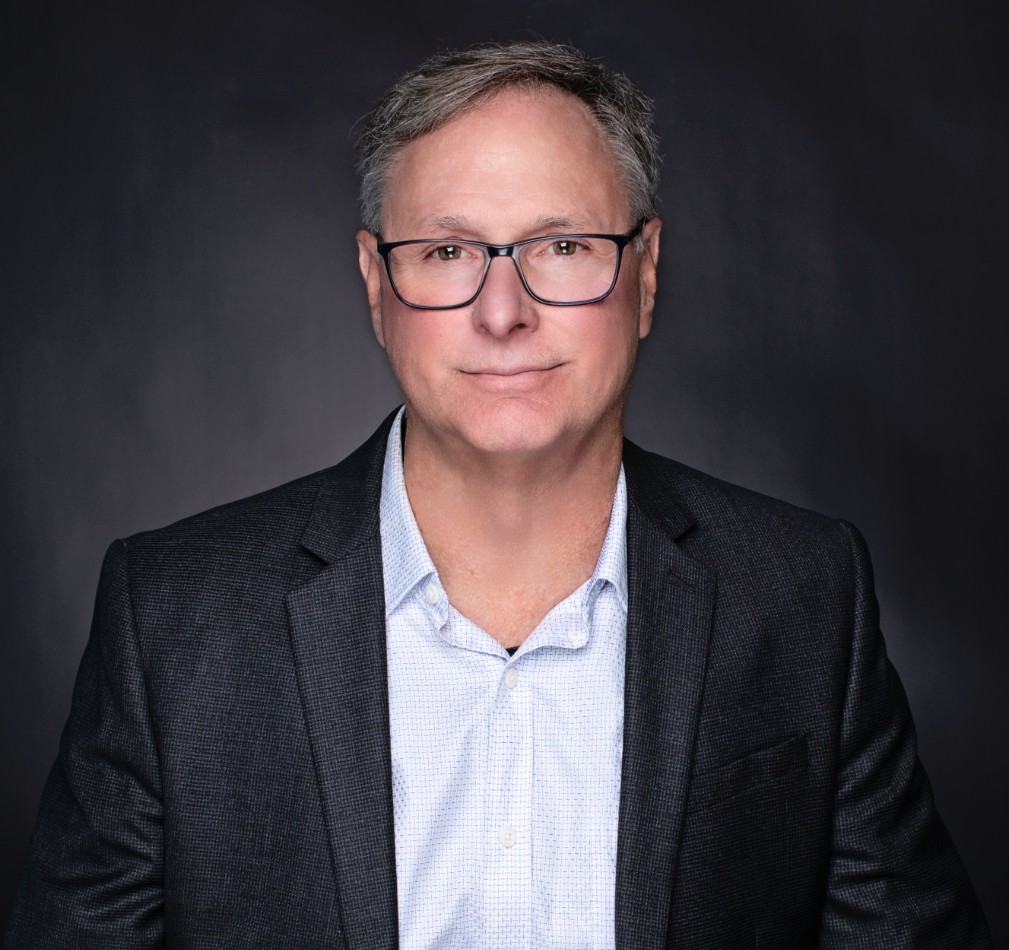
The Compassionate Innovator Transforming Mental Health Solutions One Brain at a Time
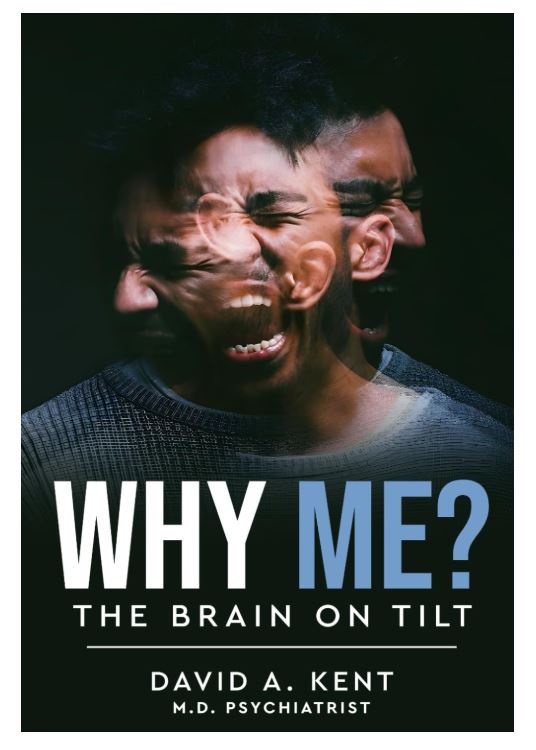
Hey there, friend—whether you’re a fellow business leader, a mental-health advocate, or simply someone who cares deeply about making a meaningful difference, you’re going to love meeting Dr. David A. Kent. With warmth, wisdom, and more than 35 years of board-certified psychiatric experience, this remarkable physician founded NuMe TMS Clinics in Idaho to bring cutting-edge, life-changing brain stimulation therapies to people who thought they had run out of options. Trained under a National Medal of Science recipient and author of the deeply human book “Why Me? The Brain on Tilt,” Dr. Kent proves every single day that exceptional clinical leadership and genuine compassion can thrive together in business.
Beverly Hills Magazine: David Kent, welcome! It’s truly such an honor to have you with us today. How are you?
Dr. David A. Kent: Thank you. I’m doing awesome. Thanks for having me on. Appreciate it.
Beverly Hills Magazine: Yes. So let’s dive right in. Thank you for your book, which I did have a chance to get through, not in its entirety, but enough to be so impressed really with your work. The book is so comprehensive, so informative, but also so compassionate for the reader, whether for themselves or for family members, you know, anyone dealing with mental health, which is such an epidemic in today’s world and far too common, which you’re well aware of.
Dr. David A. Kent: Definitely. Well, I appreciate you taking a look at it. I think once you open the pages, you start to understand that it’s worthwhile. It has something to say. You know, I’ve been doing this a long time and I just felt like there was something missing and I just wanted to give something to my patients or the families I work with. And I never had anything to give them. So I said, you know, if it’s going to happen, I better be the one. I didn’t think I could actually do it, but I did it.
Beverly Hills Magazine: And you did an excellent job. So take us back to the beginning. What initially got you interested in psychiatry?
Dr. David A. Kent: Well, you know, psychiatry is a medical specialty. I was a medical student back in the University of Iowa and the third year of medical school, you rotate through a lot of specialties and psychiatry was not even on my radar. I was thinking about family practice, internal medicine, maybe anesthesia, maybe radiology, a bunch of things. I didn’t have any idea what psychiatry was even about. And I was rotating through, we have a six week rotation and I ran into the senior resident in psychiatry and he was gung-ho and really enthusiastic and saying it’s one of the most successful specialties. And I was like, what, what do you mean it’s most successful specialties? This was back in the 1980s too. And so I turned my head and I started looking at it really closely and it just aligned with everything I was about. I wanted to work with people. I wanted to do something I could make a difference in. And so I decided to go that route. And I, it was kind of a funny story because I was married and I went to my wife and the first thing I said to her is, I think I want to go into psychiatry. And the very first words out of her lips were, I don’t think I can support you.
Beverly Hills Magazine: Oh my goodness. Are you serious?
Dr. David A. Kent: No, because she had in her mind that it was a dangerous thing to go into, that I would be harmed. That was her thinking. So we met with this guy and his wife and she became reassured. Now she would probably tell you it was the best thing I ever did.
Beverly Hills Magazine: Yeah. Well, absolutely. You’re thriving in it, you know, excelling and certainly making a difference in the world. And I think that’s ultimately the purpose of what we should be doing, you know, if we choose to do something. So tell us what’s the biggest myth about let’s say depression, which seems to be again, all too common that you wish every family or every person would let go of.
Dr. David A. Kent: I think one of the myths or one of the misconceptions, which I come across another motivation to just put a book out there is somehow you can do certain things and it’ll just go away because I do those certain things. And I sure feel better. So people hear all the time, well, if you just eat this, or you just do that, you just do this and it’s going to get better because it works for me. And that’s true for a very mild depression maybe, or for life situations. But the kind of depression I talk about is the biologically based depression that settles in. And it does harm to kind of make casual suggestions to people. Well meaning, yes, but it can be harmful because it makes them feel like they should be doing more, they start to feel guilty, they start to feel shame for it. So you have to be super careful what you say to people who struggle with these things. Because even if you’re well meaning it can have a different effect than you would like it to have.
Beverly Hills Magazine: Yeah. And the first case study in your book actually highlights that where the friends make these sort of trivial suggestions where it’s not just behavioral habits that are going to resolve the issue. There’s biological and chemical things within the body that need to be addressed in order to help, you know, hormonal. But tell us more, give us a little bit more details that maybe they can find in the book, but give us a little taste of what are some of the actual biological causes that people are experiencing with the deeper depression.
Dr. David A. Kent: I don’t know if we know everything yet. I do know that science has come to the point of concluding that most of the psychiatric conditions that I treat, depression, bipolar, schizophrenia, obsessive compulsive disorder, and those types are very biological in nature and they’re very genetic. In fact, mood disorders like bipolar and depression have a high genetic component. It’s rare to find somebody with these illnesses and not have a family member that’s close that already also struggles with it. So we know that genetics play a role. We don’t know exactly how that plays a role yet, but we know that certain biological interventions have been proven over and over again to be effective beyond placebo. And now we’re starting to understand it’s not just medicines anymore. Electroconvulsive therapy of course has been around forever, but now we have transcranial magnetic stimulation, which targets very specific circuits in the brain that have been shown very definitively that they’re underperforming. It’s like taking that part of the brain to the gym and exercising it. In fact, transcranial magnetic stimulation actually creates what we call neuroplasticity.
Beverly Hills Magazine: Before you get ahead of the rest of us, first let’s explain what is electroconvulsive therapy and transcranial magnetic stimulation?
Dr. David A. Kent: Okay, great question. ECT stands for electroconvulsive therapy. It used to be, it’s been referred negatively as shock therapy. It was negatively portrayed in One Flew Over the Cuckoo’s Nest as being very barbaric. And you know, back in the day we didn’t use anesthesia, so it must have been much more difficult. And it was used for a lot of reasons that maybe shouldn’t have been used. But today it’s used primarily for depression. And electroconvulsive therapy uses electricity to stimulate the brain to go into a grand mal seizure. But this is done under anesthesia and there’s also muscle blockers, so it’s quite benign in terms of the impact on the body. However, it’s pretty powerful as a treatment for depression. We use it for people that are really, really in a deep depression and nothing else has worked, especially if they’re suicidal. 60 to 80% of the time it’ll get them out of their depression. So that’s pretty powerful.
Beverly Hills Magazine: Yeah, very!
Dr. David A. Kent: Now, transcranial magnetic stimulation has come around a little bit later in the game. It was discovered in the mid-1980s and developed in the 90s and early 2000s, where it uses electromagnetic device, kind of like a magnet, use electromagnetic pulses. They’re invisible electromagnetic field that stimulates key areas of the surface of the brain, which are connected to the limbic system deep inside the brain. The limbic system is very critical because it’s the emotion center, as well as memory are housed there. And we know that transcranial magnetic stimulation affects that deeper structure because MRI studies have shown that the amygdala, which is part of the limbic system, actually gets larger in successful cases. And so that helps us understand a little bit of the biology. We still don’t know everything, but we’re starting to understand location, parts of the brain that are affected and where we should target our treatment.
Beverly Hills Magazine: Yeah, that’s interesting though, but it also sounds a bit like kinetic energy, and to me, that’s fascinating because there’s also the theory, like if you’re in the same room with someone who has kind of a darker energy or something that can rub off on you, for lack of better words, or somehow impact your mood. So this kinetic energy and what you’re using is impacting the neurotransmitters in the brain through energy, using like force fields of energy. So that’s interesting to me.
Dr. David A. Kent: And that sort of tips it on its head a little bit about this chemical imbalance theory with medicines. We’ve always been saying for decades, chemical imbalance, chemical imbalance, chemical imbalance, and there still may be some of that. Never really been proven that well. And medicines have their shortcomings, but transcranial magnetic stimulation doesn’t work through that mechanism. It does, but it’s through stimulation of a circuit. It’s like just turning it on and stimulating it, like exercising your bicep in the gym. It’s like that. And so yeah, energy is involved. There’s certain frequencies we use. And so there’s a lot yet to understand. And there’s maybe it all has to do with quantum physics and all that. But those all are, like I said, there’s a lot to be learned still, but we’ve come a long ways. In fact, transcranial magnetic stimulation is the most well-studied treatment in all of psychiatry, maybe in all of medicine. There’s been well over a hundred thousand papers published worldwide on transcranial magnetic stimulation. So this isn’t hocus pocus. It’s not, we’re just guessing. We actually know these things. We actually know that there’s anatomical changes. So, but we need to know more, right? We still got a long ways to go. It’s like the last frontier.
Beverly Hills Magazine:There’s the saying, “you don’t know what you don’t know.” And I think that’s sort of what the field of science is. It’s the discovery of the unknown. And that’s the pursuit of it, you know, is to get to places of certainty and discovery of truth and solutions.
Dr. David A. Kent: So that ultimately… Like peeling back an onion, right? There’s more layers to come. You know, we think we know something and then we don’t know something. And quantum theory kind of really makes it even more interesting because there’s so much we don’t know when it gets down into the particle level. And at the end of the day, you know, what is mass? Mass is actually energy because when they get to these finer particles, they have a frequency, they have an energy. So what is mass? And is it just packets of energy? You know, there’s just a lot we don’t know.
Beverly Hills Magazine: Yeah, that’s interesting. So I’m a Christian and I have a Christian paradigm in terms of how I analyze everything, even scientific study and theories. And so there’s a specific instance in the Bible where Jesus encounters a man who’s been, who’s completely psychotic, aggressive, violent, out of his mind. And Jesus sort of exercises the demons, if you will, casts them out. And then immediately he’s in his right mind. So have you ever considered the possibility of any sort of entity possession or oppression of any patient? Somewhat of a spiritual condition that’s impacting them in a kinetic way, their being?
Dr. David A. Kent: Well, you know, that’s a different ball of wax. You know, that’s a different way to look at it. And I’m, you know, I come from a very scientific background where data is king. In fact, the program I was at, data was everything. So anybody can have a theory that I’m okay with any kind of theory, as long as you can create some research behind it, that you can collect important data to verify whether that’s true or not. And so that’s, what’s important to me. It’s not so much that there’s literally millions of theories. And so, and I always say, well, that’s great, but, you know, kind of show me some kind of data that I could sink my teeth into because at the end of the day, I’ve got to face somebody eyeball to eyeball and say, I know that this has proven to be effective more than placebo. If I do anything short of that, I’m not doing a favor to my patients.
Beverly Hills Magazine: No, absolutely. I understand in your field, it’s very analytical. And obviously in the spiritual realms or Christian communities, it’s a little different.
Dr. David A. Kent: It’s not to say that we, it’s not to say it’s okay not to have a theory about these things, a theory about, because the universe is vast. There’s just so much we don’t know. And when you started diving into the quantum world is even more mysterious. So there’s just a lot, we don’t know what is reality, what isn’t reality. There’s all those kinds of thought talks about that. And I, I have an open mind about that, but at the same time, you know, I like to see things that you can demonstrate and then you can replicate and you can show that, you know, there’s some substance to it.
Beverly Hills Magazine: Yeah, absolutely. Because I believe we’re tri-part being body, soul, and spirit, and I believe they’re interconnected. So I do think that a spiritual condition can affect us physically and a physical condition can affect us spiritually and emotionally, you know, so let’s not leave any stone unturned, so to speak, in terms of the true cause or root cause and treating really all of the facets of our being.
Dr. David A. Kent: Well, even science recognizes consciousness and consciousness is something we’ve not been able to get our hands around. And so the other question is, you know, if we have consciousness, what happens if our body disappears? Do we still have consciousness? And even scientists believe that there’s some form of consciousness. So some people call it spirituality, some people think it’s consciousness, some people it’s this. And I keep an open mind, you know, because I think we just don’t know enough.
Beverly Hills Magazine: Yeah, I think it’s fantastic. And I think that we should all keep an open mind and continue to, in the pursuit of truth and true understanding of who we are, what we are and how we function as human beings on every level. Tell me, tell me about your is it NuMe transcranial magnetic stimulation clinics?
Dr. David A. Kent: Right. Yeah, that’s you said, you said it right. People kind of messed that one up a little bit. But we kind of liked the way we spelled it and the way we did it. So, you know, I’ve been doing transcranial magnetic stimulation for about 11 years, I was the first one in my area in our valley to do transcranial magnetic stimulation. And in about nine years ago, I got really serious because I purchased a very expensive machine from Brainsway. And I basically committed myself to it, because I’m going to do this. So I ended up rebranding my company and deciding to branch out. And so that was the name I kind of labored over names, and I wanted one that was more universal, not one that was regional, you know, one more that I could branch out with. So that’s how I came up with that. I’ve been doing transcranial magnetic stimulation, like I said, for about 11 years, but nine years very seriously, I’ve probably treated over 900 patients with transcranial magnetic stimulation. So a large number.
Beverly Hills Magazine: Yeah, I love it. The “New Me” sort of concept is so relevant, because I think we have all at some point in our lives, either have experienced or have a loved one who has experienced mental health issues. And so when you have healing, recovery and transformation, it is a new me, you know, and that’s I think it’s so perfect.
Dr. David A. Kent: Thank you. I appreciate that.
Beverly Hills Magazine: Yeah. So which patient story from your book is one that you just want to highlight for us today?
Dr. David A. Kent: I would say the one that’s the most impactful is the bipolar or schizoaffective disorder, because that’s the one that leads to the most difficulties. And that’s the most poorly understood, maybe. Bipolar is two to 3% of the population. Schizoaffective is one to 2% of the population. So one out of 20 people, one out of 15 people may struggle with it. And it’s a chemical, it’s a chemical balance, it’s a brain disorder, highly genetic, that results in mood swings that are out of the control of the individual. And the only way to control it is through medical intervention, like medications, the only way we can talk to her blue in the face. And that’s really the only way to stabilize it. So when I because I do hospital work every day, I’ve been doing it for almost 40 years. So I’ve seen a lot and the majority of people in there tend to have bipolar or schizoaffective disorder, get a few schizophrenics. And then we get depression, of course, depression is the most common thing that I treat. So I should say that that’s the most significant chapter because it’s the most common. And it’s some also pretty misunderstood. Bipolar just can really affect people in a negative way. If they don’t get it taken care of. It results in poor relationships can’t hold down a job. And then eventually, if it’s untreated, you know, the homelessness and things like that. It’s a downward spiral, we call it.
Beverly Hills Magazine: Yeah. I recall that case study. And that was incredible. These extreme highs and sort of delusional, grandiose ideas and thinking and then extreme lows, but then, the confusion, the chaos of being, would be really uncomfortable for any person to experience that. So to know that there’s help, and there’s hope for somebody who is experiencing this erratic, emotional roller coaster is wonderful, like with someone like you, that offers that kind of service. Now, are you can people work with you remotely? How does somebody work with you know, get ahold of me?
Dr. David A. Kent: Yeah, well, you know, I’m at the twilight of my career. So I’ve kind of built up a practice. I work in two main locations. I’m in Boise. So I work at a psychiatric hospital, seven days a week, around a couple three hours every day. I really enjoy the inpatient side, because I get the sickest patients who have the most need. And I can turn them around more dramatically, because they come in one state and they leave in another state. And then I have my NuMe transcranial magnetic stimulation clinic, which is primarily a transcranial magnetic stimulation clinic. However, I do med management there as well. I just, I once people have kind of attached their hip to my hip, I tend to not give up. I have a patient I’ve been treating since 1990. And she has followed me through thick and thin. So I do have a set of private patients. I don’t take on a lot of new med management patients, because between the hospital and transcranial magnetic stimulation, I’m really busy. And now I’m out promoting my book. So because I really think the book is going to be a way for me to project myself better. To the rest of the population on what this all means.
Beverly Hills Magazine: Yeah, it’s so true. It’s kind of the accumulation of all your work and your daily practice in one resource that is available for the whole world to have access to.
Dr. David A. Kent: Yeah, that’s what I thought. Once I was, you know, my stiffest critic is my wife. And so when she read my manuscript, and she said she didn’t couldn’t find anything wrong with it. And she really liked it. Okay. Okay, I’m good. Green light, I can get past her. She’s good, because you know, she is in a good way. And she’s very, you know, good constructive criticism. And I always respect it. But I didn’t have any, I just was like, okay, I got a green light. Let’s do this. So where is it available on Amazon? It’s on Amazon. It’s called why me the brain on tilt, and you can post it on your site. It’s on Amazon. There’s three formats. So there’s paperback, there’s a Kindle. And there’s also a Nook on mobile. And then lastly, I’ve got an audio version I’ve just released in January, actually, yeah, late December. I really pleased with the audio version, I went through 60 narrators, professional narrators to find the one I found. It’s very he’s from Belfast, but he doesn’t have a super thick accent. So you can completely understand what he’s saying. But it’s more of like, listen to the David Attenborough or something like that. Just really easy on the ears. And it really turned out good. So there’s a lot of people are busy or on the move, or they just don’t like to read.
Beverly Hills Magazine: The audio version is perfect for that. Let’s shift gears. I want to talk more about some of these experiences people are having, like schizophrenia, for example, can someone a family, let’s say that has a member who’s experiencing schizophrenic tendencies or behaviors? What what reassurance do you have for someone that they don’t understand what they’re dealing with?
Dr. David A. Kent: That’s a great question is the most serious mental illness that we deal with. It’s very pervasive in the brain when it happens. There’s two types of issues with schizophrenia. There’s what we call positive symptoms, which are the hallucinations, the delusions that happen. Those we can treat with medicines fairly effectively, not perfectly, but fairly effectively. And that’s where we target the treatment. Then there’s what we call negative symptoms. And the negative symptoms are what we call a volition, a motivation, a lack of ability to do things. They lose their social connection. They they lose their sex drive. They really that’s where they have trouble connecting to other people.
Beverly Hills Magazine: Yeah. That’s their normal functioning as a human being.
Dr. David A. Kent: You know, in some ways. So we target the positive symptoms and we try to make them so that they aren’t looking over their shoulder all the time and they’re wondering what’s going on and they can’t get out of the house so that they can get out. Can they go back to normal life and have a job? No. But can they have meaning in their life? Yes. And in the book, I give an example of this guy and he ends up being like a volunteer at a shelter, an animal shelter. Right. There’s some semblance of meaning there. And so it’s you have to readjust your sights. So families have to accept that. They have to reaccept their sights. It’s like if someone in your family has a really devastating physical illness, maybe they have a stroke or maybe they have something happen. You have to readjust to what the new reality looks like. And that’s the same with schizophrenia. It’s less so with other mental illnesses, because we can get better outcomes. Schizophrenia, we have to readjust and we can’t expect them to go out and get a job and support themselves anymore because it’s too disabling. However, they can find meaning in their life and we need to support that, whatever that means, if that makes sense.
Beverly Hills Magazine: Yeah. Oh, absolutely. But that’s the question for me with all of these mental health conditions, which, you know, I’ve experienced firsthand in my family. What is the cause? What is the root? Is it spiritual? Is it demonic? Is it like you said, you mentioned genetics?
Dr. David A. Kent: Well, genetics plays a role and it’s our blueprint. It’s our blueprint for how we turn out. It designs how our eyes look and our nose looks and our hair color and our eye color. And it’s so, so powerful. There’s nothing more powerful in the universe than our DNA. It doesn’t mean that we can’t have environmental factors play a role because they do. However, genetics are super powerful. So genetics somehow color the brain for these disorders and somehow at a certain age when the brain is fully mature, it becomes more and more apparent. And so it’s still a very biological intervention. It doesn’t mean that psychotherapies and terms therapies aren’t helpful. They are helpful. And I have mentioned in my book what psychotherapies can be useful, but they’re not the cure. And if we bypass biological interventions for these more severe illnesses, we’re not going to get anywhere. And so we have to kind of hold our tongue a little bit about suggesting things that are outside of that, because it can do them more harm. I can give you some examples. This is more personal. I have two sons that have serious mental illness. In fact, they have the same one. A severe type of bipolar schizoaffective disorder. Both came down with symptoms about the same time. Both were in the same room with me. I suggested treatment for both of them. They initially said, you know, you’re right. And then one of them was living in California, went back to California. The friends told him, no, you don’t have that. I don’t know what he’s thinking. My other son listened to me, got treatment immediately. One son is no longer with us, and the other one is. So words matter what you tell people. And they take their peers very seriously. Even if they meant well, they steered him away from the treatment that he desperately needed. My other son, who’s been in treatment ever since, is a music producer. Two children that are beautiful. He’s married. He’s not a CEO of a company, but he is a very successful musician and music producer in his own right. And I’m very proud of him.
Beverly Hills Magazine: Oh, well, that’s wonderful that he experienced the treatment necessary to recover and have a normal, functioning, beautiful life.
Dr. David A. Kent: I call it a fork in the road, and I tell my patients all the time, I’m going to give you some advice. You don’t have to take it. But if you do, your life can go like a fork in the road. It can go over here where you can maximize your potential as much as we can, or you can go the other direction and you could end up potentially homeless. That’s how dramatic the difference is. So I always try to emphasize that what we tell people who have these conditions, words matter. And we don’t want to say something in well-meaning that could steer them away from getting help with a good professional. We just don’t. So I had first-hand knowledge with that. And that story has always sunk home with me. It’s at home. I know it’s right in my face. So I could see the difference.
Beverly Hills Magazine: You’re a living testimony of it. That’s powerful. That’s fueling your purpose, truly, to save others, to help others, to pull them out of the darkness.
Dr. David A. Kent: That’s why I wrote the book because I just felt like I couldn’t find another one out there that was written. I said, why aren’t they being written? We have good knowledge. It’s just not being available and accurate. And my book isn’t about my opinion. My book’s not about my feelings. My book is about being evidence-based. And if some evidence comes along in the future that refutes something in my book, I will revise my book to accept that.
Beverly Hills Magazine: Yeah. Yeah, it’s very research-driven and data-supported. I mean, it’s an excellent resource for information and facts about these conditions so people can really gain the understanding that they need to know what they’re experiencing and how to get help.
Dr. David A. Kent: I really appreciate that.
Beverly Hills Magazine: I’m fascinated by this whole subject because for me, dealing with depression in my family, and my aunt had epileptic episodes, and it was all very strange. But I’m, again, in this born-again Christian paradigm, right? And so I’ve come to see a lot of it as this demonic spiritual influence in people’s lives. And when I became born again, I sort of experienced sort of a new me, a transformation within my own self, like coming out from under the dark cloud that was in my family, seemingly genetic mindsets and patterns and behaviors that are self-destructive and negative spiraling into a new me, a transformed self, where now I’m like in the light of God, where the devil can’t touch me now. You know what I’m saying? So it’s a totally different realm of thought from where you are in terms of the biological understanding and study of the body, the brain, the chemical basis of who we are and God’s creation. So for me, it’s fascinating to blend these, marry these worlds and find just a cohesive treatment on all levels.
Dr. David A. Kent: The other thing you mentioned there was, I have it in my family, right? That’s completely the norm. It’s not the exception.
Beverly Hills Magazine: Yes, we need to normalize talking about it and lose the stigma. We all experience mental health issues either ourselves or someone we love. And talking about it, bringing the darkness out into the light, is truly the only way to make it go away.
Dr. David A. Kent: Absolutely.
Beverly Hills Magazine: Dr. Kent, thank you for this profoundly honest and enlightening conversation. Your evidence-based insights, personal stories, and dedication to compassionate care through your book and NuMe transcranial magnetic stimulation clinics offer real hope in the fight against mental illness. It’s been an honor to explore these important topics with you.
Dr. David A. Kent: Thank you so much for having me and for your thoughtful questions. I hope this discussion helps reduce stigma, encourages people to seek proven treatments, and reminds everyone that words and understanding truly matter in supporting those affected by mental health challenges. Keep the conversation going—there’s always more hope and science to discover.
Dr. David A. Kent reminds all of us that the most successful leaders are the ones who combine scientific excellence with heartfelt humanity. As he continues writing his next book on family support strategies and expands hope-filled care through NuMe TMS Clinics, his story invites every business leader to ask: How can I use my platform to reduce suffering and restore hope? Thank you, Dr. Kent, for showing the world that mental-health care can be both brilliantly innovative and beautifully kind.