

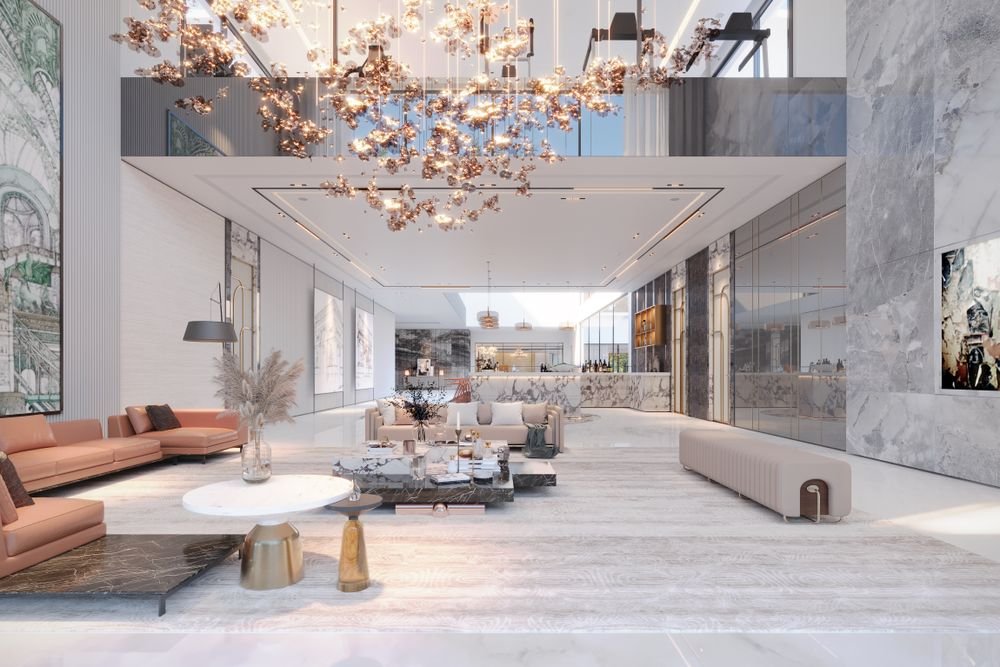
The Unexpected Secret Behind Beautiful Luxury Interiors
Luxury interior design has never been simply about purchasing the most expensive materials. It is about creating spaces where architecture, texture, color, and craftsmanship come together to produce something distinctive.
Wallcoverings play an increasingly important role in that process. Natural fibers introduce organic warmth, textiles add depth and softness, and large-scale murals can turn an ordinary wall into the defining feature of a room.
Yet there is an important distinction between selecting a beautiful material and achieving a beautiful result.
A premium wallpaper may cost hundreds of dollars per roll, but its appearance ultimately depends on decisions that homeowners rarely see: surface preparation, material compatibility, pattern placement, adhesive selection, environmental conditions, and installation technique.
For experienced wallcovering professionals, these details are not minor technicalities. They are the foundation of a successful project.
Key Takeaways
-
Luxury wallcoverings transform interiors through beautiful textures, sophisticated patterns, and premium materials.
-
Professional installation is essential for achieving elegant results and avoiding costly mistakes.
-
Proper wall preparation matters because even expensive wallpaper can reveal imperfections beneath the surface.
-
Designer wallcoverings require specialized expertise, especially when working with grasscloth, silk, metallic finishes, and custom murals.
-
Experienced craftsmanship adds lasting value through precise installation, material knowledge, and quality control.
Luxury Begins With Understanding the Material
One of the defining characteristics of luxury wallcoverings is the extraordinary variety of materials available.
Natural grasscloth, silk, linen, textile-backed coverings, metallic finishes, specialty vinyl, and handcrafted wallpapers offer entirely different visual and tactile experiences.
However, each material also comes with its own technical requirements.
Natural grasscloth often contains variations in fiber thickness, texture, and color. These differences contribute to its character but can also produce visible changes between panels.
Textile wallcoverings may require specialized handling to prevent staining, stretching, or adhesive contamination. Smooth metallic finishes can emphasize even minor imperfections in the wall beneath them.
Some high-end wallpapers are particularly sensitive to moisture, while others require specific primers, adhesives, or installation procedures.
Understanding these differences requires much more than familiarity with basic wallpaper installation.
According to the installation team at Enjoy The Wall, a Colorado-based company specializing in wallcoverings and decorative finishes, one of the most important professional skills is knowing how a material will behave before it is applied.
That understanding comes from practical experience, technical education, manufacturer specifications, and lessons accumulated across different projects.
An experienced installer does not simply ask whether a particular wallpaper can be installed. The more important questions are whether it is appropriate for the space, what preparation it requires, and how to achieve the intended result.
The Value of Knowledge Accumulated Over Years
Experience in a specialized trade is not measured only by the number of completed installations.
It is also reflected in the ability to identify potential problems before they become expensive mistakes.
Wallcovering installation involves a combination of material science, surface preparation, precise layout, and craftsmanship.
An installer working with a thin, reflective wallpaper must understand how lighting will reveal imperfections. Someone installing natural grasscloth must anticipate changes in color and texture between panels. A specialist working with a custom mural must consider its relationship to architectural features before making the first cut.
These decisions often determine the quality of the final appearance.
At Enjoy The Wall, technical knowledge developed through years of installation experience is incorporated into the company’s approach to preparing its own specialists.
Instead of relying exclusively on general installation experience, the team emphasizes material-specific techniques, surface evaluation, pattern alignment, and the practical requirements of different wallcovering systems.
This transfer of knowledge matters because luxury materials leave little room for experimentation.
A mistake with an ordinary product may be inconvenient. A mistake involving a custom-printed mural or imported textile can become costly, particularly when replacement materials are limited or must be reordered.
Professional expertise, therefore, is not simply about the ability to complete an installation. It is about reducing uncertainty throughout the process.
Why Wall Preparation Deserves More Attention Than Wallpaper Price
One of the most expensive misconceptions in interior finishing is the belief that premium wallpaper can compensate for an imperfect wall.
In many cases, the opposite is true.
Thin, smooth, or reflective materials may reveal drywall joints, uneven surfaces, texture differences, and other imperfections that were barely noticeable before installation.
Even a visually substantial wallpaper cannot correct unstable paint, moisture problems, poor adhesion, or inappropriate substrate conditions.
The proper level of preparation depends on the selected material and the manufacturer’s installation requirements.
For homeowners interested in understanding the technical considerations behind a professional result, this article on wallpaper installation explains how material characteristics, dimensions, and pattern repeats affect planning and installation.
In practice, the most important decisions should occur before the wallpaper arrives at the property.
Surface condition, lighting, room environment, wall dimensions, and material specifications all need to be considered.
Experienced professionals also understand that preparation should be appropriate rather than excessive. Not every wall requires identical treatment, and not every wallcovering demands the same level of surface finishing.
The objective is to establish a reliable foundation for the chosen material while avoiding unnecessary expenses.
Designer Wallcoverings Are About More Than Famous Names
Luxury wallcoverings are often associated with established design houses, exclusive collections, and sophisticated patterns.
Manufacturers such as Phillip Jeffries, Schumacher, Arte, Thibaut, Cole & Son, and other respected brands offer materials with distinctive aesthetics, construction methods, and performance characteristics.
But selecting a recognizable brand is only the beginning.
Two wallpapers from the same manufacturer may require completely different installation approaches. A textured vinyl and a natural fiber covering may look equally appropriate in a design presentation while creating very different technical challenges.
This is why material selection should involve more than browsing colors and patterns.
Homeowners and interior designers benefit from considering how a particular product will interact with lighting, furnishings, architectural details, humidity, and everyday use.
For a curated view of manufacturers and collections, exploring designer wallcoverings through a specialized sourcing and installation company can help connect aesthetic preferences with practical material requirements.
The best choice is not always the most expensive or visually dramatic wallpaper.
It is the material that delivers the desired appearance while remaining suitable for the intended application.
Why Training Specialists In-House Makes a Difference
One of the challenges facing specialized finishing trades is maintaining consistent workmanship across different installers and project types.
A professional may be highly experienced with conventional wallpaper yet have limited exposure to delicate textile coverings, natural materials, or complex custom murals.
Treating all wallcoverings as interchangeable can lead to costly mistakes.
Enjoy The Wall addresses this challenge by sharing accumulated technical knowledge within its installation team and preparing specialists to work with different materials and site conditions.
The objective is to create a consistent understanding of professional standards rather than depending entirely on each installer’s individual habits.
This includes evaluating substrates, reviewing manufacturer requirements, planning seams and pattern placement, protecting delicate materials, and recognizing conditions that should be corrected before work begins.
Internal training also allows experienced installers to pass along lessons learned from demanding projects.
For luxury residential and commercial interiors, this approach offers an important advantage: the project benefits from the collective experience of the team, not merely the experience of the person applying the material.
Training cannot eliminate every possible challenge. However, it can create more consistent decision-making and reduce preventable installation problems.
A Designer’s Vision Needs Technical Support
Interior designers frequently work with materials that are chosen for their visual effect rather than their installation simplicity.
A panoramic mural may need to align with custom millwork. A bold geometric pattern may require careful centering. A natural wallcovering may introduce visible panel variations that should be discussed with the client before installation.
These challenges do not mean designers should limit their creative choices.
Instead, installation planning should support the design from the beginning.
At Enjoy The Wall, an in-house design consultant affiliated with the Wallcovering Installers Association (WIA) and the Interior Design Society (IDS) helps coordinate material selection, technical considerations, project planning, and final quality review.
Connecting design consultation with installation experience helps identify potential conflicts before they reach the construction site.
It can also prevent a common source of frustration: discovering that a selected material requires additional preparation, has an unexpected pattern repeat, or cannot be installed as originally envisioned without adjustments.
The relationship between a designer and an installation team should therefore be collaborative.
When technical expertise supports creative decisions, designers gain greater flexibility and clients receive more predictable results.
Different Homes, Different Design Challenges
Luxury interiors are not defined by a single architectural style or geographic setting.
A contemporary residence in the Beverly Hills area may emphasize smooth finishes, clean geometry, and carefully controlled lighting.
A mountain home near Telluride or Copper Mountain in Colorado may incorporate natural materials, large windows, exposed wood, and architectural features that call for a different wallcovering approach.
Beverly Hills properties may combine contemporary design with natural textures, while homes throughout Colorado’s Front Range can range from traditional suburban interiors to highly customized modern spaces.
These environments present different design opportunities and technical considerations.
Natural light, seasonal temperature changes, indoor humidity, wall construction, and room usage can all influence material decisions.
The same installation method cannot automatically be applied to every property simply because the material is called wallpaper.
An experienced team must evaluate the relationship between the material, the architecture, and the conditions in which it will be installed.
What Happens After the Final Panel Is Installed?
A finished wall may look impressive in photographs, but professional quality control should go beyond the initial visual impression.
Pattern alignment, seam appearance, corners, transitions, trimming, and the overall consistency of the installation all deserve attention.
Different materials also require different expectations.
Natural grasscloth may exhibit characteristic shading and texture variations, while a uniform printed wallcovering should be evaluated according to its own specifications and intended appearance.
A professional inspection should distinguish between legitimate material characteristics and workmanship issues.
Enjoy The Wall incorporates final review into its project process, connecting the finished installation with the original design requirements and technical expectations.
For projects involving interior designers or remote property owners, photographic documentation also helps communicate the completed work.
This is particularly valuable when clients are managing multiple properties, coordinating renovations from another location, or relying on contractors to complete work without continuous on-site supervision.
Quality control is not simply the last step in the installation. It is part of the responsibility that begins during consultation and planning.
The True Cost of a Luxury Interior
When planning a high-end interior, homeowners naturally compare the prices of materials and professional services.
However, the initial installation estimate rarely tells the entire story.
A poorly prepared surface can require expensive corrections. Incorrect material quantities may delay a project. An installation error involving a discontinued collection or custom mural can be especially difficult to remedy.
The true cost of a project includes the potential consequences of avoidable mistakes.
This does not mean every installation requires the most expensive available approach.
Rather, it highlights the importance of choosing a process appropriate to the material, the property, and the desired result.
Professional knowledge can help homeowners and designers decide where additional preparation is justified, where simpler solutions are sufficient, and where technical limitations should influence material selection.
In many cases, the most valuable contribution of an experienced specialist is identifying a problem that never has to occur.
Excellence Is the Real Luxury
Beautiful wallcoverings can transform an interior, but exceptional materials do not guarantee exceptional results.
The finished appearance depends on a combination of design judgment, technical preparation, installation skills, and quality control.
For companies such as Enjoy The Wall, years of accumulated field experience, internal specialist training, familiarity with designer collections, and collaboration with design professionals form the foundation of a comprehensive approach to wallcovering projects.
The value of that expertise is not limited to luxury residences. The same principles apply to a modest accent wall, a complex commercial interior, or an architecturally distinctive mountain property.
In every case, the goal is to select the appropriate material, understand the installation conditions, and execute the work with care.
Ultimately, luxury is not defined only by the name printed on a wallpaper sample or the price of the material.
It is defined by the knowledge and craftsmanship that make the finished interior feel complete.