
Few places in the world communicate success as instantly as Beverly Hills. The name itself evokes palm-lined streets, magnificent estates, luxury automobiles, celebrated restaurants, five-star hotels, and some of the world’s most prestigious fashion houses.
Yet Beverly Hills did not become an international symbol of success overnight.
Its reputation developed over more than a century through a remarkable combination of visionary development, Hollywood glamour, luxury hospitality, sophisticated retail, desirable real estate, and an unmistakable culture of aspiration.
Today, the city welcomes millions of visitors each year and maintains an international reputation as a premier place to live, work, and experience luxury.
So how did this relatively small Southern California city become one of the world’s most recognizable names in luxury?
From Water and Ranch Land to a Visionary Community
The story begins long before Beverly Hills became associated with Hollywood. The area was originally recognized for its abundant water. The Tongva people regarded the location as a sacred gathering place connected to the area’s natural springs and waterways. The Spanish later referred to the region as El Rodeo de las Aguas, or the gathering of the waters.
In 1838, Mexican authorities granted the land to Maria Rita Valdez Villa, who established a ranch and built an adobe home.
Decades later, developer Burton Green and his partners acquired the land.
Their original ambitions involved oil exploration.
The wells did not deliver the anticipated fortune.
However, the developers discovered something arguably more valuable.
Water.
Green and his wife subsequently renamed the area Beverly Hills, inspired by Beverly Farms in Massachusetts. Landscape architect Wilbur D. Cook then created a carefully planned community featuring curving streets, landscaped spaces, parks, and generous residential lots.
The foundations of the future luxury destination were beginning to emerge.
The Beverly Hills Hotel Changes Everything
One of the most important moments in Beverly Hills history arrived in 1912. The Beverly Hills Hotel opened at the site associated with the area’s historic gathering waters.
It quickly became much more than a hotel.
The property served as a gathering place for residents and visitors while helping establish Beverly Hills as an appealing destination for affluent travelers and prospective homeowners.
Its presence helped give the developing community something extremely valuable.
An identity.
Beverly Hills was no longer simply a residential development.
It was becoming a lifestyle.
Hollywood Creates the Celebrity Mystique
Then came Hollywood. During the 1910s and 1920s, some of the entertainment industry’s biggest names began choosing Beverly Hills as their home. Douglas Fairbanks and Mary Pickford famously established Pickfair, while other major actors, directors, producers, and studio executives followed.
The connection between celebrity and Beverly Hills became one of the city’s defining characteristics.
This was an important distinction.
Many communities could offer beautiful homes.
Beverly Hills offered something else: proximity to the people shaping popular culture.
As Hollywood’s influence expanded around the world, the image of its stars living in magnificent Beverly Hills estates traveled with it.
Success became visible.
And Beverly Hills became part of the mythology.
Luxury Real Estate Becomes Part of the Identity
The city’s residential architecture played an equally important role. Grand estates and expansive homes helped establish Beverly Hills as a place where extraordinary wealth could be expressed through architecture and landscape.
The hills above the city became particularly associated with privacy, spectacular views, large properties, and exclusivity.
Greystone Mansion, completed in 1928, became one of the most notable examples of the era’s grand residential architecture. The 55-room estate was built by Edward L. Doheny as a gift for his son and later became a City-owned historic property.
Over time, Beverly Hills real estate became more than property.
It became part of the city’s global image.
The mansion represented success.
The address represented achievement.
The neighborhood represented access to a particular way of life.
Rodeo Drive Transforms Luxury Shopping
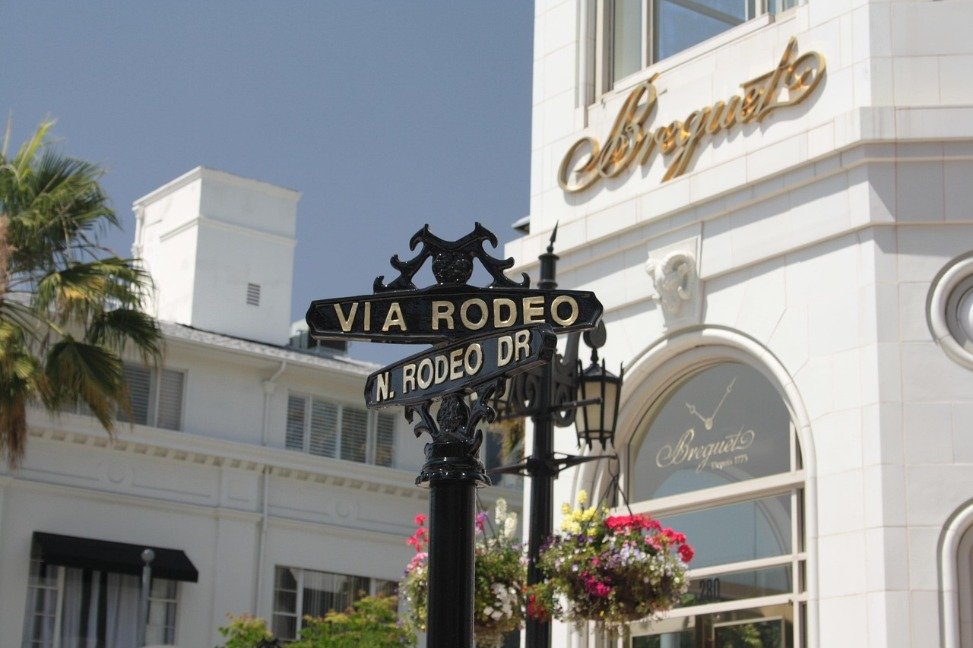
Perhaps no street contributed more to Beverly Hills’ international luxury reputation than Rodeo Drive. For much of its early history, Rodeo Drive was a local street.
That changed dramatically in the 1960s.
Fred Hayman opened Giorgio Beverly Hills, followed by major international luxury houses including Gucci and Van Cleef & Arpels. The arrival of prestigious retailers transformed Rodeo Drive into an international shopping destination.
By the following decades, the street had become synonymous with luxury.
Today, Rodeo Drive’s three iconic blocks are home to more than 100 leading international luxury brands.
This transformation was significant because it changed how people experienced Beverly Hills.
You did not have to own a mansion to participate in its luxury culture.
You could walk Rodeo Drive.
You could shop.
You could dine.
You could experience the atmosphere.
Luxury became an experience available to visitors as well as residents.
Hollywood Turns a Place Into a Brand
Movies and television helped take Beverly Hills from an affluent American community to an international cultural symbol.
The city’s image appeared repeatedly in popular entertainment.
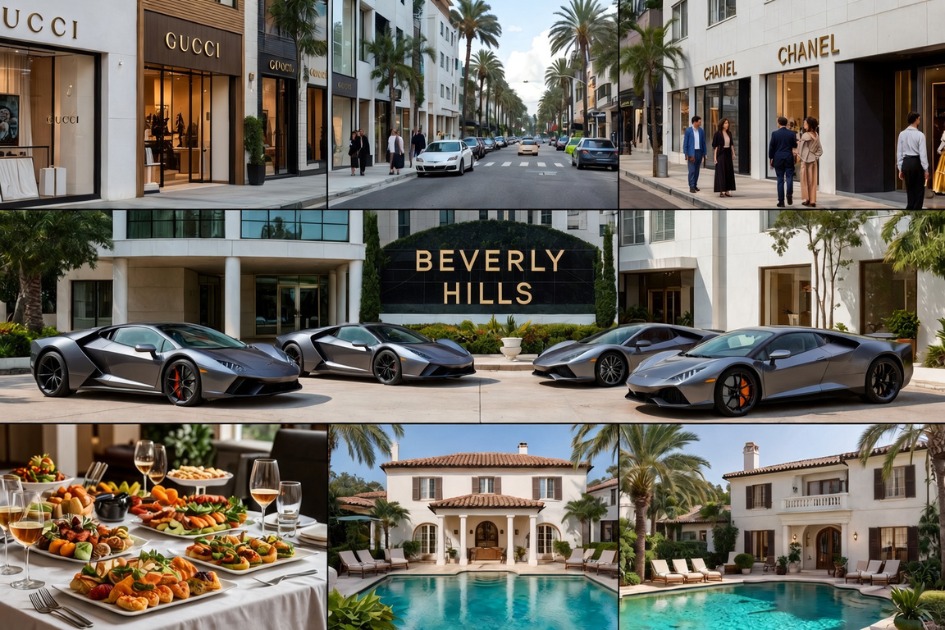
The Beverly Hills Hotel, Rodeo Drive, grand estates, luxury automobiles, and glamorous lifestyles became familiar visual references around the world.
Films such as Beverly Hills Cop and Pretty Woman further strengthened the association between Beverly Hills and wealth, fashion, celebrity, and aspiration. Visit California notes that films including Pretty Woman, Clueless, and Beverly Hills Cop helped cement Rodeo Drive’s reputation in global pop culture.
The result was extraordinary.
People who had never visited California knew what Beverly Hills represented.
The city had become a brand.
The Golden Triangle Becomes a Luxury Destination
The area surrounding Rodeo Drive evolved into what is now known as the Golden Triangle. Luxury retail became intertwined with hospitality, dining, entertainment, and pedestrian-friendly streets.
This created something particularly powerful. A complete luxury environment.
Visitors could stay at a prestigious hotel, walk to designer boutiques, dine at exceptional restaurants, visit galleries, and experience the atmosphere of Beverly Hills without leaving the central district.
Rodeo Drive describes the area today as an intersection of luxury, fashion, and entertainment, with international brands, acclaimed restaurants, and celebrated hotels.
This concentration helped differentiate Beverly Hills from ordinary shopping destinations.
It became a luxury ecosystem.
Hospitality Reinforces the Experience
Luxury hotels played a critical role in maintaining Beverly Hills’ identity. The Beverly Hills Hotel and Beverly Wilshire became internationally recognized names.
Their appeal extended beyond accommodation.
They became places where celebrities, executives, entrepreneurs, travelers, and cultural figures could gather.
This created a powerful relationship between hospitality and reputation.
A prestigious hotel can help define how visitors perceive an entire destination.
Beverly Hills understood this exceptionally well.
Its hotels became part of the story.
Success Became an Experience
Perhaps the most interesting aspect of Beverly Hills is that success became experiential. You could see it in the architecture.
You could experience it in hospitality. You could shop for it on Rodeo Drive.
You could encounter it in restaurants.
You could observe it through automobiles moving through the city.
You could even experience it simply by walking beneath the palm trees.
This helped make Beverly Hills different from a conventional wealthy suburb.
The city became a destination where luxury could be experienced rather than merely observed.
The Power of an Address
In luxury real estate, location is everything. Beverly Hills became one of those rare addresses where the name itself communicates something.
A Beverly Hills address can evoke privacy, prestige, architecture, history, celebrity, and access. That association has strengthened over generations.
The city’s international reputation for luxury real estate continues today, with Visit California describing the hills above Sunset Boulevard as home to some of the world’s priciest real estate.
An address therefore became part of the luxury product.
The property mattered.
But so did the name attached to it.
The Culture of Aspiration
Beverly Hills has also benefited from something less tangible.
Aspiration.
Luxury destinations become powerful when people do not simply want to visit them.
They want to become associated with them.
Beverly Hills has long represented a particular vision of achievement: beautiful surroundings, exceptional service, sophisticated fashion, successful careers, cultural influence, and personal freedom.
That symbolism extends far beyond its borders.
For many people around the world, Beverly Hills represents the possibility of having arrived.
Luxury Without Losing Its Identity
Despite its international reputation, Beverly Hills remains a relatively small city.
The City of Beverly Hills encompasses only about 5.7 square miles and has approximately 35,000 residents while welcoming millions of visitors annually.
That scale is part of its appeal.
The city feels intimate enough to navigate while possessing a global reputation.
Its streets can feel residential and peaceful.
Then, a short distance away, Rodeo Drive presents some of the world’s most recognizable luxury brands.
That contrast contributes to the city’s unique character.
The Beverly Hills Formula
The success of Beverly Hills was never based on a single attraction.
It was the combination.
Real estate created exclusivity.
Hollywood created glamour.
Hotels created hospitality.
Rodeo Drive created international luxury retail.
Restaurants created a sophisticated social scene.
Architecture and landscaping created visual identity.
Entertainment transformed the city into a cultural symbol.
Together, these elements created something much larger than the sum of their parts.
They created a lifestyle brand.
Why Beverly Hills Still Matters
Luxury trends change.
Fashion changes.
Technology changes.
Consumer expectations change. If there is one thing we’ve all learned it’s that change is inevitable.
Yet Beverly Hills continues to hold an unusual position within global luxury culture.
Its appeal has evolved rather than disappeared.
Today, luxury is increasingly associated with experiences, personalization, wellness, privacy, craftsmanship, and quality of life.
Beverly Hills can accommodate all of them.
A visitor can spend the morning shopping on Rodeo Drive, enjoy an exceptional lunch, explore art and architecture, relax at a luxury hotel, and finish the evening at a celebrated restaurant.
For residents, the appeal extends into privacy, beautiful neighborhoods, cultural amenities, dining, and access to one of the world’s most recognizable luxury environments.
A Global Symbol That Keeps Evolving
Beverly Hills became a global symbol of success because generations of developers, entrepreneurs, entertainers, designers, hoteliers, retailers, and residents contributed to a shared vision.
It was built on natural beauty.
Hollywood gave it celebrity.
Luxury retail gave it international relevance.
Real estate gave it exclusivity.
Hospitality gave it an experience.
And popular culture gave the world an image that could be recognized almost instantly.
The city ultimately represents something more enduring than wealth.
It represents achievement expressed through lifestyle.
That is why the name Beverly Hills continues to carry extraordinary power.
From its earliest days as a landscape defined by water to its transformation into a destination of luxury, fashion, entertainment, and hospitality, Beverly Hills has continually reinvented what success can look like.
And perhaps that is the secret behind its enduring appeal.
Beverly Hills does not simply represent luxury. It represents the dream of making it to the top
Sources
- City of Beverly Hills — History of Beverly Hills
- City of Beverly Hills — Historic Context: Beverly Hills Hotel
- Beverly Hills Historical Society — A Brief History of Beverly Hills
- Rodeo Drive — Our Story
- Rodeo Drive — 50 Years of the Rodeo Drive Committee
- Visit California — Guide to Rodeo Drive
- Rodeo Drive — Official Destination Website