


Key Takeaways
- Consistent storage conditions are usually more important than chasing one exact humidity reading.
- A moderate relative humidity range, often around 65% to 70%, is a practical starting point for many cigars.
- Temperature, seal quality, air circulation, and hygrometer accuracy all affect storage results.
- New wooden humidors need time to stabilize before they are filled with cigars.
- Simple weekly checks can help prevent dryness, excess moisture, mold, and beetle problems.
Cigars are made from tobacco leaves that respond to changes in moisture and heat. When conditions swing too far in either direction, wrappers can crack, draws can become tight or loose, and burning can become uneven. A dependable routine keeps the collection in a more predictable condition without requiring constant adjustments. A traditional humidor can work well with the right seal, moisture source, and monitoring tools. At the same time, a smart cigar humidifier may suit owners who want automated regulation, alerts, and a clearer view of changing conditions. Whichever approach you choose, the goal is the same: maintain a stable environment that neither dries cigars out nor leaves them overly damp.
Why Stable Conditions Matter
A cigar that becomes too dry may feel light, develop a brittle wrapper, and burn hot or quickly. Too much moisture can make the tobacco feel soft, restrict the draw, and contribute to repeated relighting. Sudden changes can be particularly frustrating because the outer wrapper and filler may not respond at the same rate. Many cigar owners start at around 65%-70% relative humidity, then make small adjustments based on their cigars and personal preferences. A lower setting may produce a firmer cigar and more open draw, while a slightly higher setting may keep the tobacco softer. The best setting is one that remains steady and produces results you enjoy.
What a Humidor Does
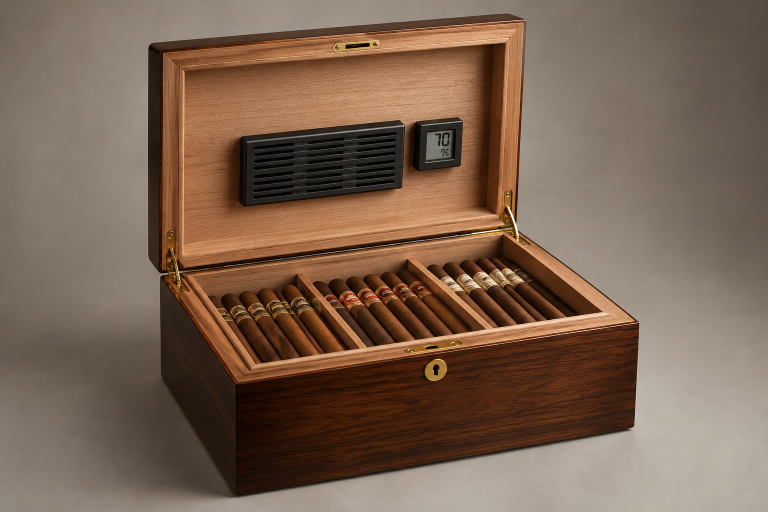
A humidor is a storage container designed to reduce exposure to changing room conditions. Its enclosure, lining, seal, humidity source, and hygrometer work together to maintain a more consistent moisture level. The basic purpose of a humidity-controlled storage box is to protect cigars from excessive dryness, moisture, sunlight, and physical damage. Small wooden boxes are a familiar choice, but an airtight container can also be an effective and uncomplicated option. Travel cases are useful for short stays away from home, while larger cabinets require extra attention to airflow and readings across different sections of the space.
Choosing the Right Storage Setup
- Small wooden humidor: A good fit for a modest collection and a traditional presentation.
- Airtight container: A practical option for stable storage with minimal complexity.
- Travel case: Useful for carrying a limited number of cigars while protecting them from damage.
- Large cabinet: Better for a growing collection, provided humidity and airflow are monitored throughout.
- Electronic system: Helpful for owners who prefer automated humidification and notifications.
Do not judge capacity only by the largest number printed on a humidor. Leaving room between cigars makes inspection easier and helps prevent one tightly packed area from behaving differently than the rest of the storage space.
How to Prepare a New Wooden Humidor
Wood can absorb moisture when it is new or has been unused for a long time. If cigars are added immediately, the wood may draw moisture from them, making the first days of storage difficult to manage. Follow the manufacturer’s seasoning instructions for the specific humidor rather than assuming every model should be prepared in the same way.
- Inspect the lid, hinges, seal, and interior lining.
- Test or calibrate the hygrometer before relying on its reading.
- Prepare the interior according to the humidor maker’s instructions.
- Allow the humidity to settle before filling the humidor.
- Add cigars only after the reading remains reasonably stable.
Temperature Is Part of Cigar Care
Humidity does not operate separately from temperature. Warm conditions can increase the risk of moisture-related problems, while direct sunlight can heat a humidor quickly. Keep storage away from windowsills, radiators, air-conditioning vents, hot vehicles, and damp basements.
- Choose a cool, dark room with relatively steady conditions.
- Check the storage area during seasonal temperature changes.
- Avoid placing the humidor beside appliances or vents that cycle on and off.
- Move the setup if the room regularly becomes hot or humid.
Checking Humidity Correctly
A hygrometer is one of the most useful items in a cigar storage setup. Digital models are often easier to read, but any hygrometer should be checked for accuracy before it guides major decisions. Place it where it reflects the conditions around the cigars, not directly beside a moisture source. Check humidity and temperature once or twice each week, especially when the humidor is new, recently refilled, or located in a room with changing conditions. A simple written log can reveal whether a recurring issue is due to frequent openings, a weak seal, a depleted humidity source, or a shift in the surrounding room.
Daily and Monthly Humidor Care
Weekly Checks
- Read the humidity and temperature.
- Look for brittle wrappers, soft cigars, unusual odors, or visible residue.
- Confirm that the lid or door closes firmly.
- Check whether the humidity source needs refilling or replacement.
Monthly Checks
- Inspect corners, seams, trays, and dividers for signs of mold.
- Rotate cigars if different areas of the storage space show uneven conditions.
- Remove dust from the exterior and nearby vents.
- Review hygrometer accuracy and storage notes.
Common Problems and Simple Fixes
Humidity Drops Too Fast
A falling reading may point to a poor seal, dry wood, frequent opening, a depleted moisture source, or very dry room air. Start by checking the lid and humidity source. Make one change at a time, then allow the humidor time to settle before making another adjustment.
Humidity Stays Too High
Excess moisture can result from adding too much water, using an oversized humidification source, poor airflow, or storing the humidor in a warm location. Do not respond by adding more moisture. Instead, confirm the hygrometer reading, reduce the moisture source if appropriate, and avoid overfilling the container.
Readings Differ Across the Humidor
Large storage spaces, crowded shelves, and poor airflow can create uneven conditions from one side to the other. Move the hygrometer to compare areas, gently rearrange cigars as needed, and give the environment time to equalize.
Dry Cigars, Mold, and Tobacco Beetles
- Dry cigars: Look for cracking wrappers, brittleness, a loose feel, or a fast and hot burn.
- Overly damp cigars: Watch for soft tobacco, a tight draw, uneven burning, or difficulty keeping the cigar lit.
- Mold: Fuzzy growth, spreading patches, or colored spots deserve immediate attention.
- Natural bloom: A fine, pale coating can sometimes appear on aged cigars, but it should not look fuzzy or spread like mold.
- Tobacco beetles: Small holes and dust-like debris may indicate infestation from pests such as the cigarette beetle.
Isolate any questionable cigar instead of returning it to the main collection. This gives you time to inspect the problem without risking nearby cigars.
A Simple Cigar Storage Routine
- Keep the humidor in a cool, dark location.
- Maintain a moderate humidity setting and avoid rapid changes.
- Check the hygrometer and humidity source once or twice weekly.
- Inspect cigars monthly for dryness, mold, or pest damage.
- Leave enough space for airflow and easy handling.
- Make one adjustment at a time and allow several days for stabilization.
Conclusion
Good cigar storage depends on steady habits rather than constant intervention. A suitable container, a reliable hygrometer, a moderate humidity level, and a cool location can prevent many common problems and help preserve your collection’s condition. Choosing a humidor with an appropriate capacity also makes it easier to organize cigars without overcrowding them or disrupting airflow. Check the humidity and temperature regularly, inspect the seal, and ensure the humidification system is functioning as intended. Keep the container away from direct sunlight, heating equipment, air-conditioning vents, and other sources of sudden environmental changes. If readings begin to fluctuate, look for an underlying cause before making major adjustments. Small, deliberate changes are often easier to monitor than several corrections made at once. Once the setup is stable, a few minutes of routine attention each week can help keep cigars balanced, protected, and ready to enjoy. Consistent care also makes it easier to recognize unusual changes early and maintain a reliable storage routine throughout the year.